Our group presented three papers at the triennial International Ergonomics Association conference in Florence.
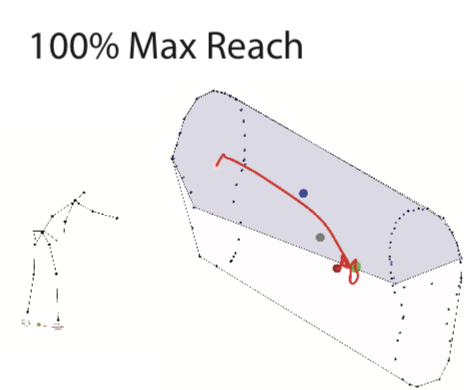
Dr. Monica Jones presented preliminary results from a study of standing posture behavior. In previous work, we have shown that people engaging in standing reaching tasks organize their postures in a way that places the center of pressure on the floor well away from the centroid of the base of support, but not necessarily at the outer margin. This study will develop empirical models to use in posture prediction.
Dr. Daniel Park presented an exploratory study combining one of our seated body shape models with augmented reality. Using Apple's ARkit, he demonstrated an app inserting a seated avatar into a vehicle environment. Although much work remains to make the tool useful for quantitative work, this approach offers potential to enable rapid visualization of vehicle occupants using minimal measurement hardware. We plan to augment this work through improved capability in our body shape modeling, including the capability to represent the effects of clothing and PPE.
I presented a brief overview of the development of a tool for modeling soldiers wearing body armor. This software, which is written in Python, incorporates our seated, posturable male soldier body shape model. A geometric representation of body armor and body borne gear can be added. The primary applications of this human modeling tool are in representing space claim for soldiers in squad seating ares of vehicles. The development of this tool will intersect with our exploration of the application of AR technology to vehicle design assessment, but we also anticipate incorporating this capability into our growing suite of online tools.