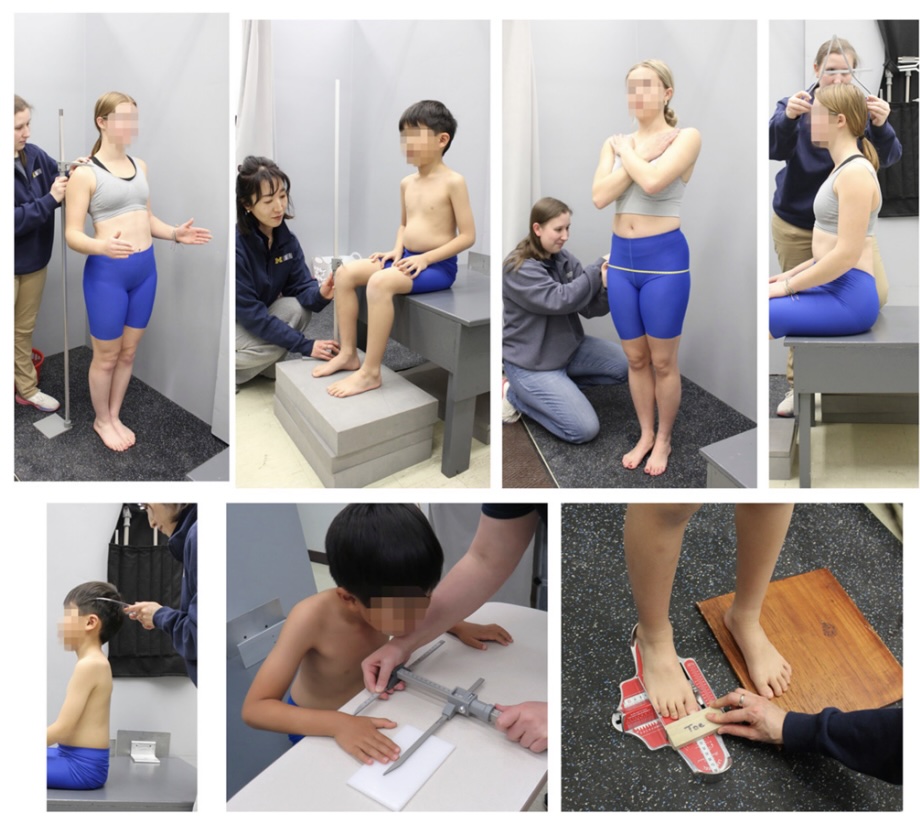
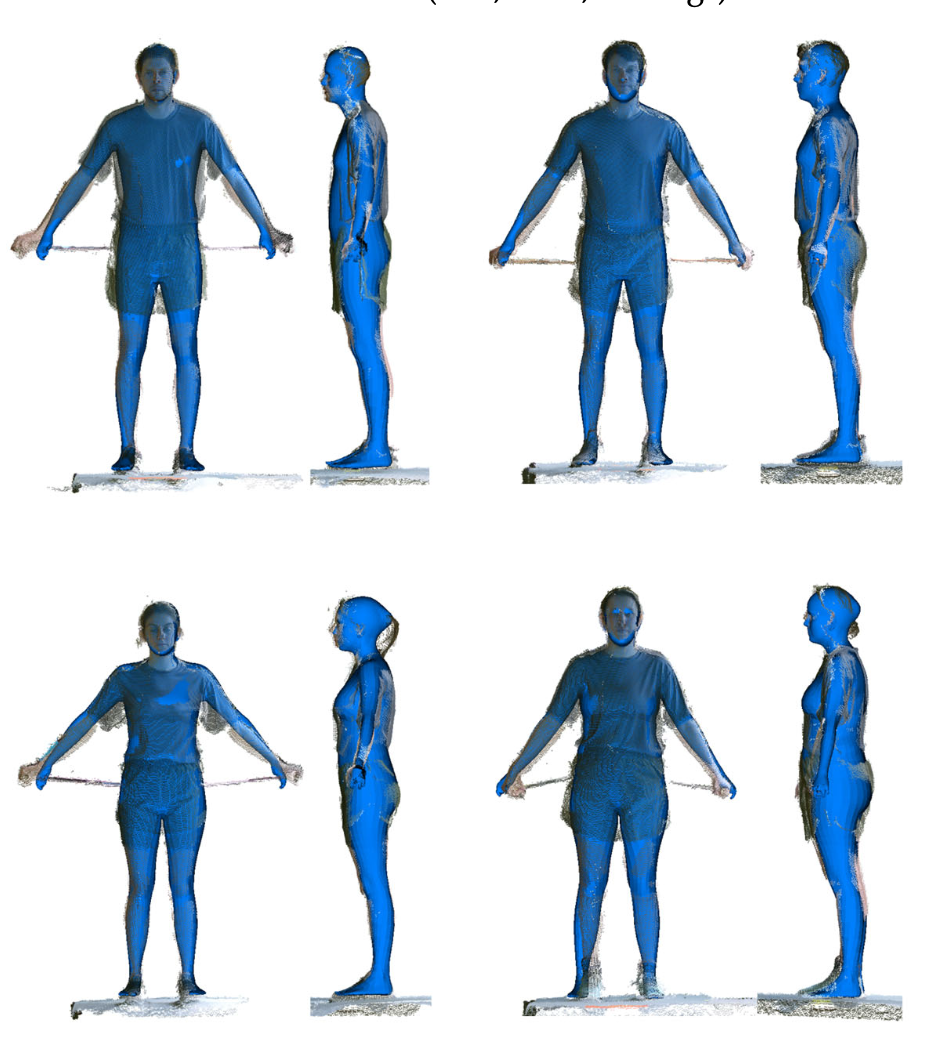
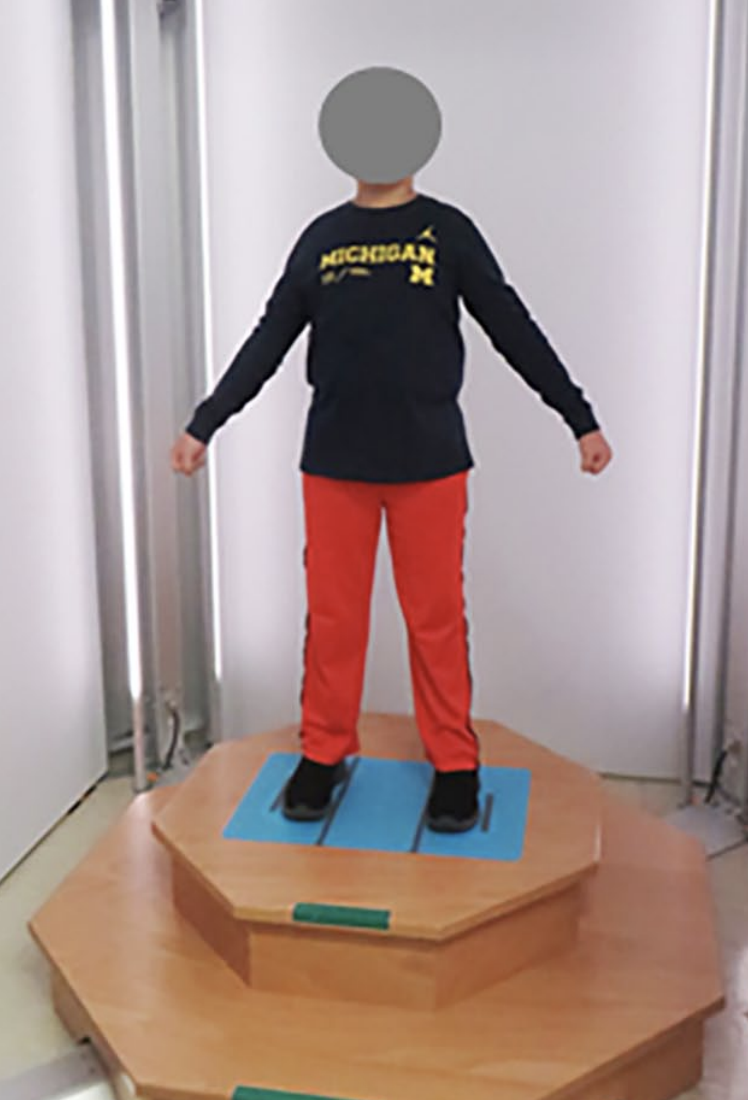
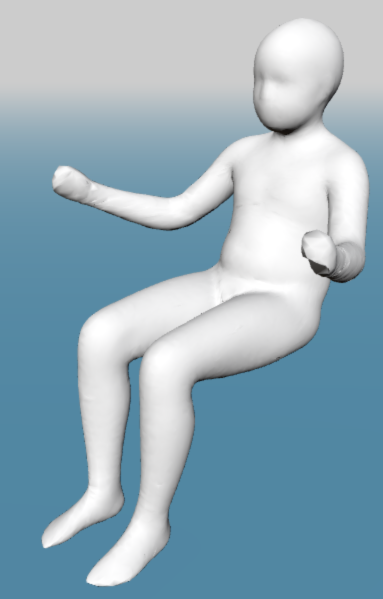
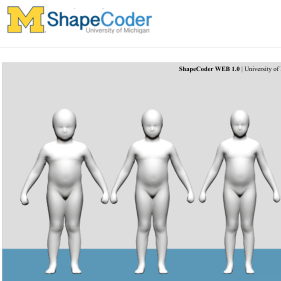
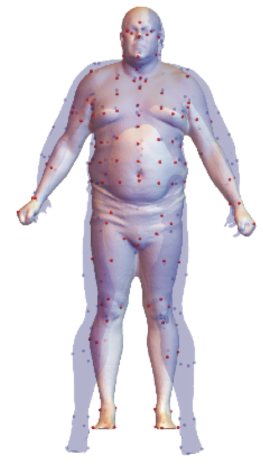
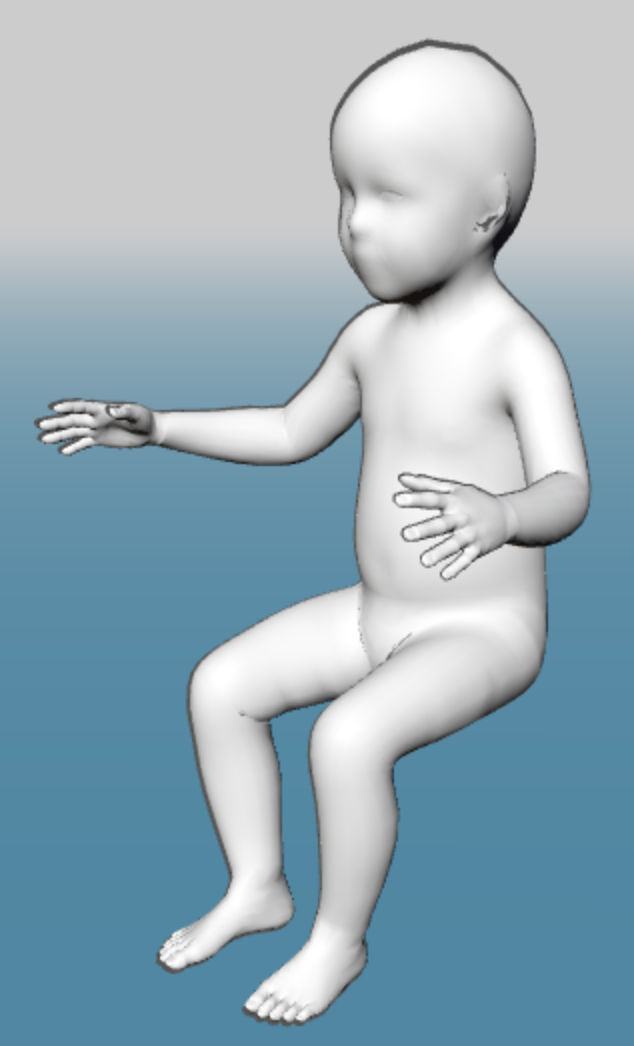
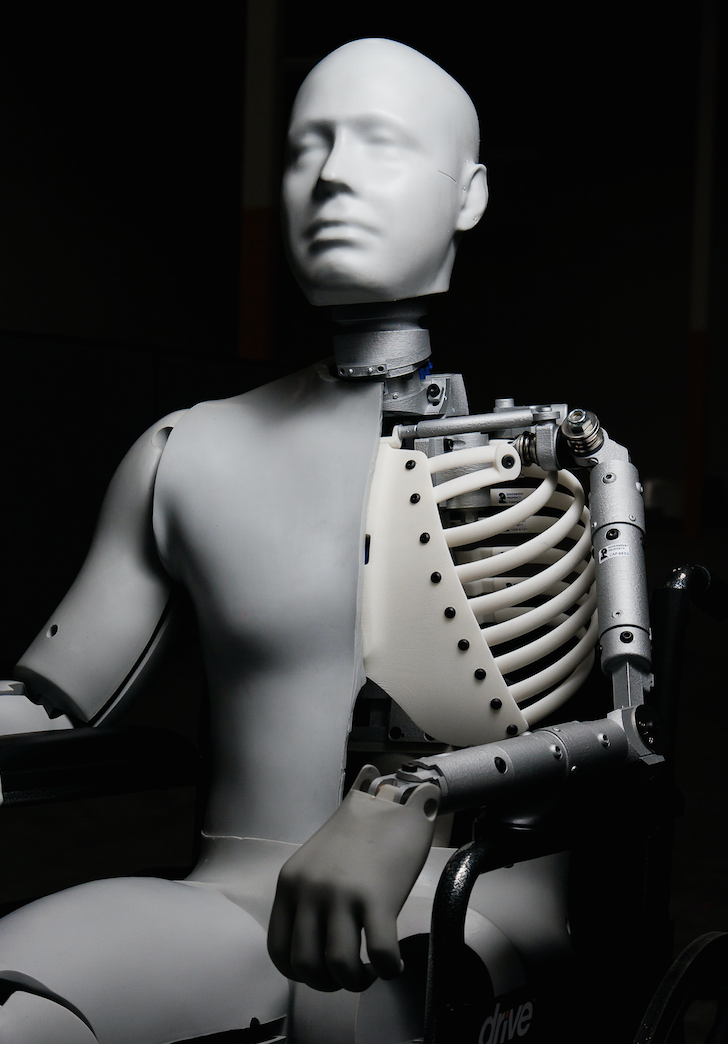
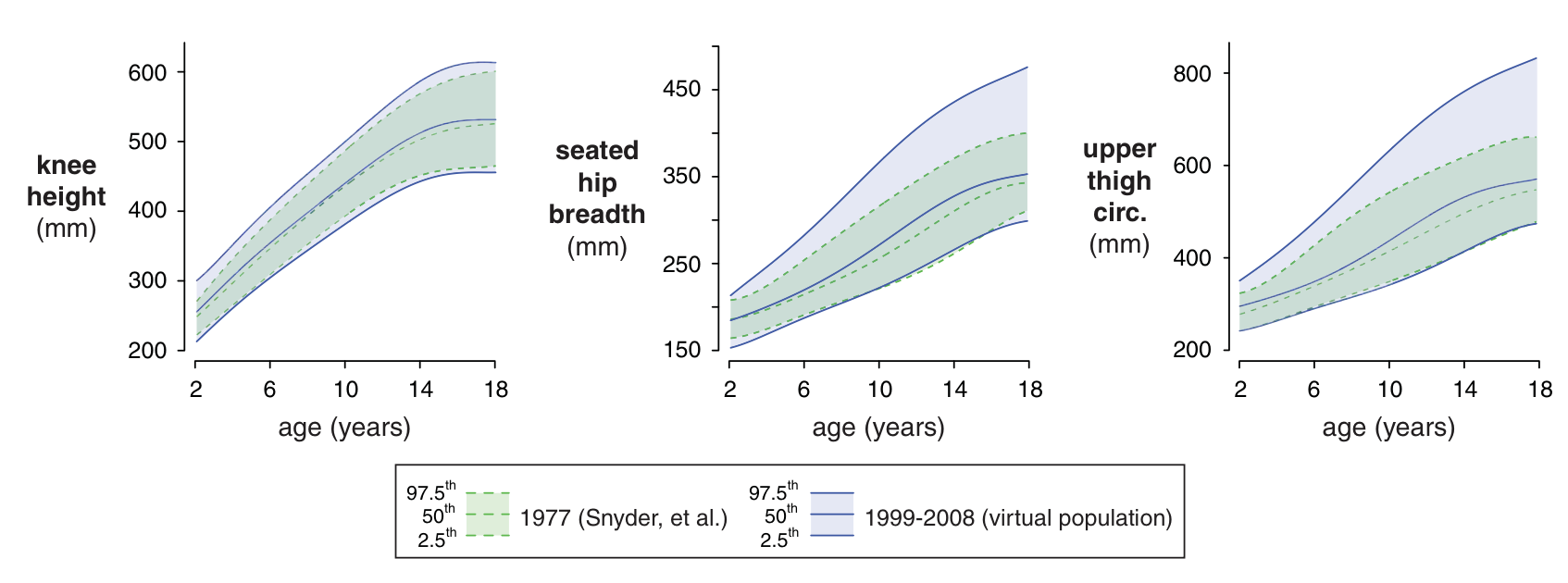
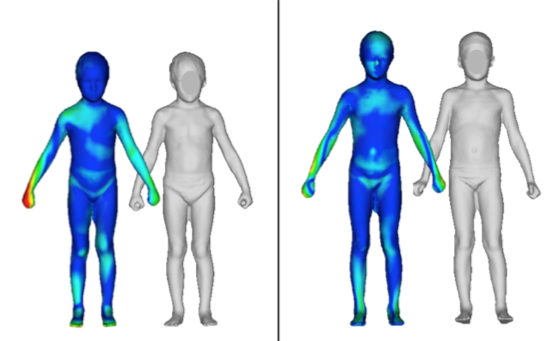
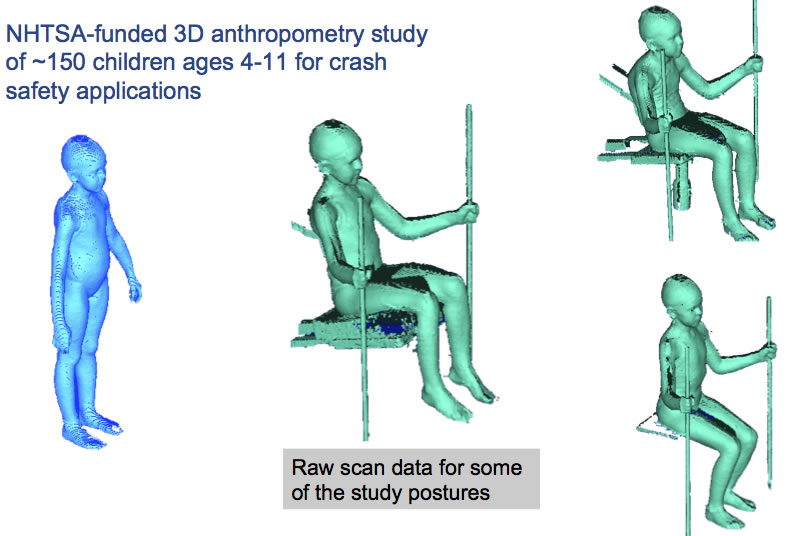
The initial overview journal article from YouthShape.US has been published. We are proud to be wrapping up the largest and most comprehensive anthropometric survey of U.S. children since the 1970s. This paper focused on the Phase-1 laboratory measurements, with a summary of the methods and an illustration of how much has changed in the last 50 years, mainly due to increases in body weight at every age. A companion technical report includes the details of the manual measurements, summary statistics, and plots for the initial phase of data collection. YouthShape.US is unique in many ways, among them that we have gathered a large number of manual measurements in addition to the 3D scans of the whole body, hands, head, and feet. The manual measurements provide a direct linkage to earlier studies and provide a mapping from 3D scan-based measurements to the traditional dimensions used in the design of clothing and other products. For much more on the study, see YouthShape.US
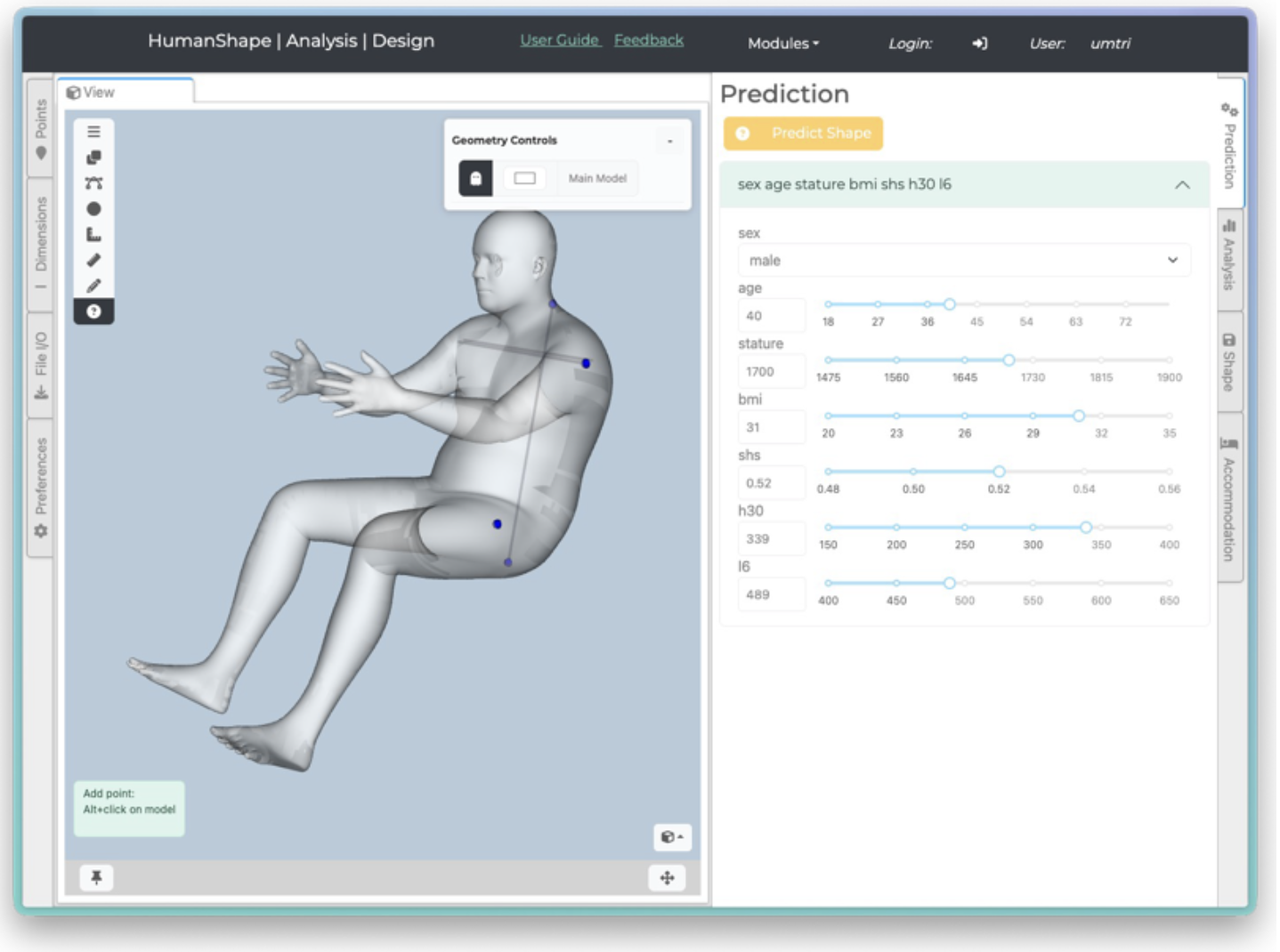
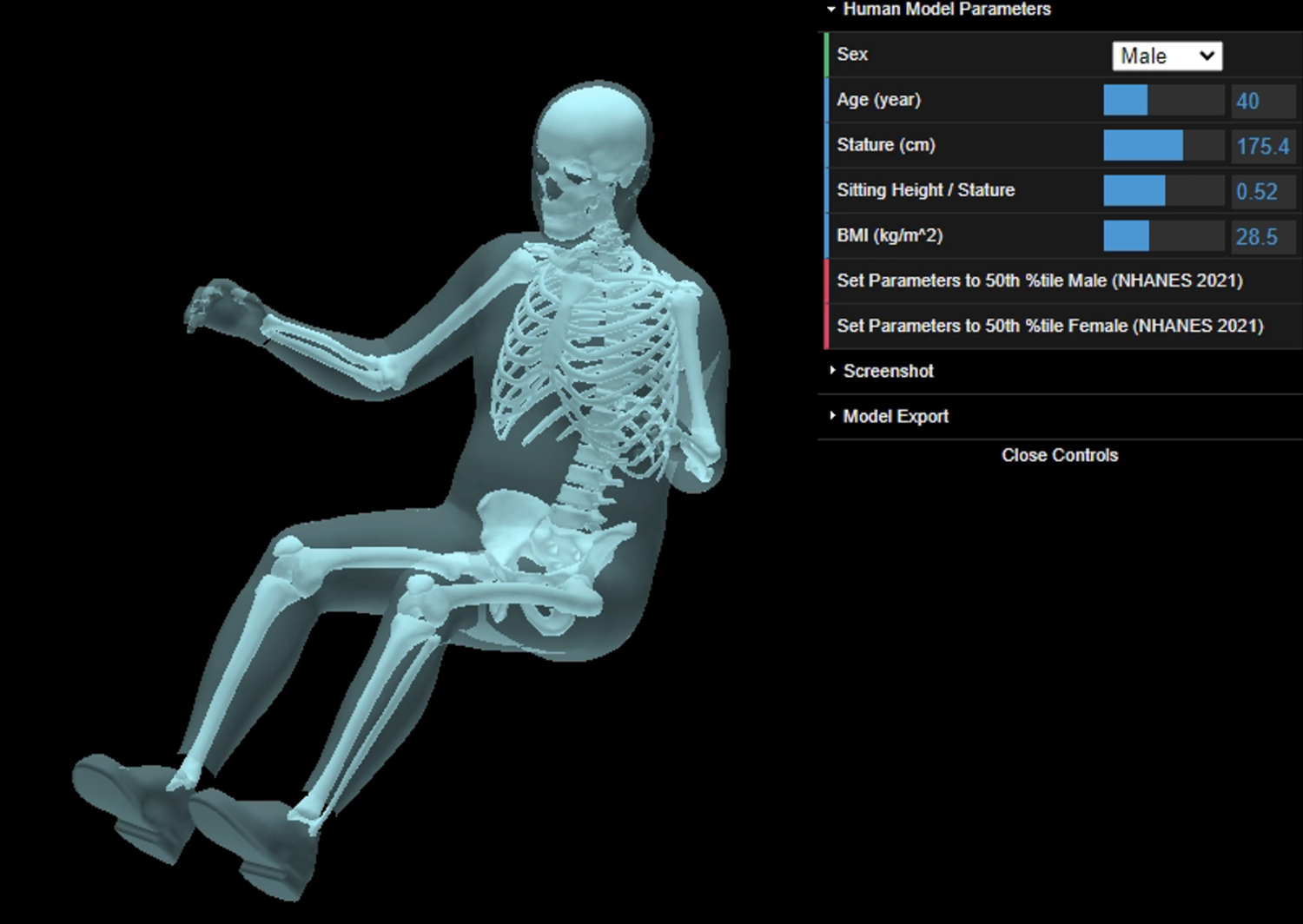
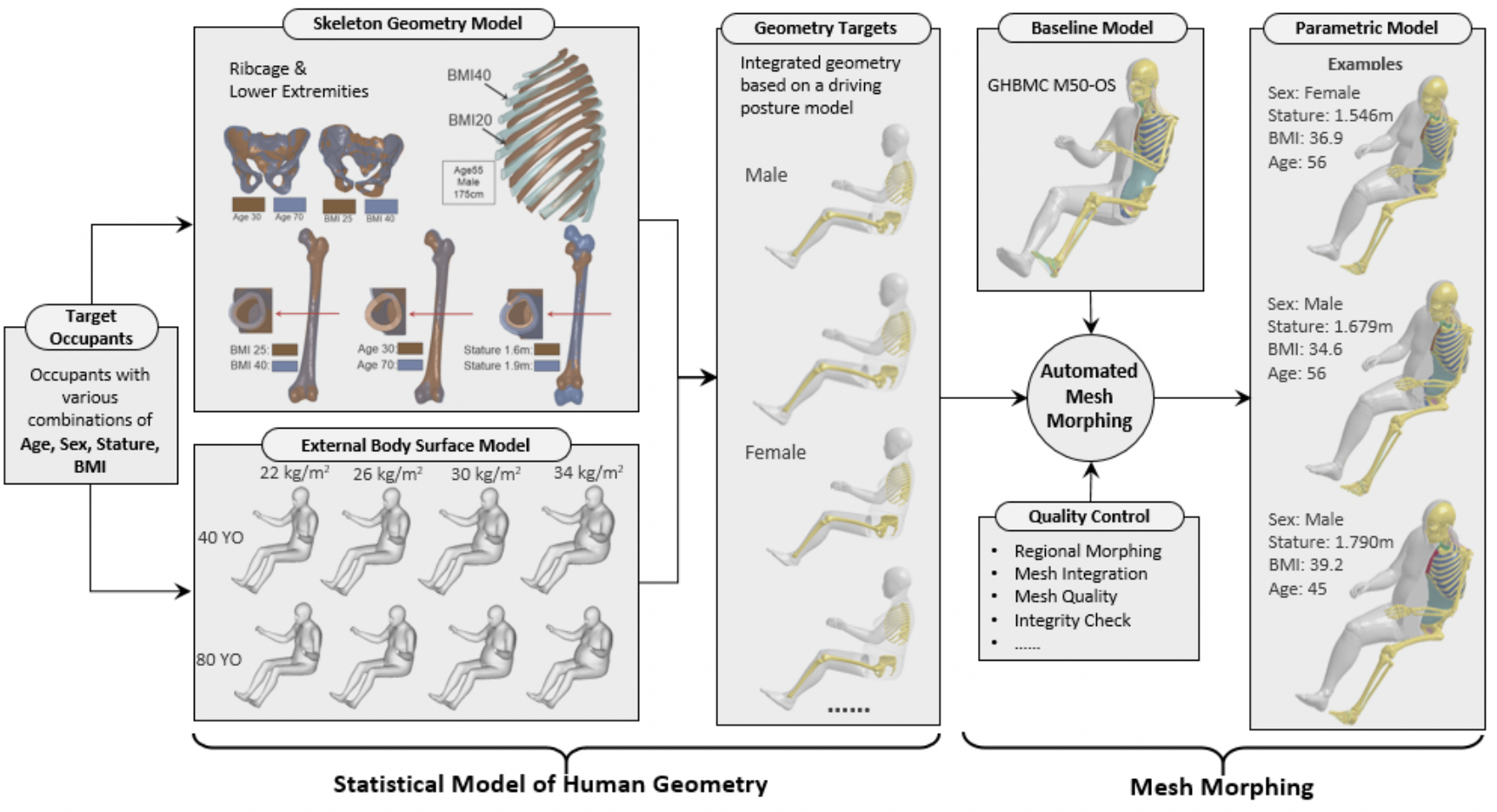
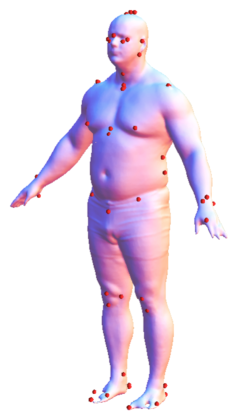
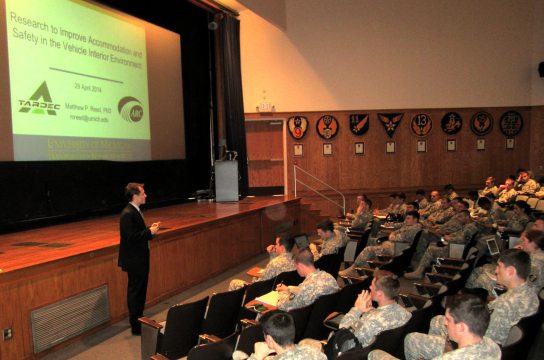
I gave a brief presentation to auto industry colleagues at a meeting of the semi-annual Seat Comfort Tech Club. This informal group of researchers and engineers from suppliers, OEMs, and a few of us academics get together to talk about methods, tools, and the occasional positive outcome in the quest to make automotive seats that aren't as bad as usual. Having been involved in automotive seating for my entire career, I know that as a community we forget just slightly less than we learn, so that the industry keeps making the same mistakes over and over, like designing seat backs that are just wide enough to fit the H-point machine, or putting bolstering adjacent to the hips. But it was great to see friends from way back and to show them the substantial progress we've made in the last 18 months. We've completely redone our automotive-posture body shape model, using our new high-res template and new fitting methods developed by my colleague Dr. Daniel Park. The model incorporates our lastest posture prediction so that accurate shapes and postures can be generated for any adult occupant in any passenger car/light truck seating scenario. The model, now based on over 500 people, is available at HumanShape.app/
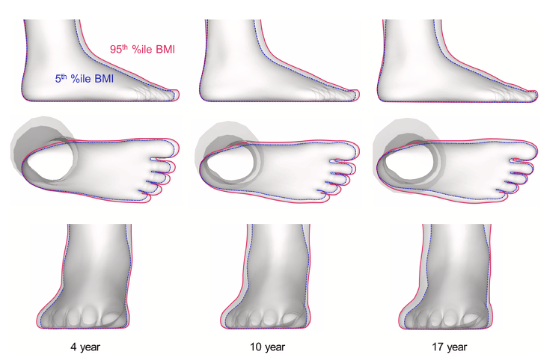
Our first journal article based on the YouthShape.US anthropometry study has appeared! We are delighted that this outstanding work led by our post-doc Hayoung Jung has been published, presenting an exceptionally high-resolution, accurate statistical shape model of the pediatric foot. We looked at the effects of BMI on foot shape and found important effects that call into question the utility of existing shoe lasts. Bottom line, the upper quantiles of foot volume at a given length are much higher than they used to be. It's likely that many kids are walking around in shoes that are far too long for them just to have enough space vertically and horizontally. This new model will provide guidance for footwear design, but is also part of a larger program to bring large-scale virtual fit testing with avatar populations (not just a few cases!) to general product design. Check out HumanShape.app for more on this.
A second note: As you are probably aware, journal reviewing is broken -- too many people submitting far more papers than they are qualified to review (and reviewing even fewer). This article took about 14 months to get through review, in spite of edits being minor. Folks: (1) do not accept an article to review that you can't get done in two weeks, (2) actually do the review in the allotted time, and (3) remember that you are obligated to review 3 times as many papers as you submit! That's the way the system works: if each paper has three reviewers, you need to review a minimum of 3x more papers than you publish!
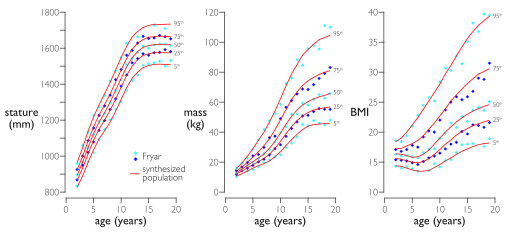
My colleague Matt Parkinson and I have just published a paper that supports our efforts to improve the quality of anthropometric data for children. The most representative data for U.S. children are gathered and published through the ongoing National Health and Nutrition Examination Survey. The anthropometric measures are only a small part of the survey, but the rigorous sampling methodology tied to the U.S. Census surveys makes these data the best available for quantifying the body size of U.S. children by sex, age, and race/ethnicity. There are challenges in using these data, however: any analyses must incorporate the sample weights (each sampled child represents a different number of children in the population as a whole) and the sample is fairly small, meaning that quantile estimates based on single-year bins vary unrealistically. We addressed these issues by synthesizing a large, unweighted dataset of stature and BMI by age and sex. The new dataset allows direct, unweighted calculations and provides smoother quantiles across age and better precision for tail quantile estimates. Most importantly, this new dataset will provide a foundation for generating nationally representative outcomes from the YouthShape.US survey.
I attended theBiomechanics and Engineering Anthropometry (BEAM)
2026 meeting in Dayton, Ohio, this week. This was the 2nd of what I hope will be a long-running meeting series hosted by our colleagues at the Accommodation Research Lab that brings together a communit of biomechanics and applied anthropometry researchers and practitioners focused on defense-related applications. Due to the ongoing chaos in DC, many of our government colleagues were unable to attend, but we had good representation from USAF, CAF, contractors, and academia. I gave an overview talk entitled "Escaping the Bottleneck" aimed at highlighting how better software enables us to actually use our 3D body shape data, rather than either extracting 1D dimensions for univariate analyses or limiting 3D analyses to a few extreme cases. I gave a few exampes of how the HumanShape app enables rapid analyses that previously would have taken weeks or perhaps not even have been attempted.
It's exciting to see many lines of research coming together to address the need to finally be able to use ALL of our 3D data. Get in touch with me if you'd like to see the future of product design for human accommodation and fit.
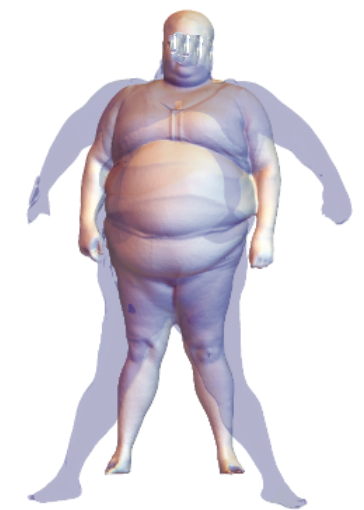
We are excited to publicly launch HumanShape.app, a radical new approach to anthropometric analysis for design. The field of applied anthropometry is stuck in the 1950s, with nearly all anthropometric data that is used for product design coming from univariate statistics published in a book or tech report. Although body scanning has never been cheaper or easier, conducting good 3D anthropometry surveys is still costly and difficult. More importantly, tools for actually using 3D body shape data are almost nonexistent. The vast majority of 3D anthro studies are really just 1D studies, except that the measurements are taken from scans rather than by hand. This approach neglects nearly all of the information from the scans.
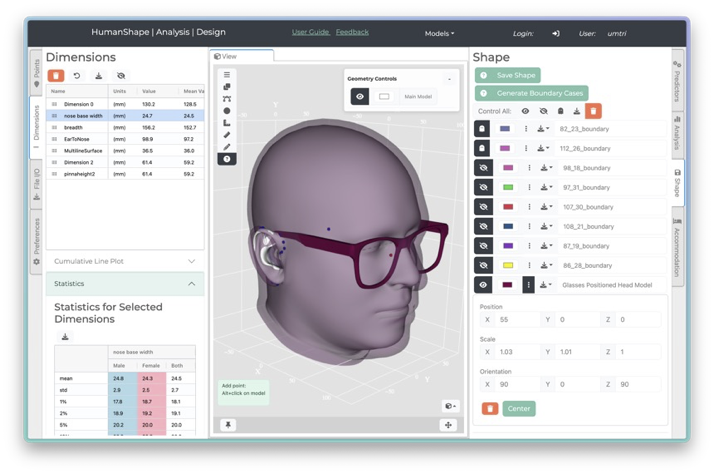
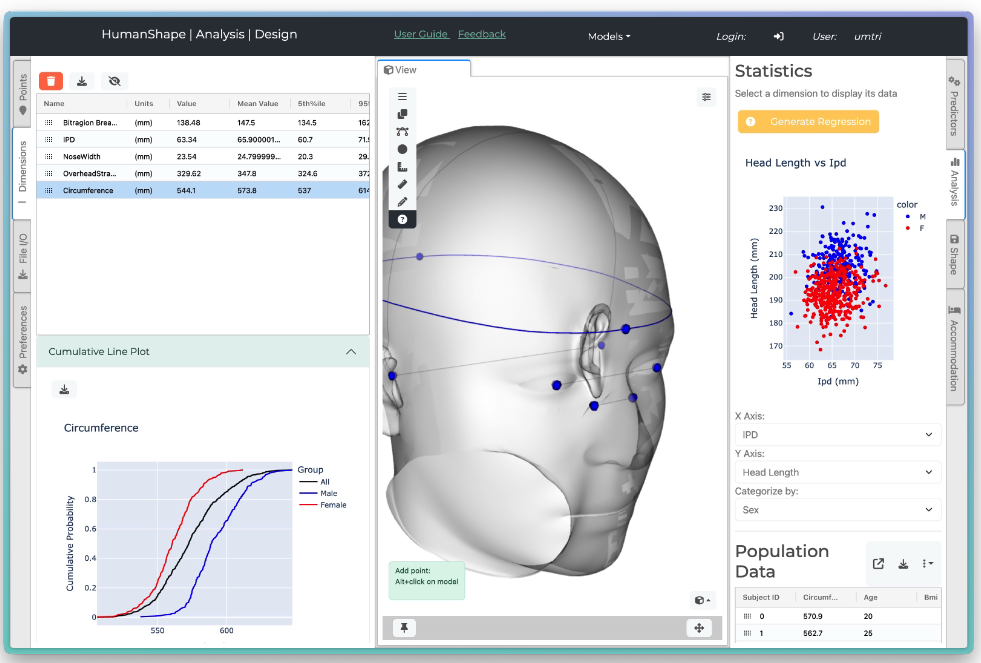
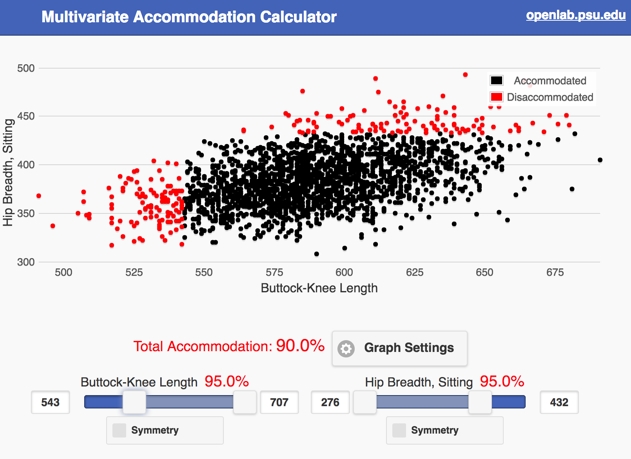
Through decades of work with 3D human data, we've developed a deep array of methods and a rigorous understanding of design processes that use human data. We're now rolling out a public-facing framework based on our methods. Here's a presentation describing the motivation and approach to HumanShape.app, our new online framework for human-centered product design. The app provides access to high-resolution, 3D shape models based on accurate scan data from thousands of adults and children. Critically, users can define and instantly measure any dimension they want across the entire population -- no more being limited to the variables someone else thought might be important. The analysis capabilities go far beyond length, breadths, and circumferences, including generating custom regression models based on the variables that are important for a particular design, creating boundary cases on user-defined variables, and conducting multivariate accommodation assessments. Check out our YouTube channel for an overview of the functionality and contact us for a demo. If you design products that physically interact with people (clothing, helmets, earbuds, headsets, masks, respirators, goggles, gloves, body armor, shoes, chairs, vehicle seats, ...) this approach can dramatically improve both the speed, accuracy, and outcomes of your process.
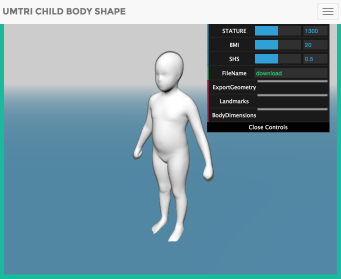
We continue to make rapid progress on YouthShape.US, the first large-scale, publicly accessible anthropometric survey of U.S. children since the 1970s. The freely available scalar data browser now hosts data from over 3500 children measured at multiple sites. The website provides summary statistics by sex and age, enables bivariate analyses, and gives rapid conversion between values and percentiles for any of the measures. In the next few months we will roll out demo access to our 3D tools based on HumanShape data. We've recently enhanced our standing child model so that we're covering ages 3 to 17 years with data from over 2300 children and youth. This is the most advanced and accurate child body shape model available and we're continuing to innovate, adding new analysis features. Most importantly, we're rolling out a synthesized dataset that uses advanced statistical techniques to generalize from our study population to the entire U.S. population. Check YouthShape.US for more updates!
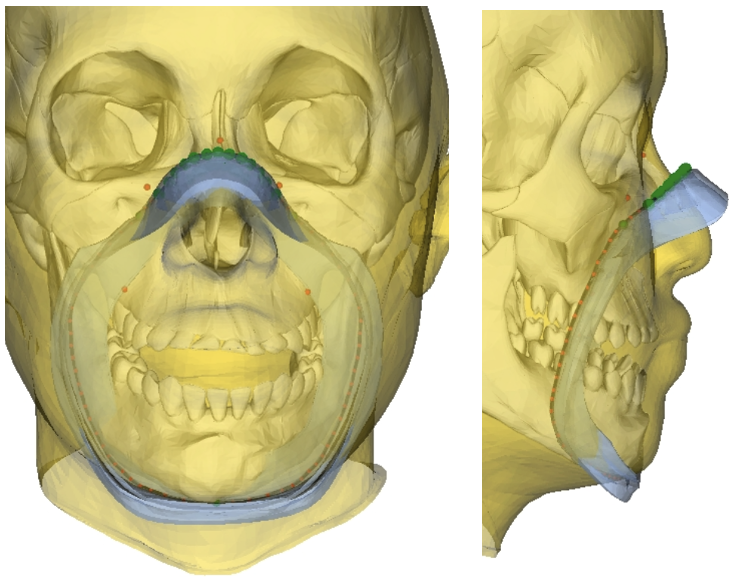
At the SAFE Symposium this month I presented an overview of some of our head/face related research. The current focus of the effort is the development of new contours for oxygen masks used by military jet pilots in the U.S. and other countries. The work is novel in several important ways. First, we started with the UMTRI head model, a high-resolution statistical shape model based on data from over 600 individuals. This model is based primarily on medical imaging data and hence has an accurate scalp, unlike nearly all other head databases and models. Second, we used the UMTRI model to create an aircrew-specific statistical shape model, fitting over 900 high-resolution scans from the U.S. Navy's 2024 aircrew anthropometry survey. Third, we devised a new approach to using 3D anthropometric data for design applications. This new approach has broad applicability to human-centered design, making the use of population-level 3D data much more tractable.
We launched the home website for YouthShape.US this month. This is the first large-scale, publicly accessible anthropometric study of U.S. children in 50 years. The study is being conducted in three phases. In the first phase, completed in 2024, we conducted very detailed measurements of body size, shape, strength, composition, and physical activity for 650 children from ages 3 to 17 years. In Phase 2, just completed, we added more than 600 Black and Hispanic children and youth to enhance the breadth of representation in the sample. We are about halfway through Phase 3, in which we're gathering 3D data from more than 3000 children at multiple sites. One goal of the study is to make the outcomes available online, going far beyond the traditional tabular presentations of quantiles. The initial version of the scalar data browser includes data from over 1000 children, and supports computation of summary statistics as well as bivariate analyses. Much more capability will be coming in future iterations. Check out the website for more information about the study.
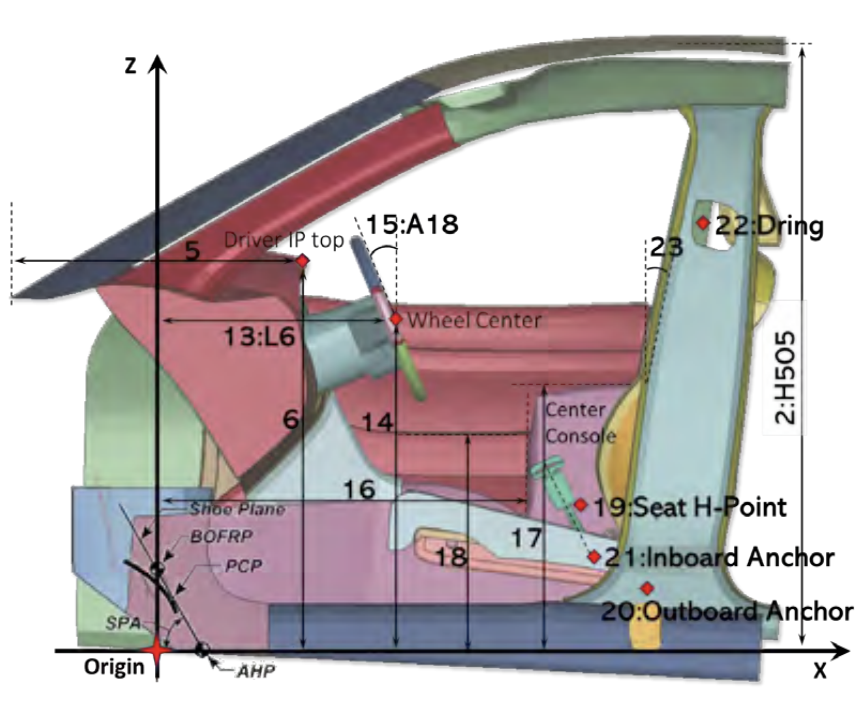
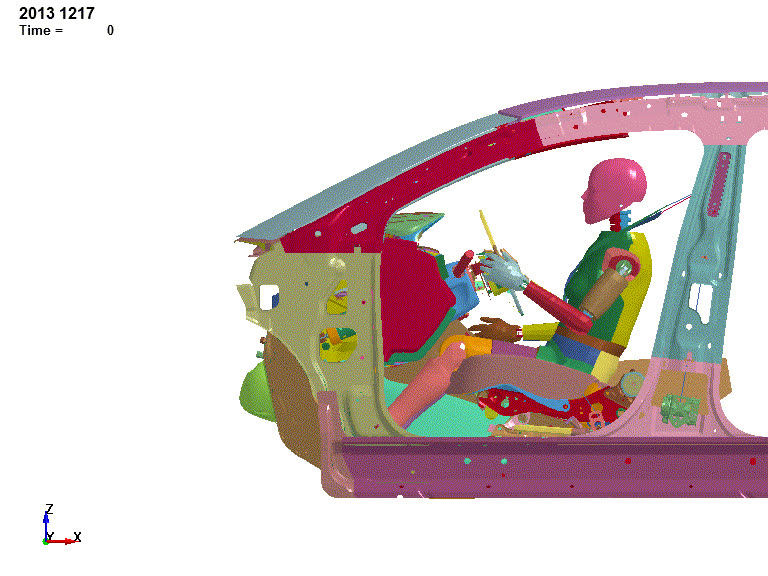
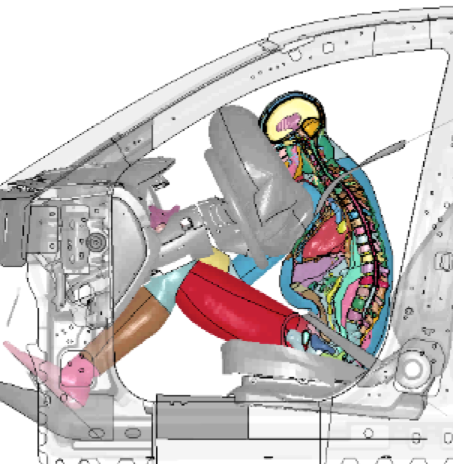
At the IRCOBI conference this month my colleague Kyle Boyle presented a paperon the development of a parametric finite-element model of a generic vehicle interior. The objective of this study was to develop a publicly available, parametric FE model representing a diverse set of driver and front passenger compartments and restraint systems to enable automated and efficient population-based crash simulations. A previously published driver compartment model was expanded in this study to include the front passenger area with additional airbags. Using a mesh morphing method, the
updated vehicle model was morphed into interior geometries representing four vehicles with varied sizes. All
modeled restraint components are parameterised. LS-DYNA simulation results using the vehicle-specific models
were compared with US-NCAP frontal and side impact tests with ATDs. Belt and airbag parameters were tuned
to provide a good match to ATD responses. A set of population-based crash simulations were then conducted
with 200 human body models with a wide range of size and shape to demonstrate the feasibility and robustness
of the automated crash simulation concept. This is the first study to develop a parametric FE model of both
driver and passenger seating positions.
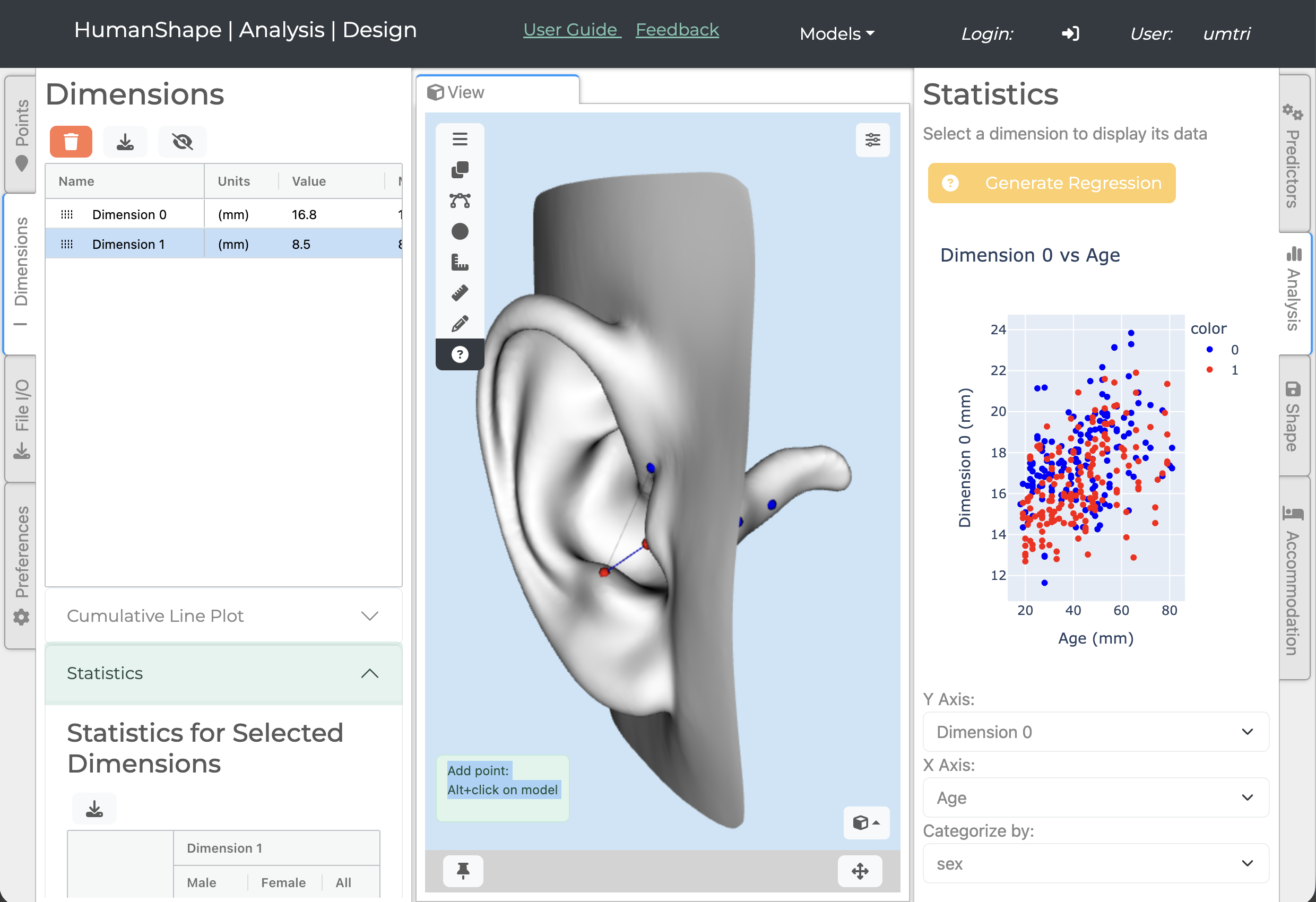
Our journal publication on the first iteration of our U.S. adult ear model appeared in International Journal of Industrial Ergonomics. This is the only parametric ear model we're aware of for the U.S. population. This high-resolution statistical model based on over 300 ears was created through analysis of medical imaging (CT) data. Unlike data gathered using ear molding and surface scanning, CT images provide sub-millimeter accuracy for the whole pinna and canal. Our model covers from the scalp to the eardrum. More than just data, the model allows exploration of population variability and direct measurement of arbitrary variables across the population. The ear model is now available for licensing in our HumanShape.app analysis and design platform. Users can define their own reference points, compute dimensions specifically related to their product designs, and download geometry for use in CAD. Contact usfor more information about how to access the ear model in this revolutionary new design tool.
We're proud of the work we're doing with Gentex and the U.S. Navy supporting the development of new oxygen masks for U.S. and NATO fighter pilots. Oxygen masks are critical equipment to ensure pilots can function at high Gs, but the current designs do not provide good fit for many pilots. We are working closely with the Navy on this. The NAWCAD DREAMS lab recently completed the first detailed anthropometric survey of Navy aircrew in decades. Through a Cooperative Research and Development Agreement(CRADA) between U-M and NAWCAD, we were able to fit their high-resolution head scan data using our detailed head template and build a Navy-specific head shape model based on over 900 aircrew. We've then developed novel methods to use population 3D data, not just linear dimensions, to design new mask contours. This work is ongoing, but preliminary results are very encouraging. The research draws heavily on our recent world-leading head modeling based on medical imaging data. Our current baseline model uses data from over 600 diverse subjects, enabling us to not only fit the Navy head surface data but also impute accurate skulls. This capability is a critical enabler for the oxygen mask research, because the mask seal is determined by a complex interaction between mask and tissue deformation.
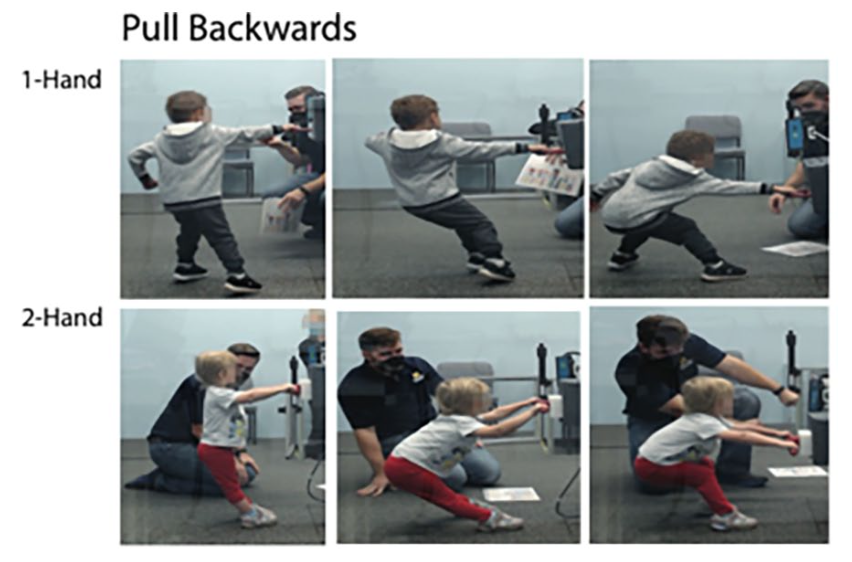
Over the past six years, we've completed the world's largest, most thorough survey of functional strength for children ages 12 months through 11 years. Funded by the U.S. Consumer Product Safety Commission, this study is the first large-scale effort in the U.S. to quantify child strength since the ground-breaking work by our predecessors at UMTRI (then HSRI) in the 1970s. We've gathered data from more than 800 children using custom-designed laboratory fixtures and rigorously tested methods. The work is summarized in 7 technical reports submitted to CPSC. The first two reports, on whole-body strength measures for children less than 2 years and 2 through 5 years are available from CPSC. We will be publishing the results first as technical reports, then as journal articles, but our primary dissemination method will be through online data browsers that make the findings available to everyone. Much more to come on that!
The application of human body measurement to design has been stuck in the 1950s since, well, the 1950s. Nearly all applications of anthropometric data to products still involve a designer or engineer looking up a 5th or 95th percentile value in the back of a book (now a PDF). The population is wrong, the data are out of date, and the measurement usually isn't the right one anyway. Almost every industrial design and engineering human factors program teaches anthropometry the same way, more than 30 years after widespread availability of desktop computers and 3d anthropometry. Why? Many reasons, including an anthropometry priesthood descended from physical anthropologists very committed to high-precision manual measurement within "allowable error", but fundamentally the problem has been a lack of computation. As long as the only means of disseminating data was/is a table of pre-calculated univariate quantiles on variables selected before the design variables are known, whether in a book or on a computer screen, nothing more can be done. For example, the vast majority of applications of 3d anthropometric surveys has been to distill the 3d data to the same univariate statistics previously computed from manually measured data, essentially discarding nearly all of the information.
I am making it my primary mission in the peak years of my career to try to do something to improve this situation. The primary solutions have been known since the 1950s: it is necessary to use data representing the target population to conduct simultaneous multivariate analysis, ideally with** 3d data in relevant postures.** But this requires (1) rich datasets, (2) the ability to weight or synthesize data to representation the target population, and (3) powerful computational tools. Computerized solutions to multivariate accommodation analysis have been proposed since the mid-1970s, yet are still vanishingly rare in practice.
And all of this must be tied into domain-specific practices. The tools needed for automotive interior design are different from those needed for designing XR headsets. What's common across domains is the humans, and rich, accurate human data is where we start. Stay tuned for much more on our progress.
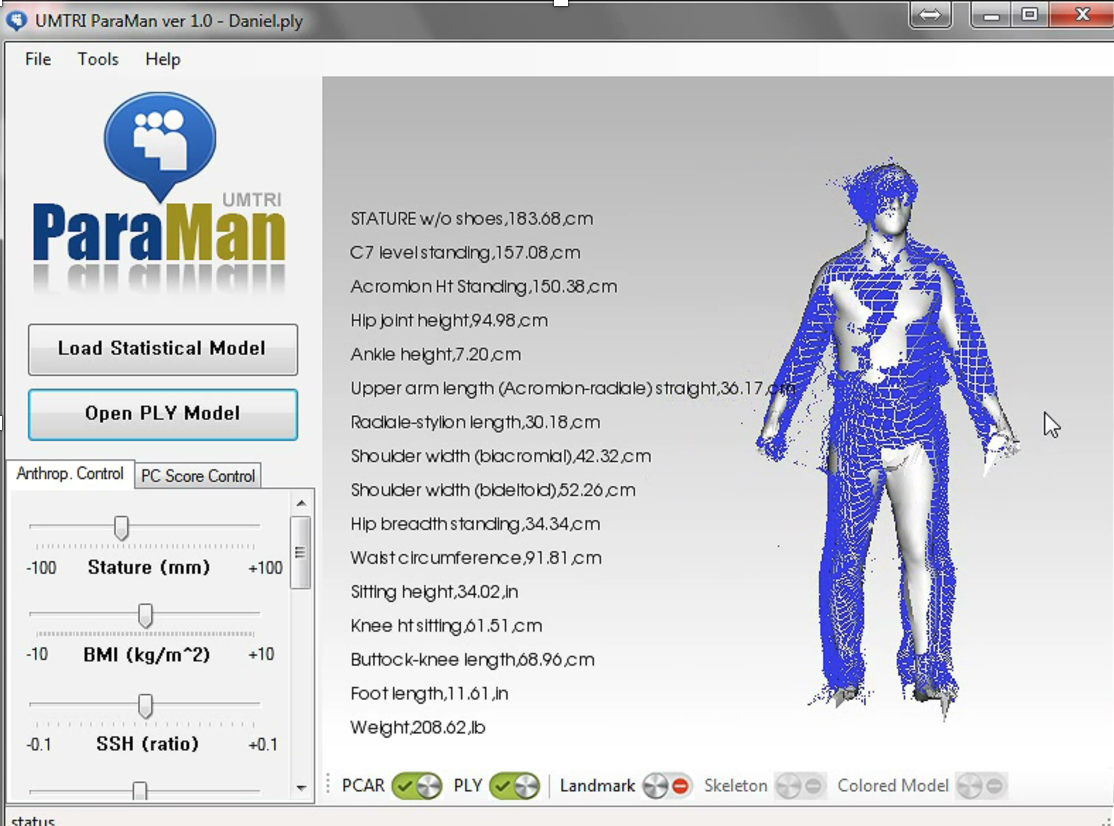
My colleague Dr. Daniel Park has been leading work on our fast, efficient PassFit human measurement system. We recently published a paper in Sensors documenting the performance of an early version of the system for estimating body dimensions of clothed individuals in a fraction of a second. (The current system is far more advanced -- these data were gathered over 5 years ago.) We have enjoyed strong support from the U.S. Department of Defense for the development of the system, due to their need for repeatable and reproducible human measurement with minimal operator training. We're currently supporting a pilot deployment of PassFit for the U.S. Air Force, focused on issuing of clothing and equipment. Near term plans include deploying the systems to recruiting stations so that prospective servicemembers can immediately know which planes they'll be eligible to fly.
My colleague Dr. Monica Jones presented a paper at the annual conference of the Human Factors and Ergonomics Society describing the methods for our YouthShape.US survey. As of Fall 2024, we have gathered very detailed body size, shape, strength, and physical activity data from over 650 children and adolescents ages 3 to 17 years. This extremely rich dataset includes over 50 manual anthrometry measures, high-resolution 3d surface scans of the head, hands, feet, and whole body dozens of postures, as well as grip strength, lower extremity power, body composition, and many other measures. This dataset is already the richest child anthropometry dataset in the world, and yet is only the pilot study for what will be a study of over 4000 children and youth by the end of 2026.
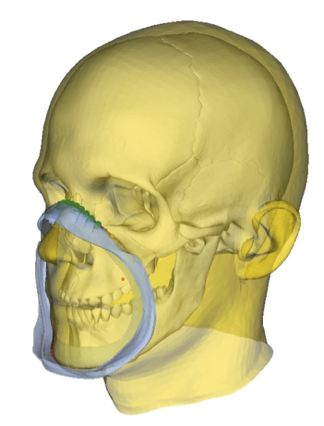
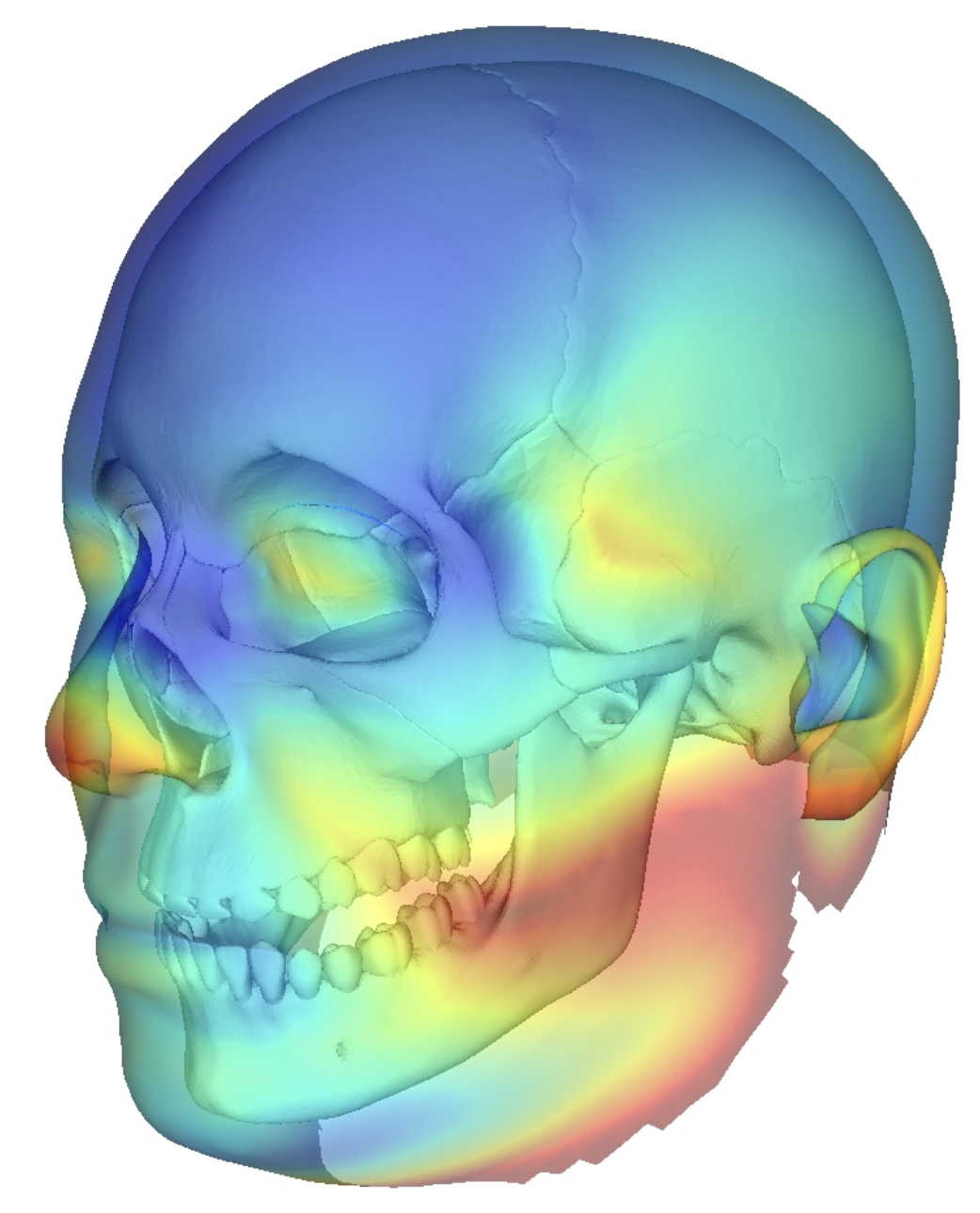
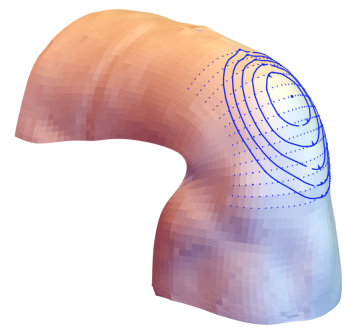
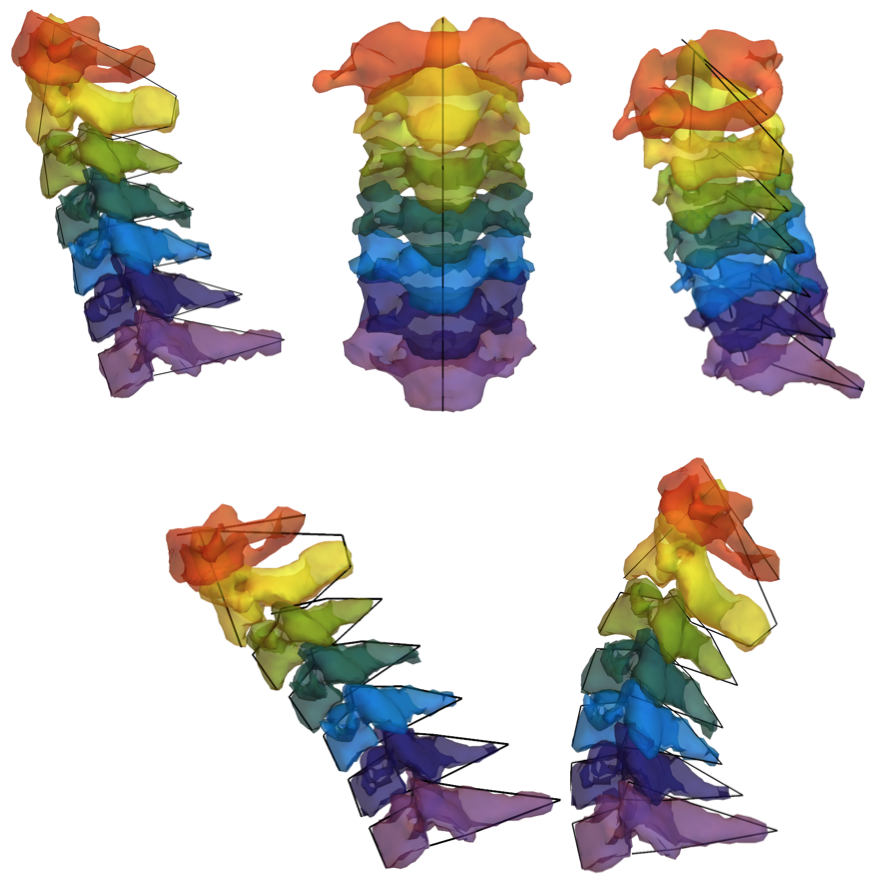
We continue to make progress on many areas of our research, including our YouthShape anthropometry survey of children ages 3-17 years (now over 550 children measured in 3D), child strength measurements (data over 800 children ages 9 months to 11 years now being analyzed), and statistical modeling of anatomical structures, including the spine, ribcage and head. The image to the right shows our new skull model. Based on 244 high-resolution CT studies (each extracted skull is over 1.5M polygons), the new parametric skull model allows us to predict with high accuracy the skull inside any head surface scan. Or vice-versa: we can predict head/face shape from the skull, a goal of many forensic analyses. Our primary application is generating a wide range of realistic heads to analyze things like oxygen mask fit for fighter pilots (a current project), VR headset fit (another current project), and concussion risk as a function of head and neck geometry. [In the image, the color scale reflects the flesh margin between the skin and the nearest point on the bone. The model accurately predicts the very thin flesh margins at the bridge of the nose and around the orbit.]
Our colleagues at SENTIR Research Labs in Dayton hosted the inaugural Biomechanics and Engineering Anthropometry Meeting (BEAM) this month. This three-day event included dozens of speakers from U.S. DOD, contractors, and other researchers who work on human safety and accommodation. My colleague Dr. Daniel Park presented an update on our PassFit portable anthropometry system that enables rapid prediction of body dimensions under normal clothing. I showed our progress integrating our detailed adult ear geometry model with a new head surface model based on hundreds of surface and CT scans. The new model provides unprecedented accuracy and detail in capturing the size and shape variability in the U.S. population. In addition to our core biomechanics and safety applications, the model will be valuable for the design of helmets and masks as well as audio products, including in-ear and over-ear headphones, hearing protection, and personalization of the head-related transfer functions (HRTF) essential to realistic spatial audio. We will be continuing this work in the coming weeks, adding data from hundreds of additional subjects. Future work will include integrating a parametric skull model, so that we can predict the skull from the surface or add a realistic surface to a skull.
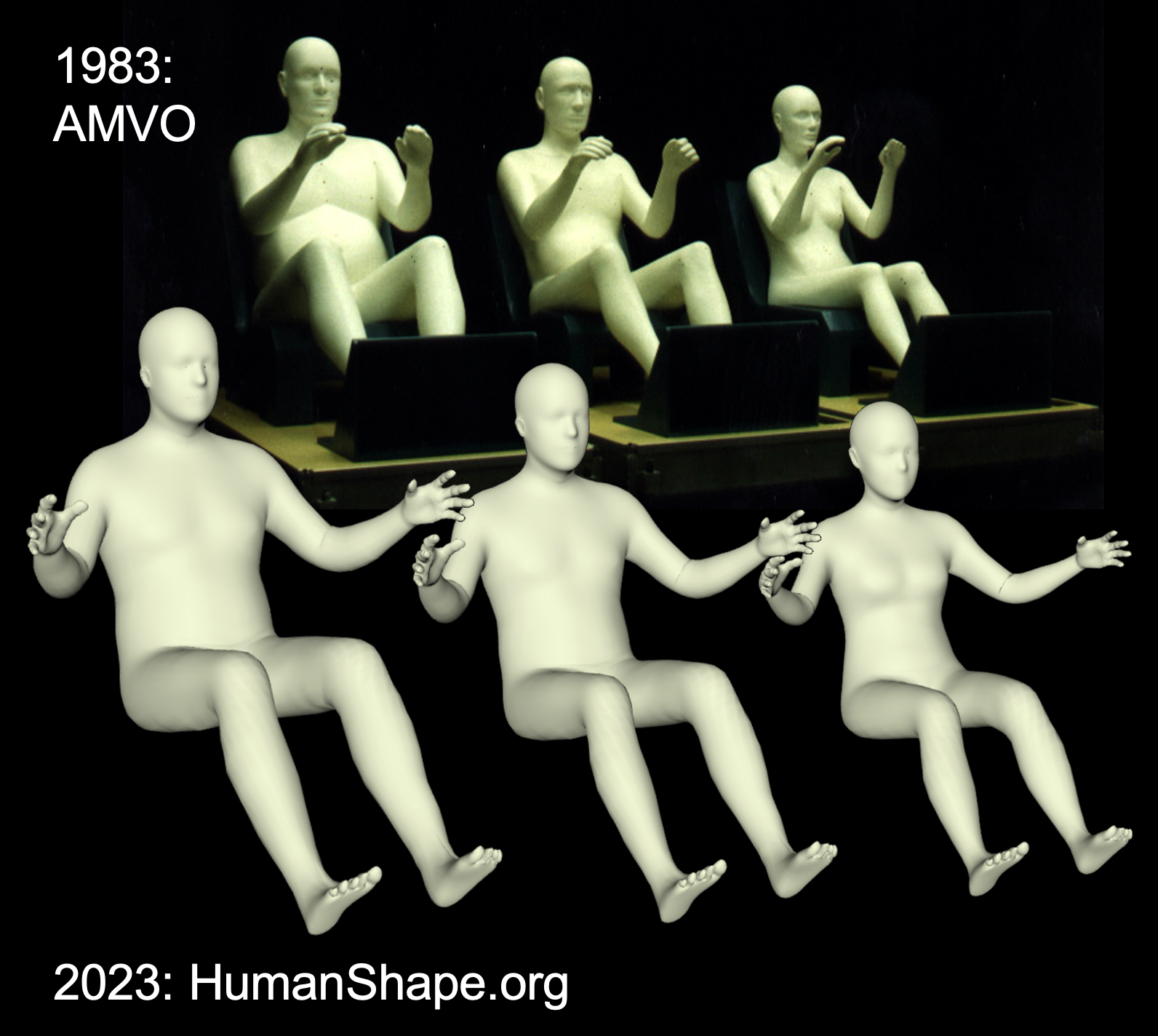
At the SAE Government/Industry meeting this month I had the opportunity to give an overview of our occupant anthropometry research, including a preview of the work we'll be doing for NHTSA over the next few years. In the early 1980s, UMTRI led the first ever large-scale, detailed, 3D study of occupant anthropometry. NHTSA funded the Anthropometry of Motor Vehicle Occupants (AMVO) study to generate anthropometric specifications for a new generation of crash test dummies. These data have been the basis for almost all adult dummies developed since that time, including the THOR and WorldSID families. Given changes in the population and dramatic improvements in measurement methodology, we're now doing "AMVO for the 21st Century". We'll be focusing on female and high-BMI occupants, since these populations have been underrepresented in AMVO and other early datasets, but we're developing open tools similar to HumanShape.org that will include accurate body surface and skeletal geometry for both male and female occupant . We expect to have results based on our existing data by this time in 2025 and results based on new data by 2026.
Last month at the HFES annual meeting, Dr. Monica Jones presented an overview of our methods for gathering data on child strength. In the past year we have gathered functional strength data from over 500 children with ages from six months to five years. Strength is challenging to measure for adults, but for children different methods are needed that depend on the level of motor and cognitive development. Dr. Jones and Sheila Ebert worked with developmental psychologists, pediatricians and other experts to develop novel methods. This work was funded by the U.S. Consumer Product Safety Commission and will provide valuable new information to inform the design of safe products.
We have been exceptionally busy even by our normally crazy standards. But we're fortunate to be able to do studies that will have major impact in future years.
Children Climbing on Dressers (Clothing Storage Units): Tip-Over Injuries
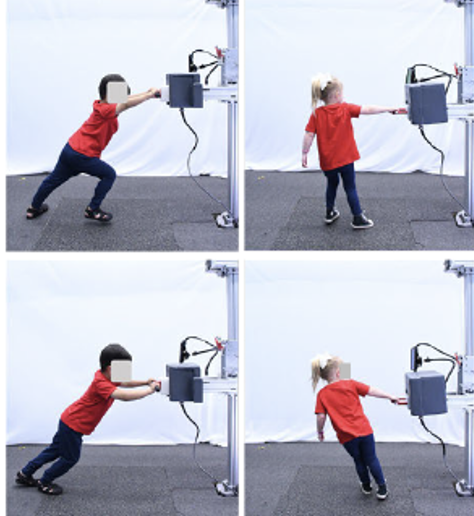
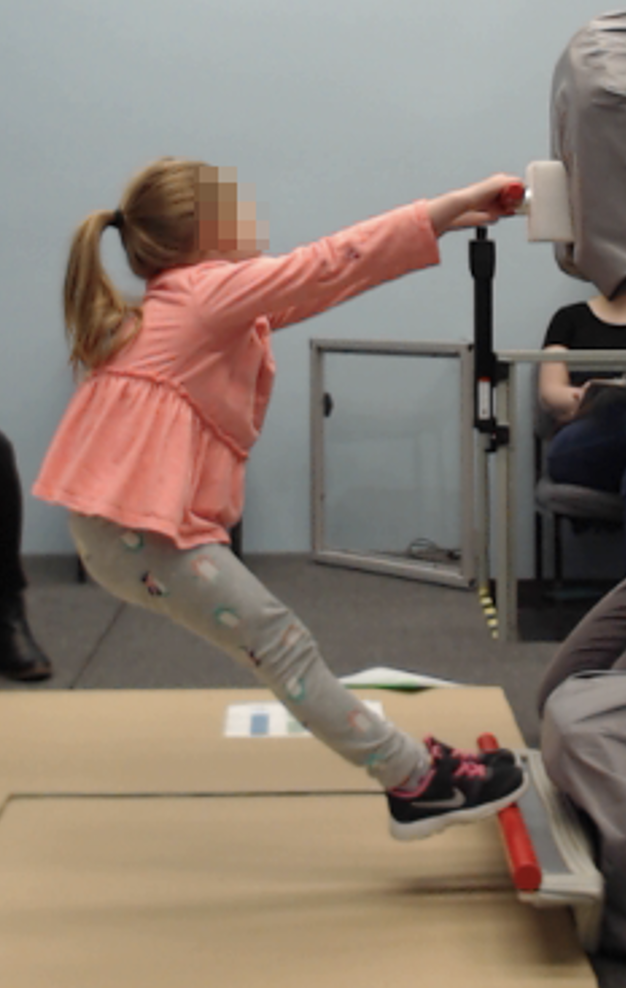
Thousands of young children every year in the U.S. are injured when a dresser they are interacting with (usually climbing on them) tips over. Beginning in 2019, the U.S. Consumer Product Safety Commission funded a study in our group to quantify, for the first time, the forces children exert when climbing. We designed a laboratory study and recorded force and posture data for 40 children ages 2 to 6 interacting with our lab fixtures in various naturalistic ways. The results of the study were cited in the development of a new regulation for clothing storage units that the CPSC issued in the fall of 2022. As these things go, the industry sued and lobbied Congress to force CPSC to instead adopt a much weaker, industry written ASTM standard. But the overall story is still a success: clothing storage units (dressers) will be safer under the new mandatory standard than under the earlier voluntary standard. Moreover, our research highlights the reality that children can easily exert forces on furniture that greatly exceed the values in the standard. Our report on this work appeared in the Federal Register in 2022 and is now available at U-M.
Ear Geometry Modeling for Audo and Other Applications
The technical report on our recent ear geometry modeling effort is now available online. Prior studies have used primarily landmark-to-landmark measurements rather than a three-dimensional analysis. We extracted 331 ears from CT studies of 224 people and developed a high-resolution statistical shape model capable of highly expressive representation of a wide range of ear size, shape, and location. Principal component analysis demonstrated a large amount of variance not previously quantified in the position and orientation of the ears with respect to the skull. A regression analysis confirmed previous findings of sex differences in the increase of ear size with increasing age and demonstrated an effect of body mass index on ear position and orientation that has not been previously described. A boundary method in principal component space was used to generate a set of ears suitable for designing devices for which the ear position on the head is important. Boundary ears were also generated in pinna-centered coordinates for applicability to in-ear device design, demonstrating the flexibility of the dataset and analysis methodology. To our knowledge, this study developed the largest and highest-resolution database of human ear geometry, the first to be measured in head-centered coordinates, and the first to include the geometry of the canal to the ear drum.
A few updates on some of many projects my colleagues and I are currently working on:
Female Body Armor Fit
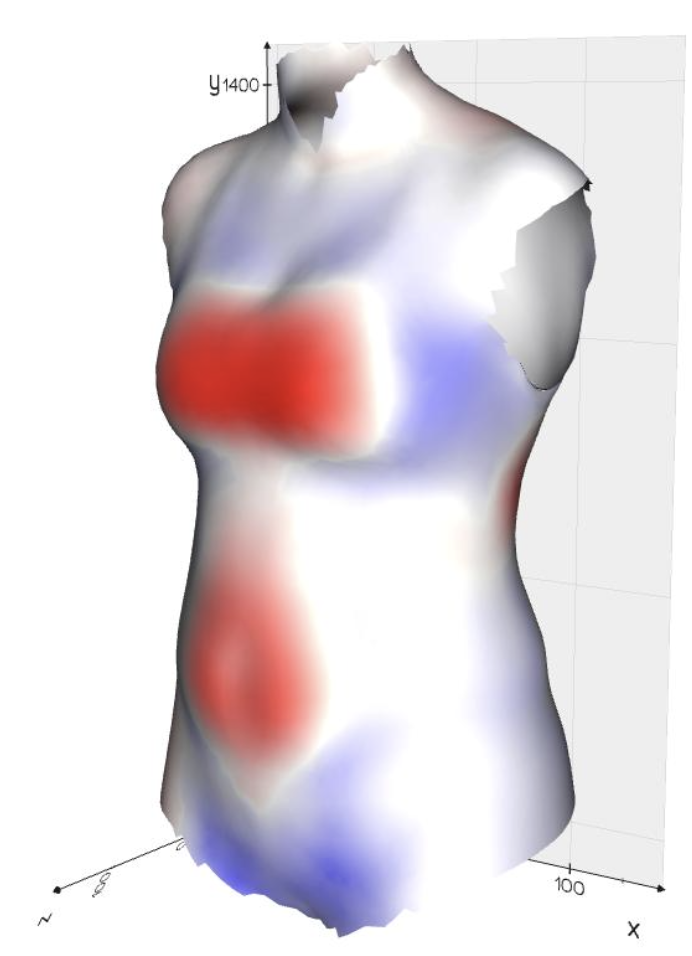
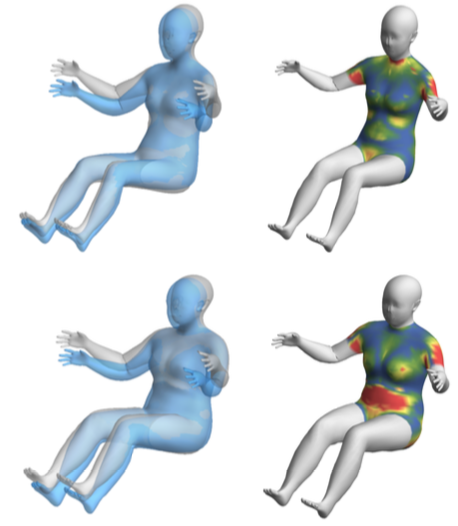
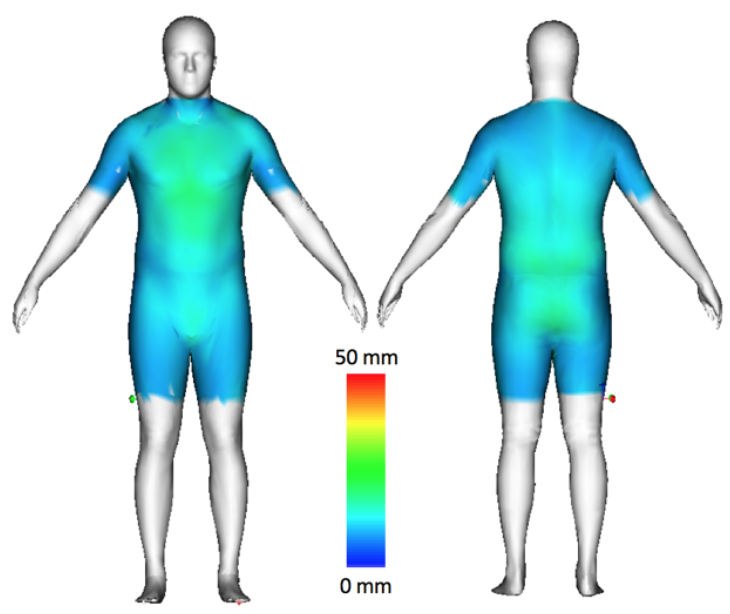
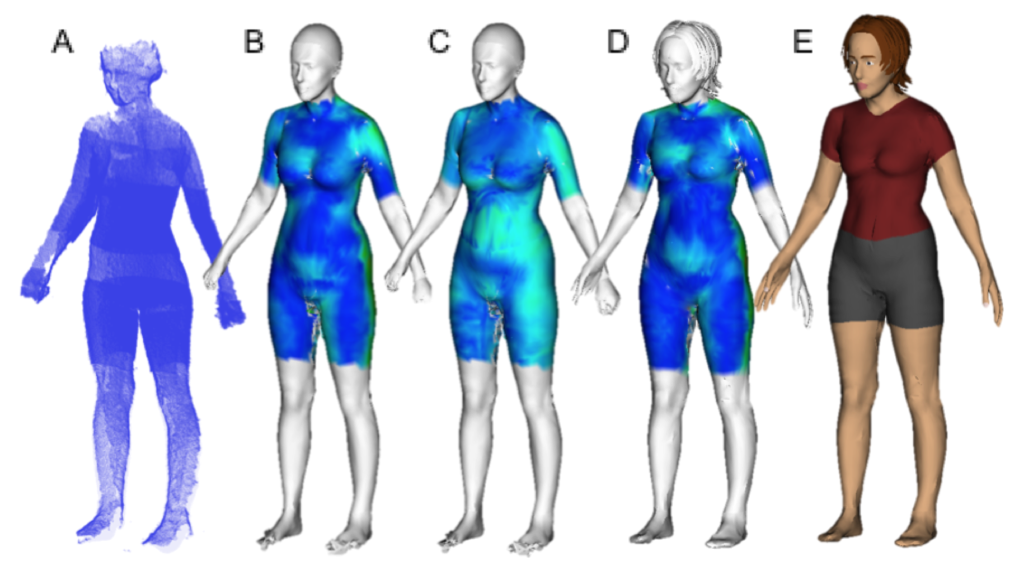
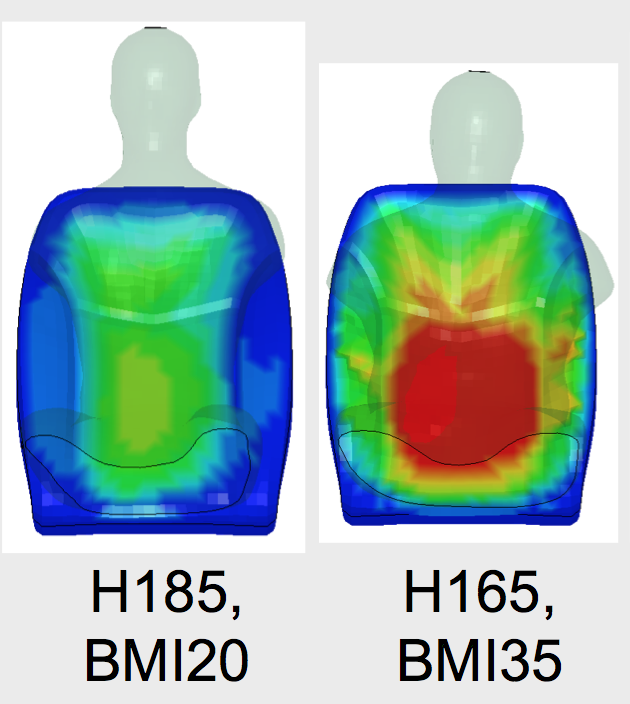
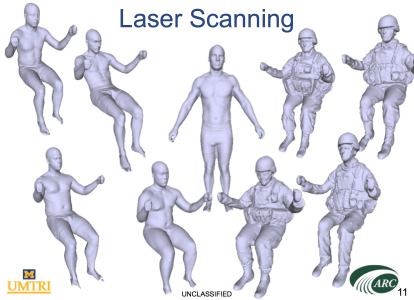
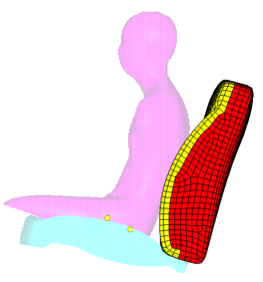
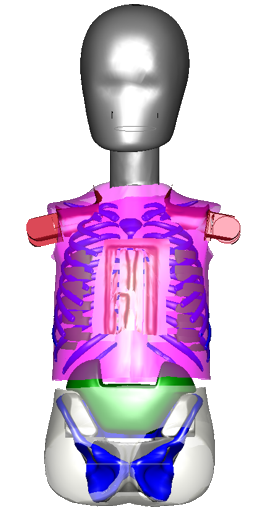
We're wrapping up a study for the U.S. Army Natick Soldier Center looking at issues related to body armor for female warfighters. In spite of a couple of decades (at least) of attention to the issue, complaints from the field indicate that body armor systems still don't work well for some women. In reviewing the literature, we found that minimal knowledge was available on the basics of the interaction between the torso and the body armor, so we focused our attention on developing methods to quantify that. This Phase-1 project included a laboratory study using 3D laser scanning and careful posture control to create the first-ever statistical model of torso deformation under body armor. We also developed a parametric finite-element modeling framework capable of simulating torso/plate interactions accurately.
We're wrapping up a study for the U.S. Army Natick Soldier Center looking at issues related to body armor for female warfighters. In spite of a couple of decades (at least) of attention to the issue, complaints from the field indicate that body armor systems still don't work well for some women. In reviewing the literature, we found that minimal knowledge was available on the basics of the interaction between the torso and the body armor, so we focused our attention on developing methods to quantify that. This Phase-1 project included a laboratory study using 3D laser scanning and careful posture control to create the first-ever statistical model of torso deformation under body armor. We also developed a parametric finite-element modeling framework capable of simulating torso/plate interactions accurately.
Ear Geometry Modeling
The shape of the human ear is of increased interest due to the importance of spatial audio for virtual reality applications. A person's ear and head shapes alter the way the sound reaches the ear drum on each side of the head, enabling people to very accurately locate the direction and distance of sounds. The head-related transfer function (HRTF) or equivalently the Head-Related Impulse Response (HRIR) describe quantitatively the ways that a particular person's anatomy affects the sounds reaching their eardrums. Knowledge of a each person's anatomy is needed to provide them accurate spatial audio through binaural headphones. Prior work on quantifying the variability in human ear shapes has focused primarily on point-to-point dimensions on the pinna (external ear) and to a lesser extent on outer ear canal geometry based on molding techniques that have been used for decades to create custom hearing aids and other in-ear devices. Drawing on our expertise in medical imaging data, we have created a new best-in-class model of ear geometry that incorporates the head, scalp, pinna, as well as the entire ear canal to the ear drum. The new model, based on data from hundreds of people, will provide an unprecedented ability to design audio experiences for the entire spectrum of head and ear shapes. We hope to integrate the new ear model into our head model to create new audio design tools.
Last year, my colleagues and I published the first large-scale naturalistic study of front-seat passenger postures and behaviors using a vehicle interior camera. Although it was not the focus of the study, the video also included views of the rear seat passengers. We coded the video using the same techniques we'd applied to the front seat and were able to describe some interesting aspects of rear occupancy and behaviors. One of the more notable findings was a dramatically lower second-row belt use rate in two ride-hailing (Uber) vehicles that were included in the study. This has concerning implications for potential future mobility if ride-hailing begins to account for a larger proportion of trip. This paper was presented at the AAAM annual meeting and i Traffic Injury Prevention.
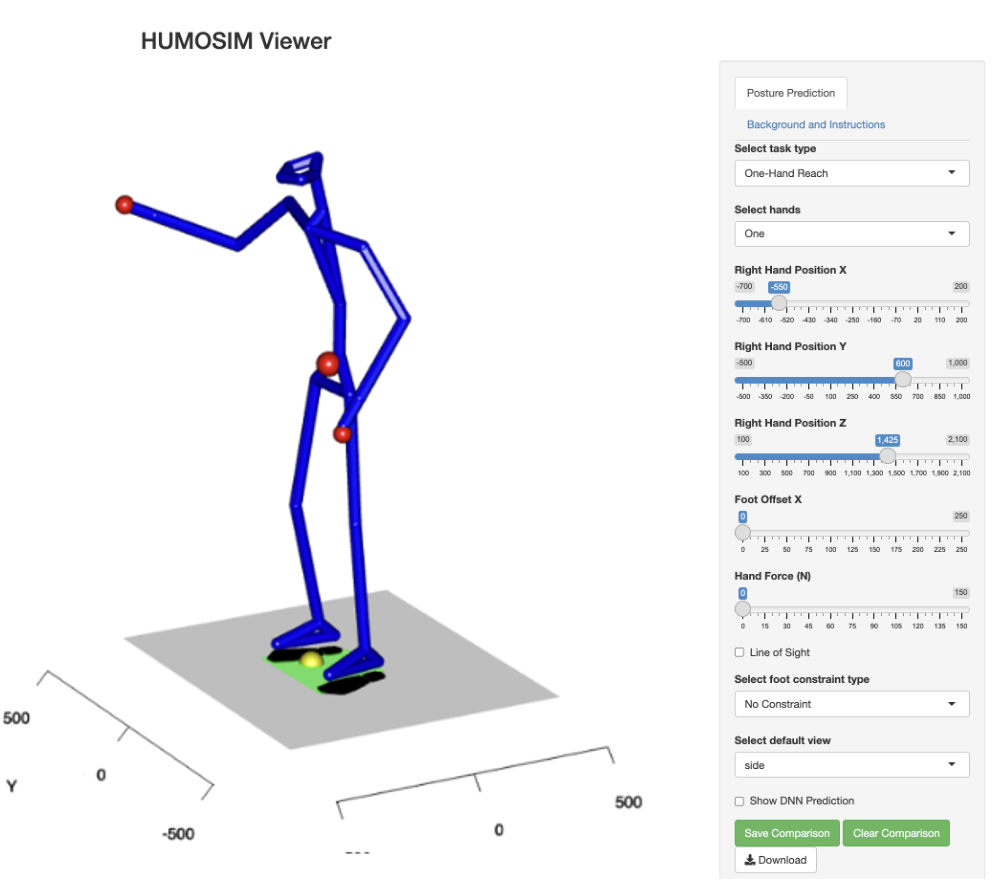
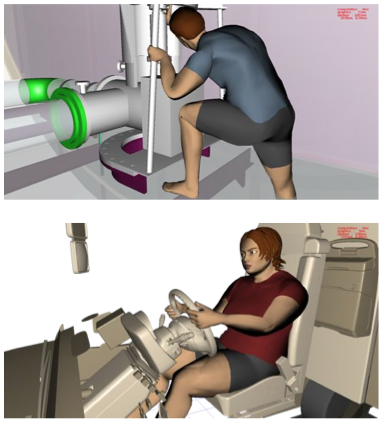
At the Human Factors and Ergonomics Society annual meeting this month, I presented a paper in an occupational ergonomics sesssion on some playing around I've been doing with machine learning and large posture datasets. This paper gives an overview of a deep neural net regression model that predicts standing task postures from anthropometry and task parameters (hand locations with respect to the feet, hand forces, and a few other variables). The data were gathered in two large-scale studies led by my colleagues Dr. Monica Jones and Dr. Clive D'Souza. The DNN models were fit inR using the Keras library. What's more interesting is that I have created an online demo with downloadable output. The demo was written in R using Shiny. The implementation of a prediction model like this in human modeling software used for ergonomics analysis is critical, because the predictions are never quite consistent with the physical requirements of the task. The Humosim Framework approach uses inverse kinematics and optimization to match the predictions as well as possible while also respecting the kinematics constraints and maintaining balance. This proof-of-concept could lead to more useful implementations, in part through incorporation of more data. The extension to motion is straightforward; we have 10s of thousands of motions in our database that could be used for training.
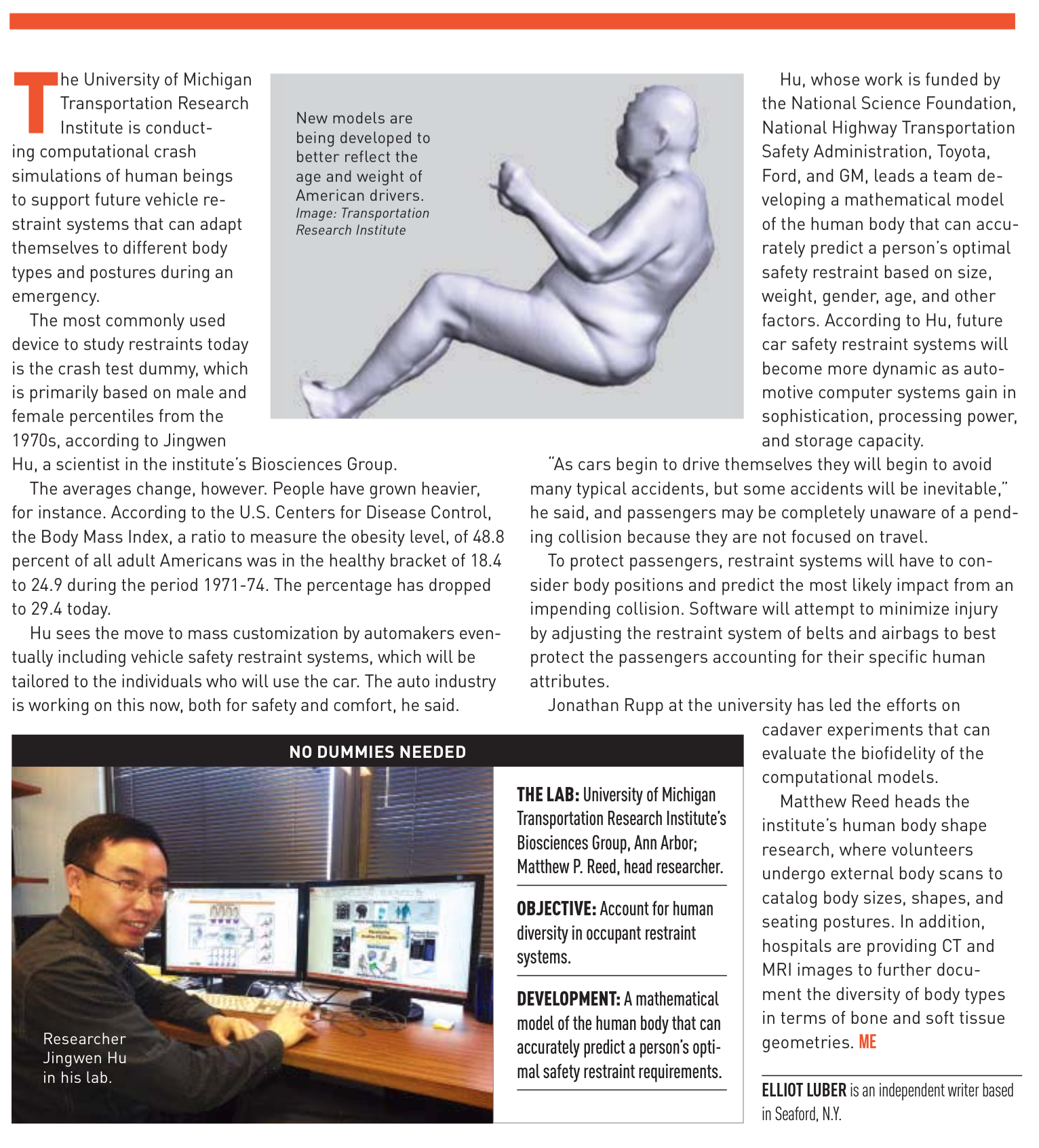
The IRCOBI conference in Porto marked our first public presentation of the new Hermes™ finite-element human body model developed in our group. Led by Dr. Jingwen Hu, a large team has been working for over a decade to develop a rigorous research foundation for a fully parametric, efficient FE model for population-based optimization of safety systems. Conventional FE human body models are too complex and hence too slow to use for large-scale optimizations, but Hermes runs approximately 4x as fast as the "fast" models currently in use. We achieve this by using a carefully constructed mesh designed from the start to be morphable to nearly any adult body size and shap. An interactive representation of the Hermes™ geometry is now available online. A downloadable version will be available soon.
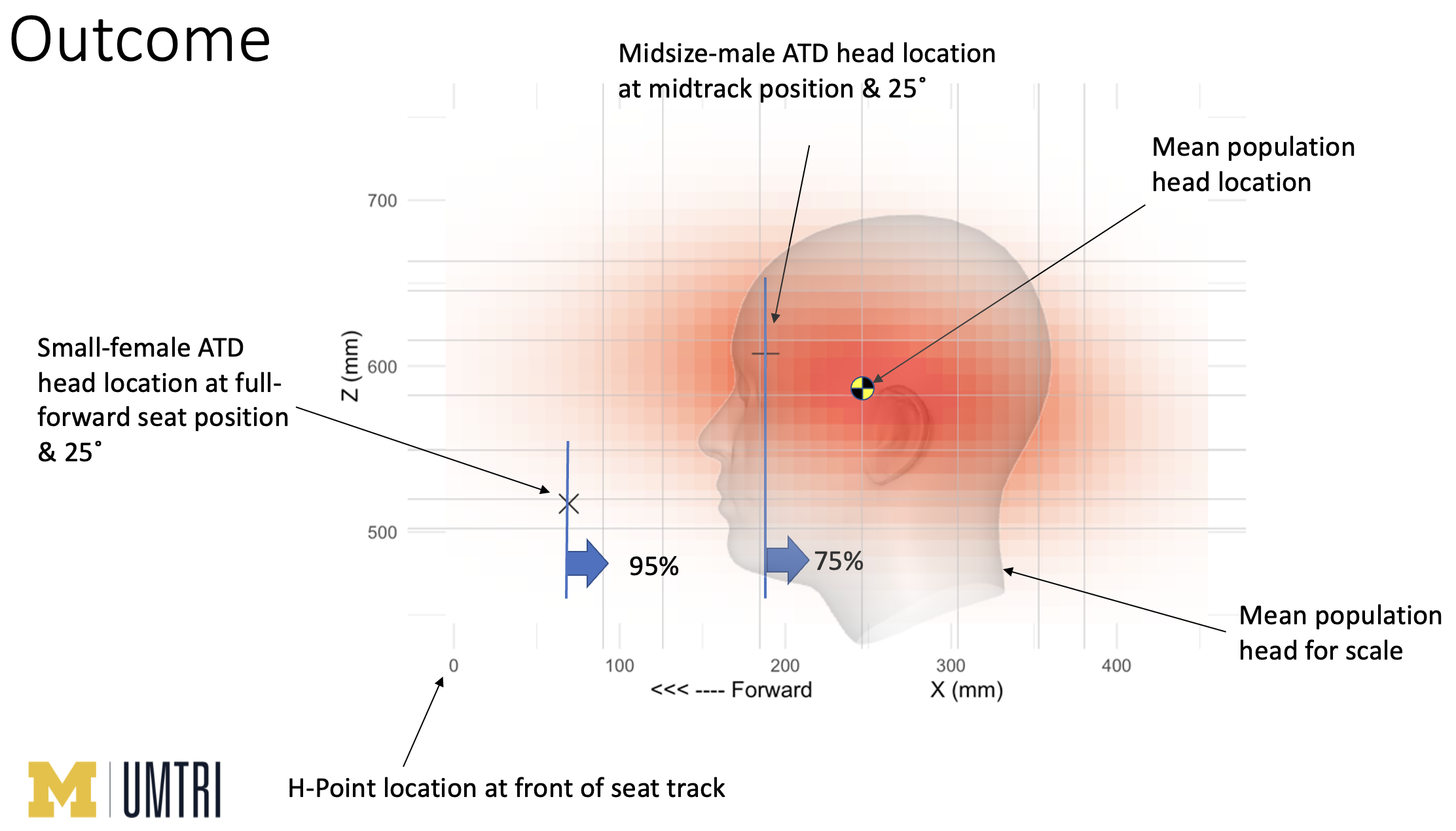
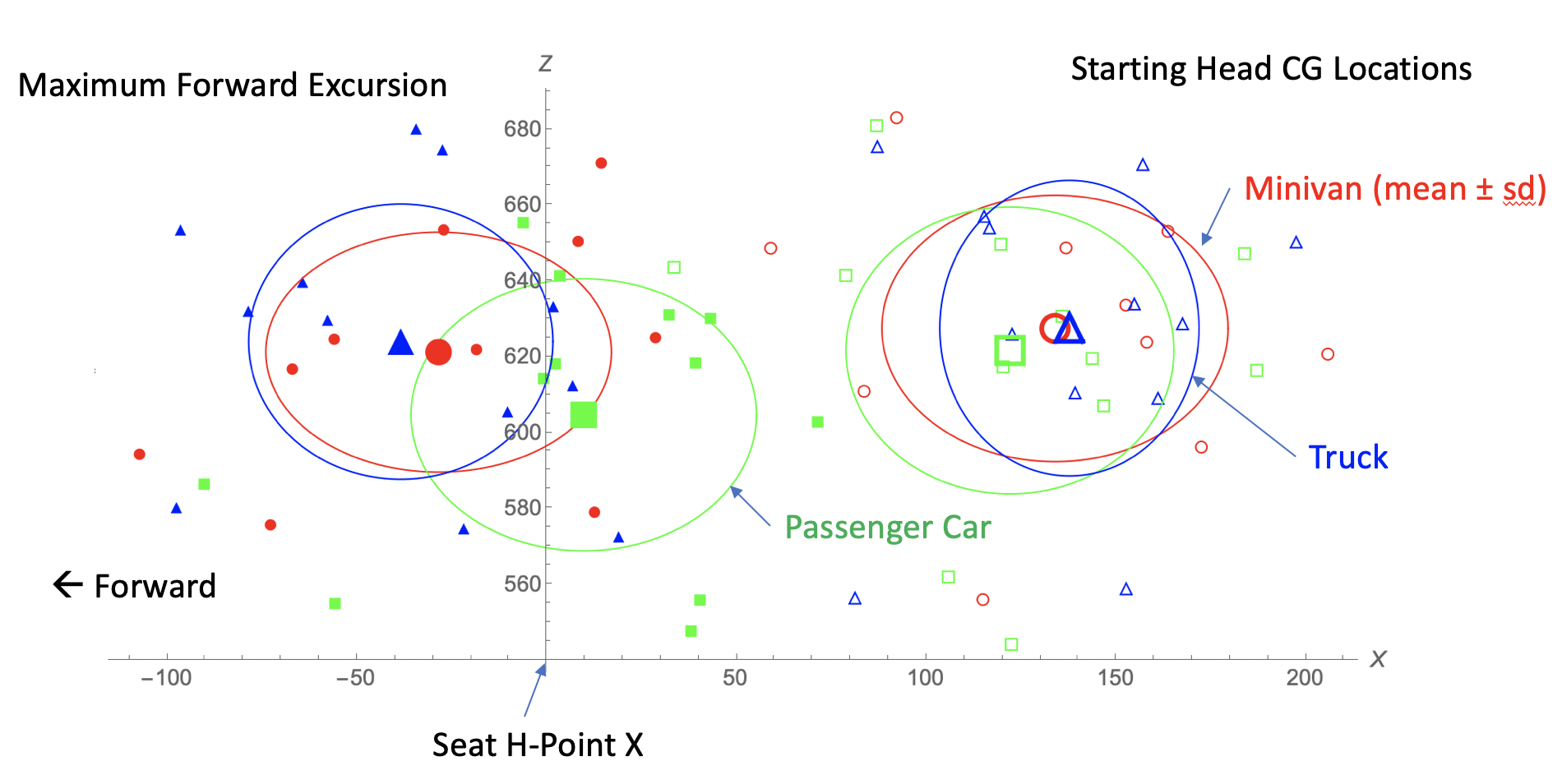
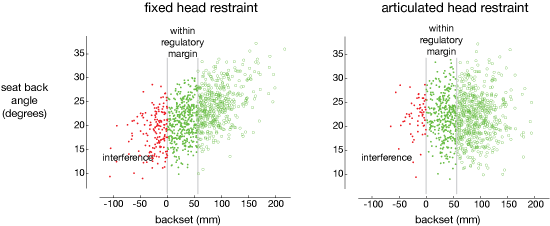
At the annual IRCOBI conference in Porto, I presented two short communications based on our work in the Biosciences group. Using data from two previous studies, I presented a statistical model of front-passenger head location. A large amount of work from our lab and others has quantified driver head location, and to a lesser extent head locations in second-row, fixed seats, but no prior studies have presented empirical data on front passenger head location. I combined seat position and seat back angle data from a recent naturalistic study conducted in 75 vehicles with volunteer data from a lab study. For this injury biomechanics conference, I compared the head locations of the ATDs used in crash testing with the actual passenger head locations (in nominal postures). Of course, we've previously documented the large range of non-nominal postures and the effects of abrupt vehicle maneuvers on passenger postures. The range of likely pre-crash passenger postures is much larger than the range used in regulatory and consumer information testing.
We haven't been doing as much child passenger safety research as we did from 2005 to 2015, but we recently collaborated with CDC and Westat on a study of child posture and belt fit in second row seats. Our role was in training the study team and analyzing the results. The study, published in Traffic Injury Prevention, is similar to some of our previous work, but used a more diverse population of children. As we have demonstrated previously, being a certain stature (say, 4'9") does not guarantee a child good belt fit. Instead, belt fit must be assessed individually. We are cautiously optimistic that new dynamic consumer information testing with a small female ATD in second-row seats will improve belt geometry, benefiting all occupants in those seats.
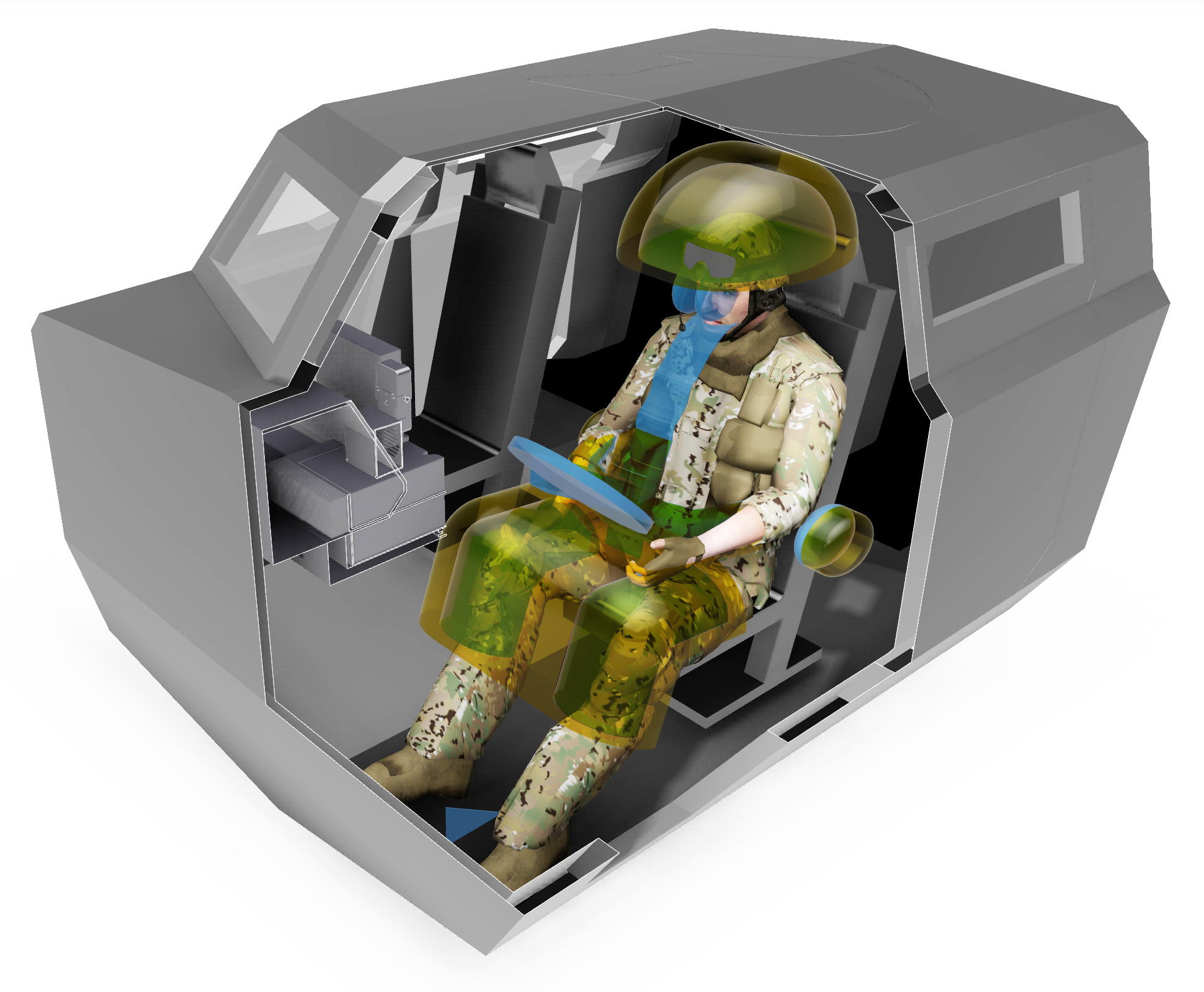
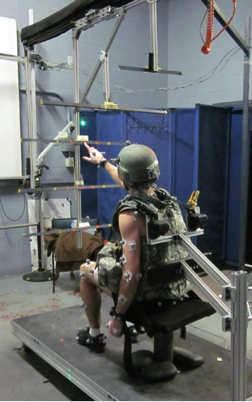
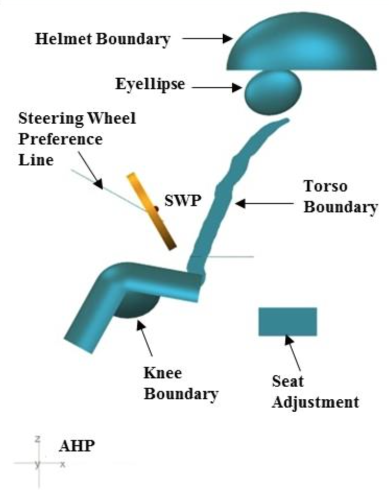
I'm very proud of the research program that we're leading for the U.S. Army that is creating a modern suite of tools for human-centered design of vehicle interiors. Now in its 10th year, this program has been funded by the Army's Ground Vehicle Systems Center (formerly TARDEC). Through the program, we have measured posture and position of over 1000 people, including over 750 soldiers, in a wide range of vehicle seating conditions. Using statistical models we created from the data, our collaborators in the Army have developed a suite of CAD tools that enable vehicle designers to readily account for the distribution of body size in the Army, taking into account the effects of body armor and body borne gear. This is a radically new paradigm for military vehicles, which have typically been developed using the 1950s-style guidance in MIL-STD 1472. With this program, U.S. military vehicles now have a more advanced suite of human-centered design tools than any other vehicle category, including road, agriculture, and construction vehicles. This new approach offers considerable potential for these other domains as well.
As the design tools pass the Army's verification and validation process, they are published online for all to use. See examples: Soldier Accommodation Models
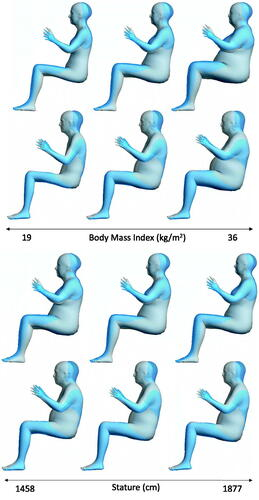
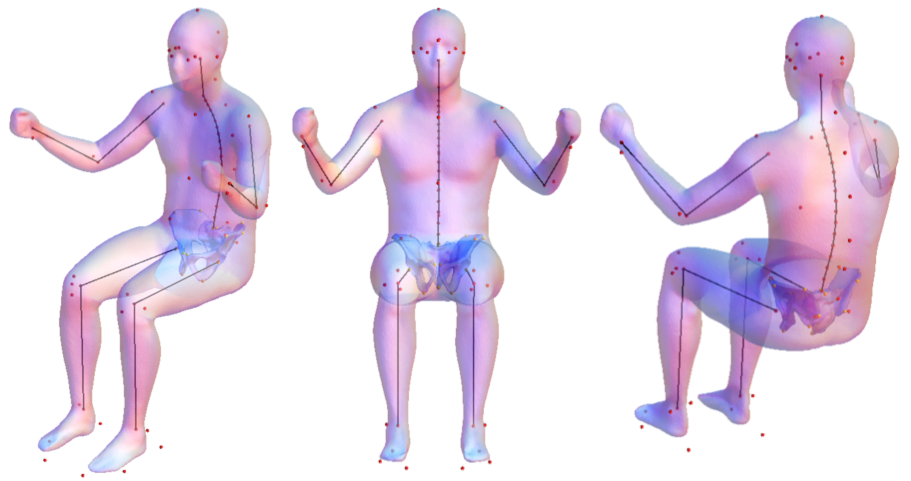
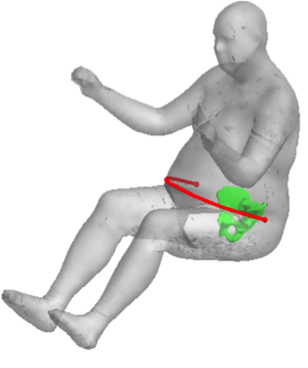
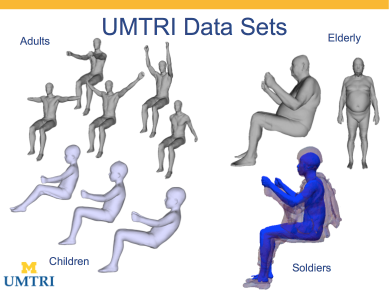
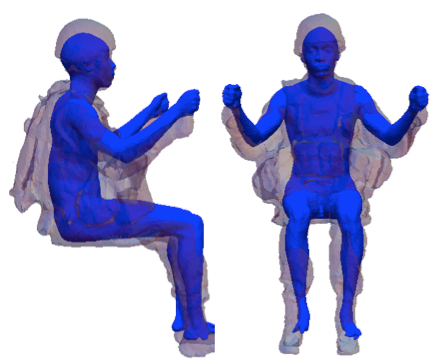
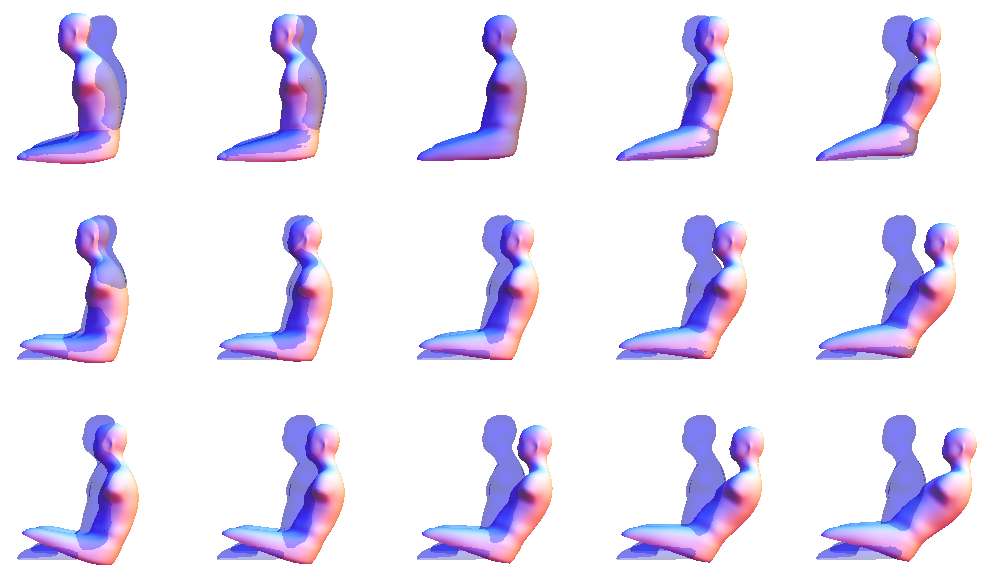
Our 3D anthropometry team, including my colleages Dr. Daniel Park andDr. Monica Jones, have published the first whole-body parametric human body model for supported seated postures. This is also the first published body shape model for seated postures to include a rigorously derived effect of age. Since nearly all design applications in seating involve backrest support, this closes a large gap in the literature. This stream of research goes back 20 years, to early modeling using the CAESAR dataset. Our first model for seat and chair design was published in 2008, but that model was limited to the torso area. The recently published model was developed about 2016, but it took us a few years to get around to reporting it in the journal literature. Meanwhile, our group has made extensive use of seated body shape modeling in parametric human body modeling. A related model has been available at HumanShape.org for a few years. An additional publication is in the works that demonstrates parametric posture change driven by validated posture-prediction models.
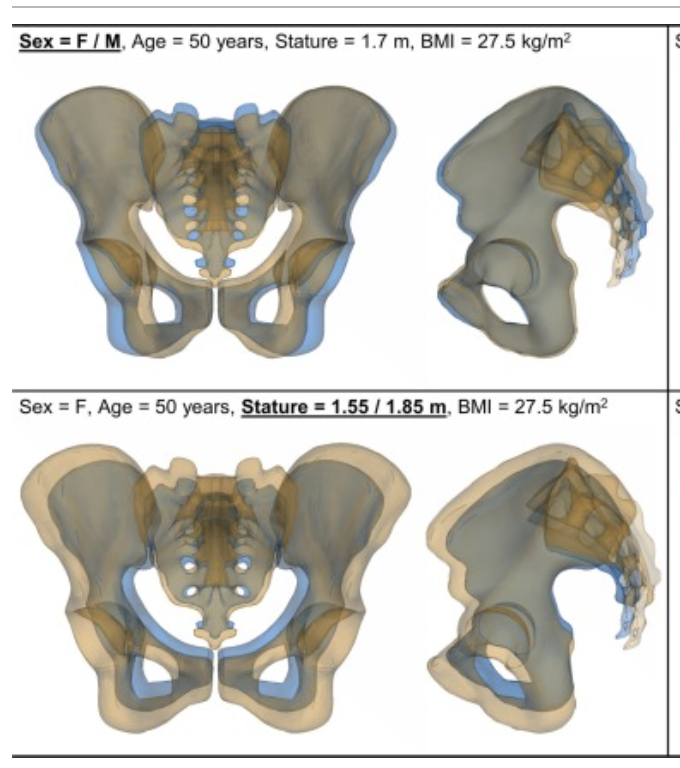
Erik Brynskog, a PhD student at Chalmers University in Sweden, has just published what is currently the best-available statistical model of pevis geometry. Using a dataset of geometry extracted from CT studies that was originally developed by Katelyn Klein and other UMTRI researchers, Erik digitized a much larger landmark set, enabling a considerably higher-resolution model of the pelvis. He also used a sparse PCA method in place of the conventional PCA, which will allow him to study local variability in pelvis shape more directly. Expect to see much more from Erik as he publishes the local shape analysis and considers how pelvis variability may affect restraint interaction and injury risk.
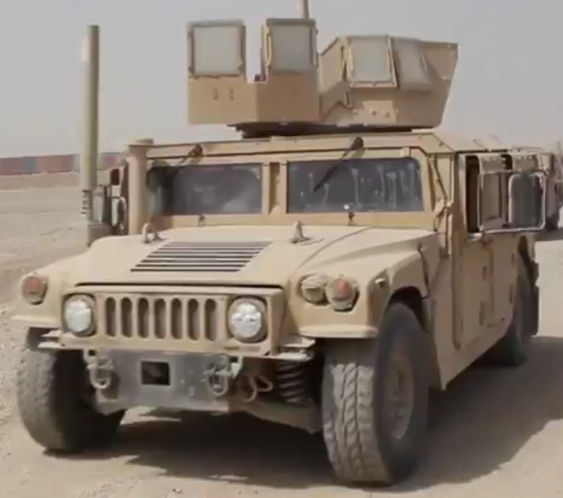
My colleagues Kyle Boyle, Nikki Orton, and Jingwen Hu recently published a paper describing new research aimed at improving crash protection for occupants of military ground vehicles. This is part of a long-running series of studies aimed at improving military vehicle design from a human-centered perspective, which has included contributions to new test dummy design, the development of a large range of vehicle interior design models based on occupant posture and space claim, and crash safety research including sled testing and full-vehicle testing.
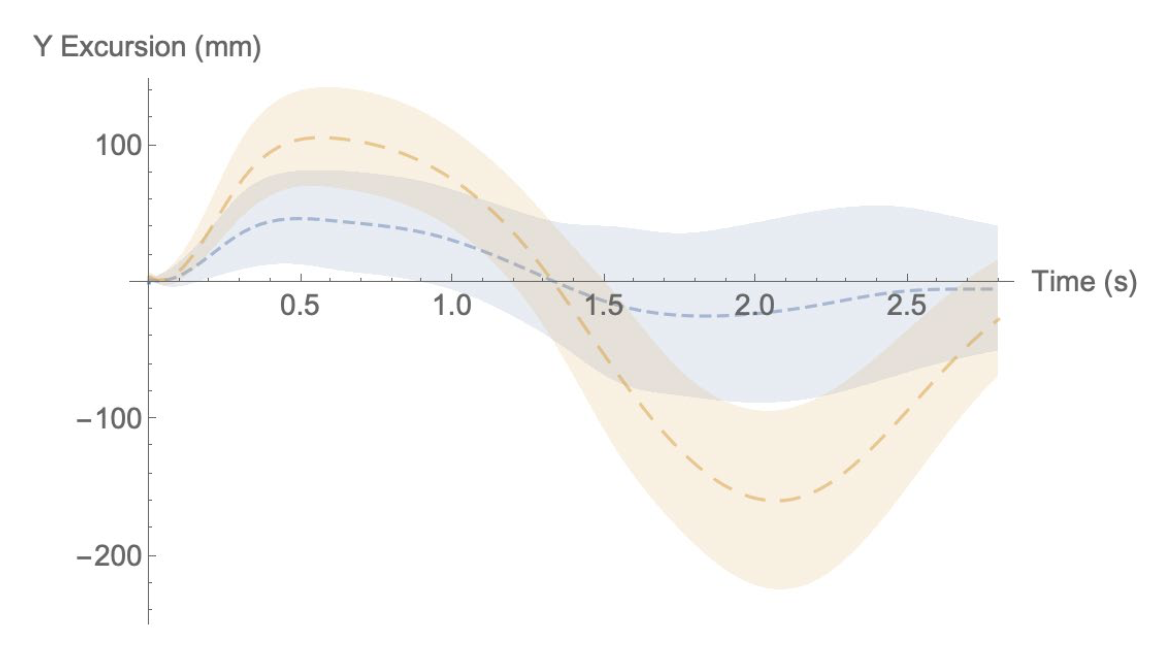
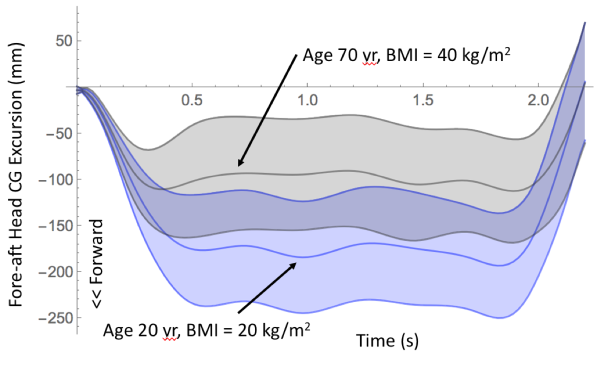
NHTSA has published our report on the effects of abrupt vehicle maneuvers on front-seat passengers with a wide range of initial postures. In the first part of the study, we tested 12 participants in three different vehicle models using the same protocols we'd used in an earlier study. We found differences in head exursion in one vehicle, but overall the results were similar. We then ran a large-scale, test-track study to examine the effects of initial posture on head kinematics in braking and lane-change maneuvers. The study with 90 participants documented the effects of recline, leaning forward, leaning inboard, and seat position. We used a functional regression approach to generate corridors for head excursions. To our knowledge, this is the first use of both a sample of this size and functional methods to quantify this important variability in pre-crash posture.
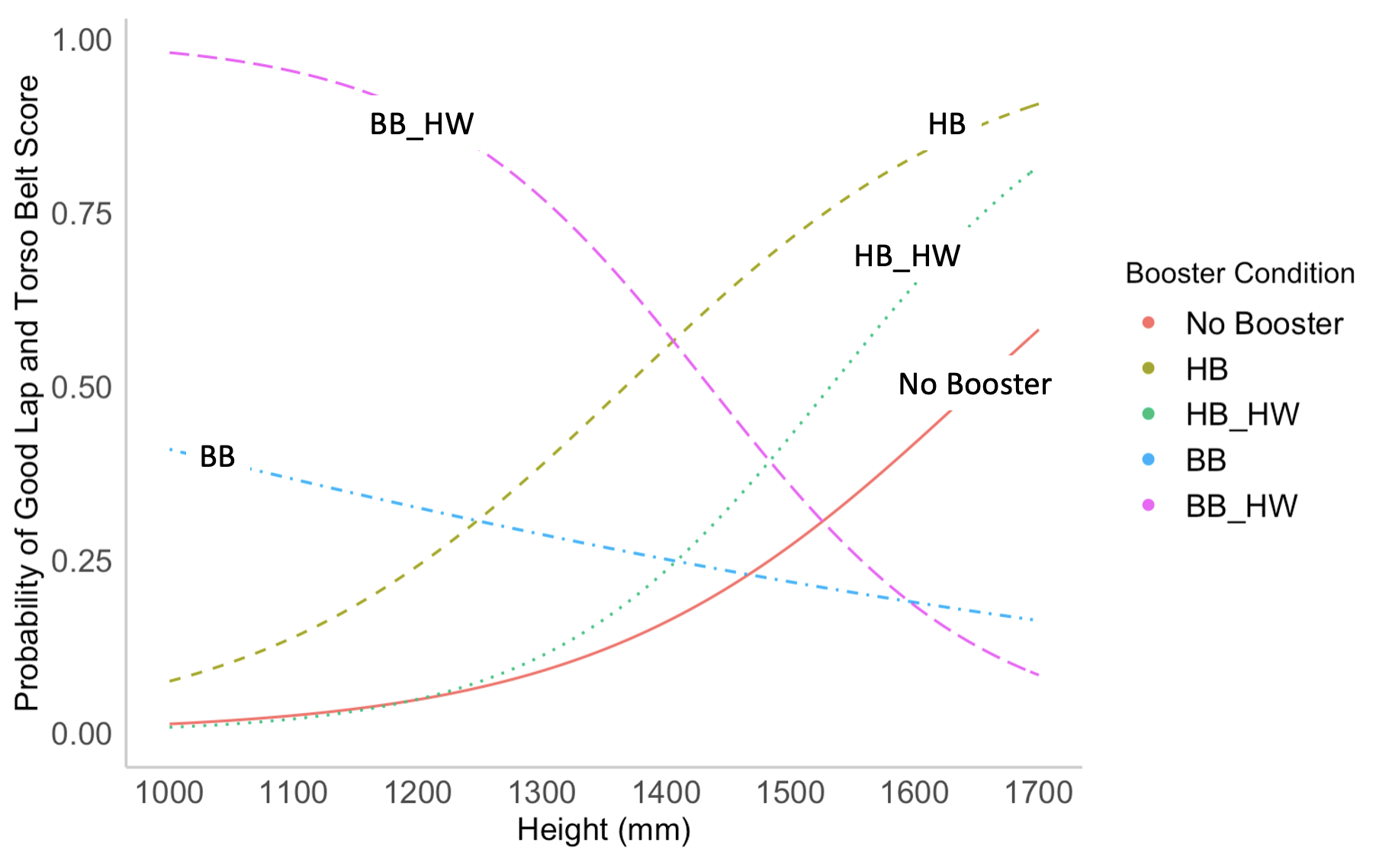
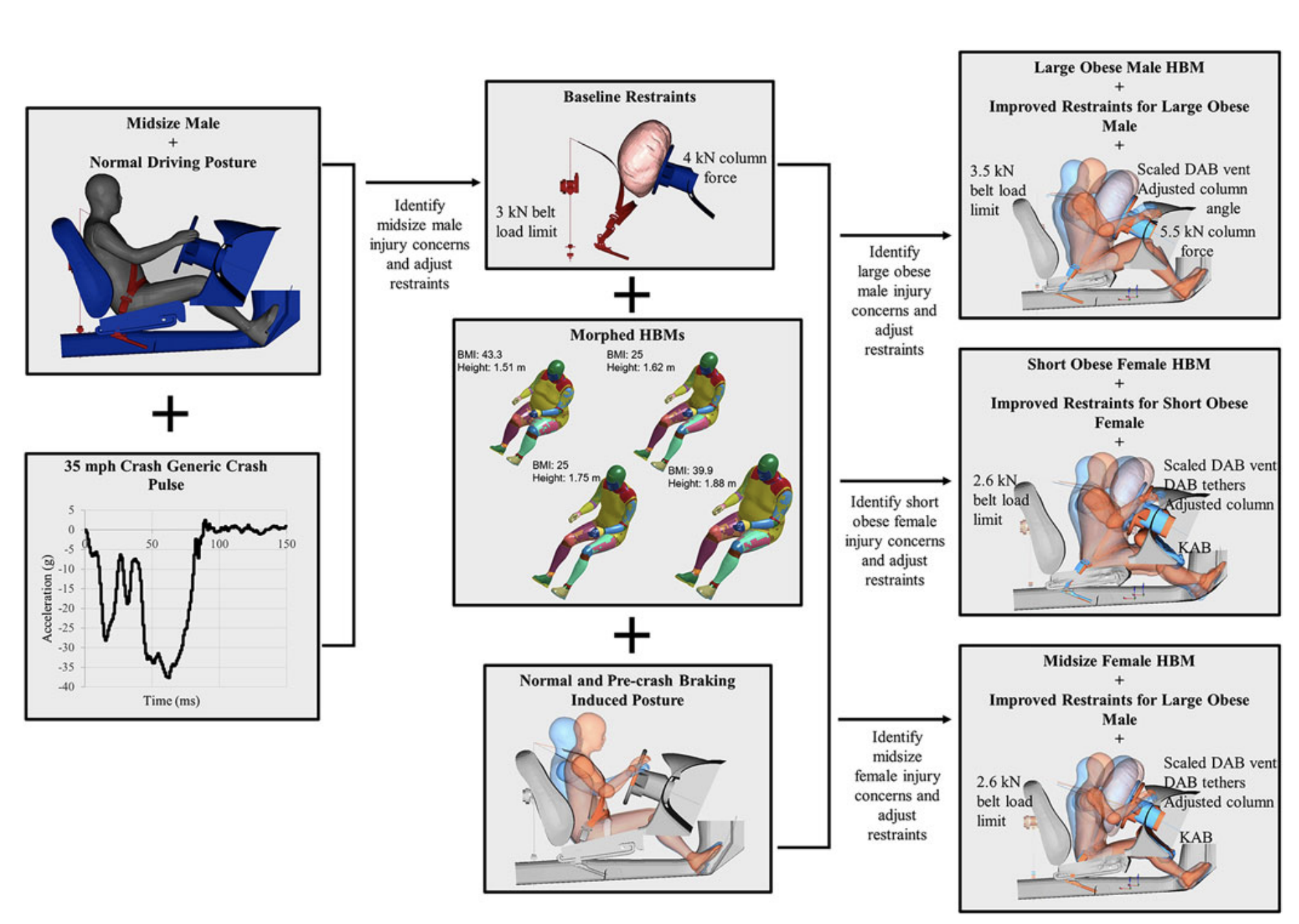
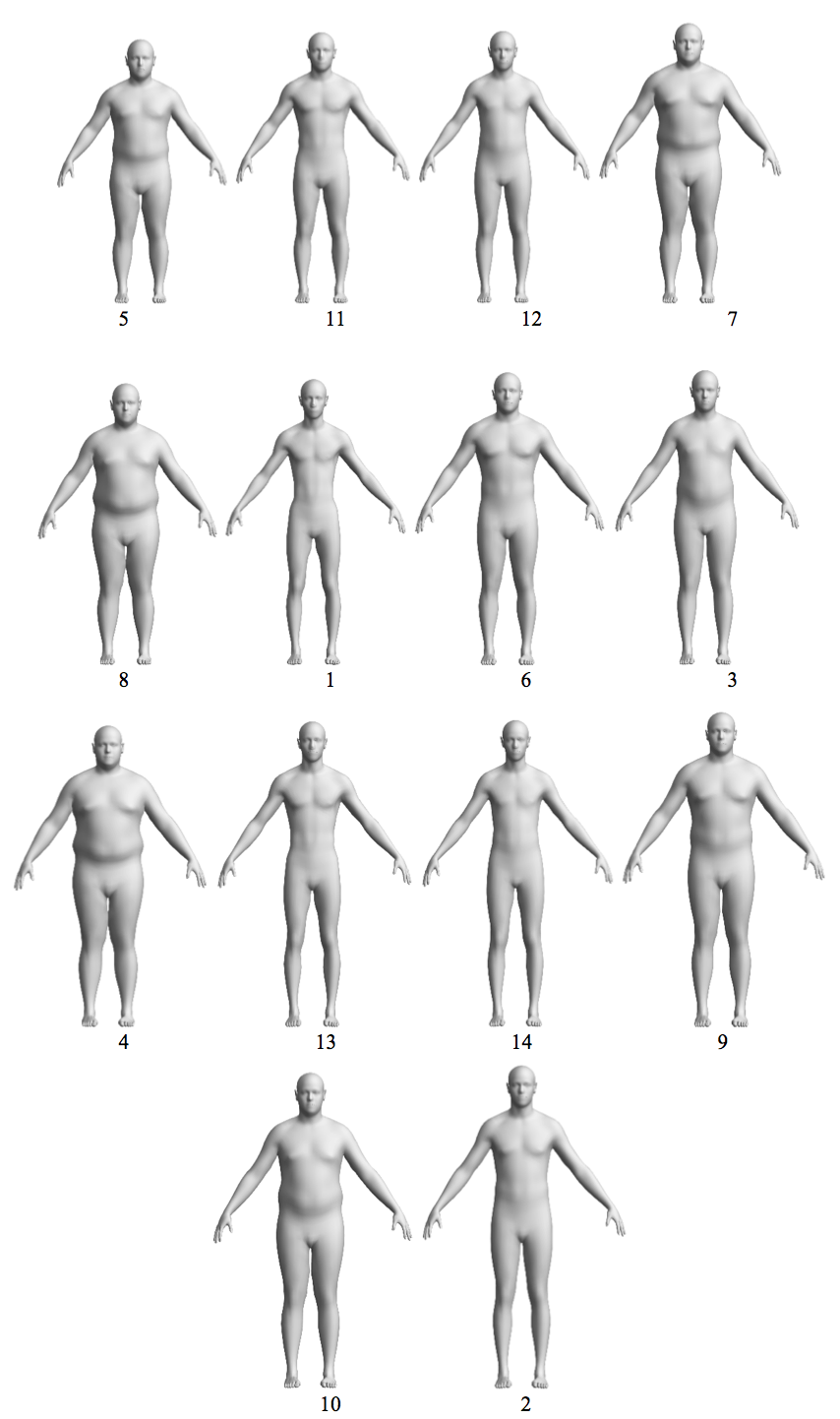
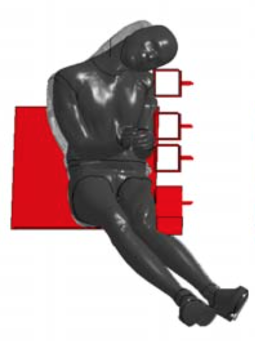
Our human modeling team, led by Dr. Jingwen Hu, published another paper documenting our application of parametric human body modeling to improving vehicle occupant restraint systems. This is the first analysis of the effects of pre-crash driving posture to take into account variability in both stature and BMI. It's also the first paper we're aware of to conduct human body model simulations with a midsize-female occupant. (Most prior work has used only a so-called "5th-percentile female" occupant that is very small for a driver in the US.) The simulation results demonstrated that body size and shape have larger influences on frontal crash outcomes than pre-crash posture over the ranges studied. The two obese models experienced higher levels of lower-extremity injury risk, consistent with results from the field. Now that more than 40% of US adults have BMI > 30, continuing to optimize restraints for crash test dummies that represent occupants with BMI < 25 is increasingly unrealistic. Parametric human body modeling allows a wide range of occupant sizes and shapes to be generated quickly so that restraint systems can be optimized for more realistic occupant populations.
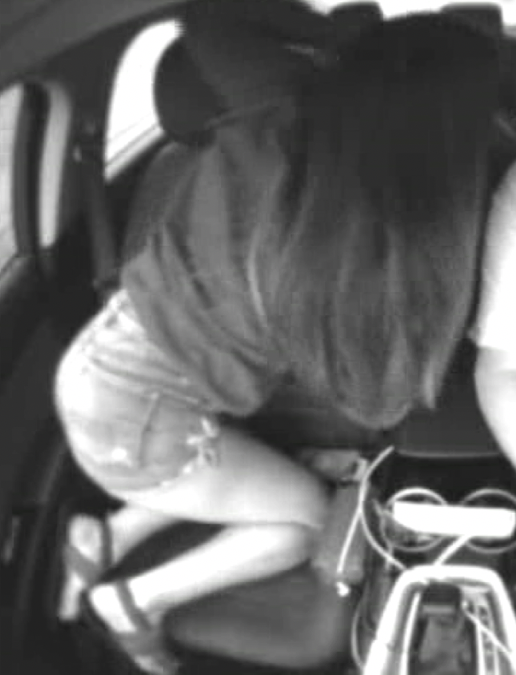
At the AAAM conference this month, I presented an overview of findings from the first large-scale study of road vehicle passenger behavior. This was an update on a presentation I gave at the 2020 SAE Government-Industry meeting. The AAAM presentation is based on a publication in Traffic Injury Prevention focused on non-nominal postures. Currently, most evaluation and optimization of restraint systems is performed using crash test dummies (or computational versions of these dummies) seated in nominal postures, usually in the middle seat position with a seat back angle between 23 and 25 degrees. We have previously shown that abrupt vehicle maneuvers can shift passengers out of nominal positions, but the current research shows that passengers are sitting with their torsos rotated or leaned left or right more than 20% of the time. Non-nominal head postures, particularly looking down, are even more common. Although highly reclined postures were rare, passengers usually sat toward the rear of the seat track regardless of body size. The safety implications of these findings will be explored in future research.
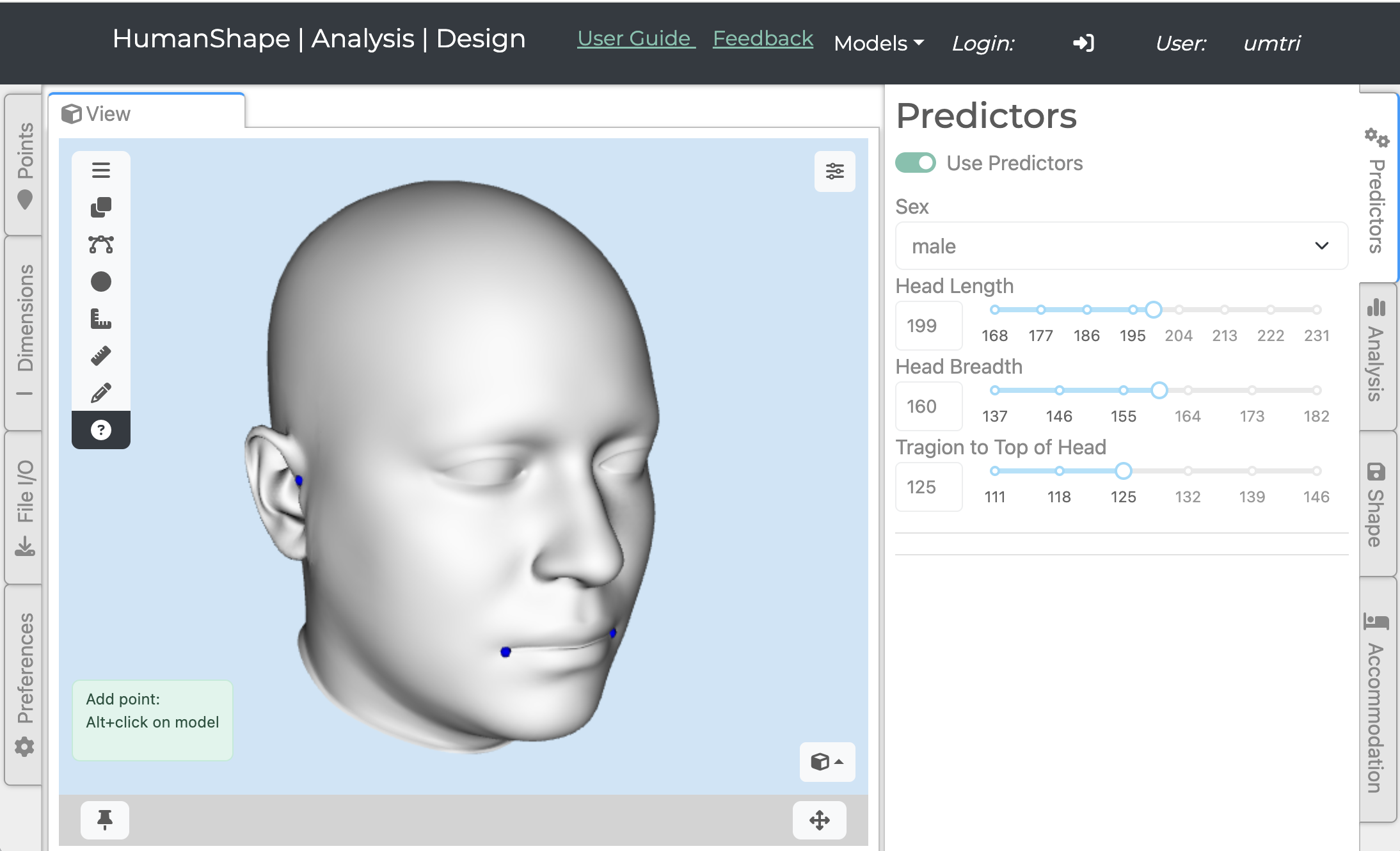
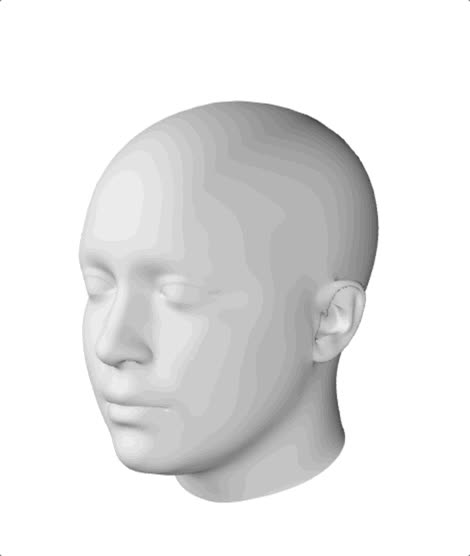
My colleague Dr. Daniel Park has just published a new head/face surface model that is one of only two we are aware of that includes a realistic scalp contour. Hair is a perennial problem in surface anthropometry studies. In most surveys, a wig cap or similar is used to compress the hair, but the resulting variable artifacts, which are typically larger for women. The resulting surface shapes are largely meaningless except for bald participants. Working with the US Air Force, we fit a template to data for 100 women obtained by a combination of head surface scanning and scalp point recording using a surface probe (FARO Arm). We added scans of 80 bald men to create a combined male/female statistical shape model. We have made a version of the new model available online at HumanShape.org. Users can vary head dimensions and download the resulting model. Importantly, the model includes a set of key landmarks defining facial features and skeletal points. The model has broad applications for the design of products that engage with the user's face and head, including protective helmets and masks as well as eyeglasses and other wearables.Contact us if you're interested in commercial applications.
My colleague Dr Monica Jones led this work, which builds on several previous studies in this domain. We have previously published extensively on posture and belt fit for booster-age children, including contributions to the development of the IIHS booster rating procedure that has resulted in substantial improvements in belt fit for children in boosters. This recent study was prompted by concerns that some recently developed "boosters that don't boost" could have adverse effects on child safety. In this study, we documented concerns about posture and belt fit with two of these new products.
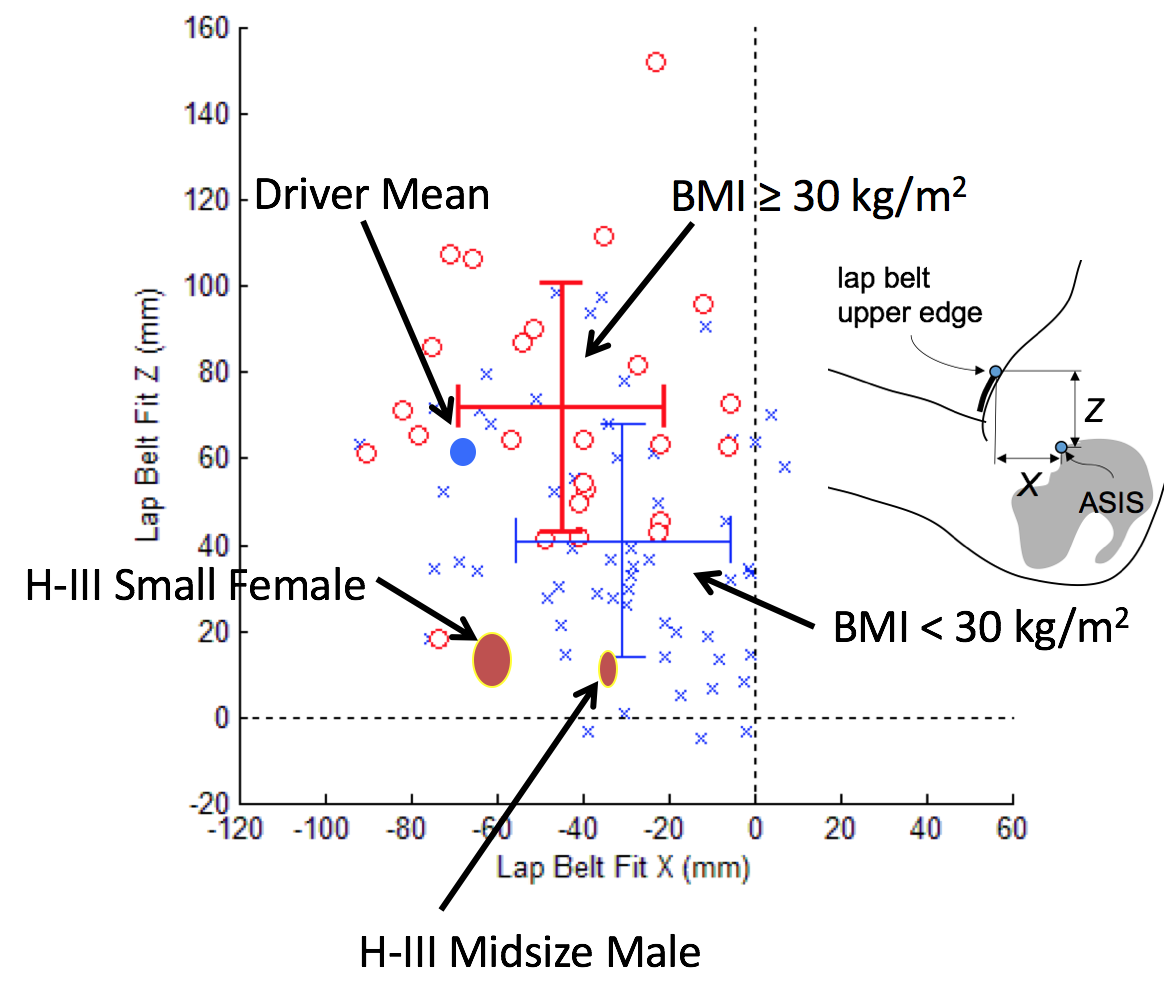
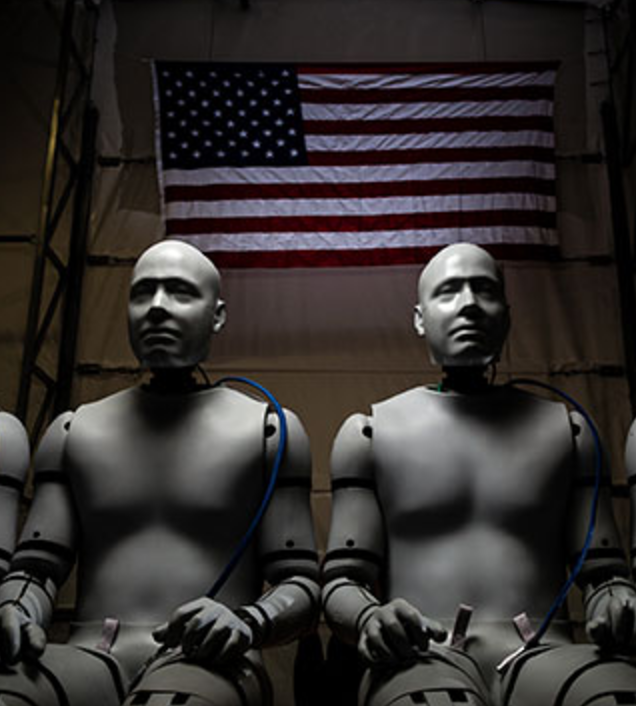
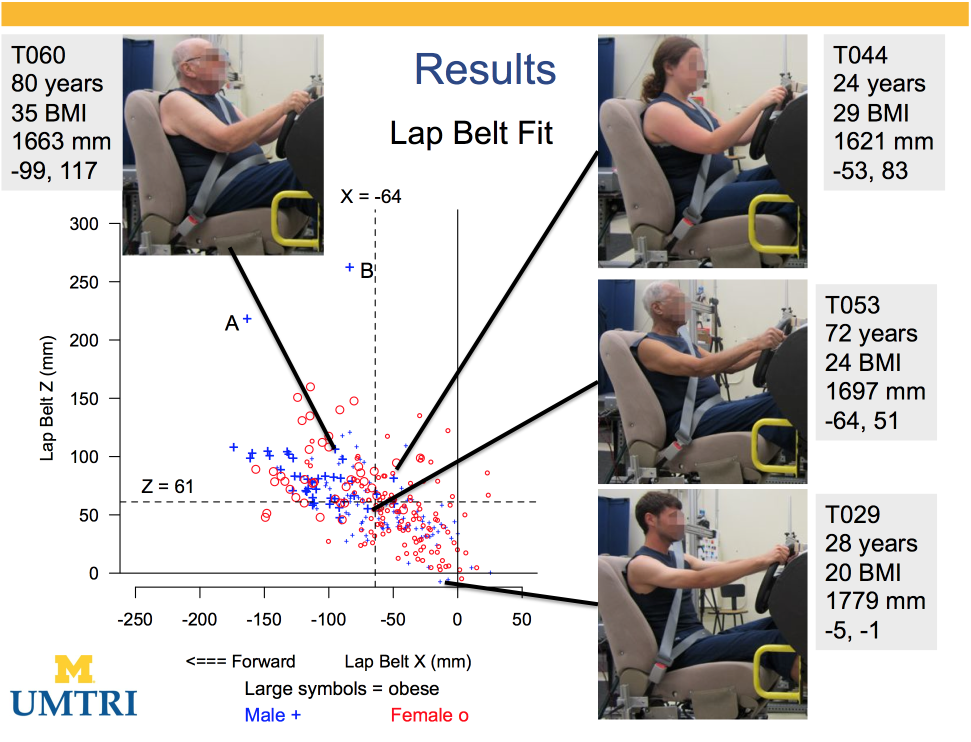
A substantial stream of our work has focused on quantifying the important differences in restraint system interactions between humans and crash test dummies (ATDs). These differences are very important because restraint systems are optimized for ATDs, so that vehicles perform well on regulatory and consumer information tests that use ATDs. In this paper, my colleague Dr Jangwoon Park (now at Texas A&M) compared the belt fit obtained by midsize-male and small-female Hybrid-III ATDs with the belt fit for similar-size drivers. The lap belt fit is markedly better for the ATDs, meaning that humans experience the belt restraints in a less advantageous manner, on average. Improving restraint performance for humans requires integrating simulation results from parametric human body models that can represent the range of human body shape, belt fit, and posture better than ATDs can.
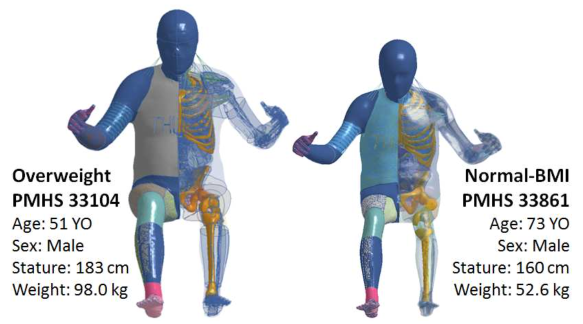
This paper is one of series of studies examining the validity of parametric human body models (HBMs). As noted above, human models are needed to overcome the limitations of ATDs, which at best represent accurately a small percentage of individuals with low body mass index. Historically, HBMs have been constructed to be essentially identical in size to existing ATDs and then validated using the same ATD response corridors previously developed from post-mortem human subject data. Among the many problems with this approach is that the method is not readily applied to parametric HBMs that can be rapidly morphed to represent a large range of the population. Our team, led by Dr Jingwen Hu, has been developing a new approach to validation based on subject-specific comparison. One question addressed by this research is "how subject-specific" a model needs to be to represent PMHS data accurately. Is it sufficient to match stature and body weight, or is more detailed information about body shape, posture, and even tissue properties needed? Ultimately, much more PHMS data is needed from diverse populations that include sufficient imaging and posture measurements.
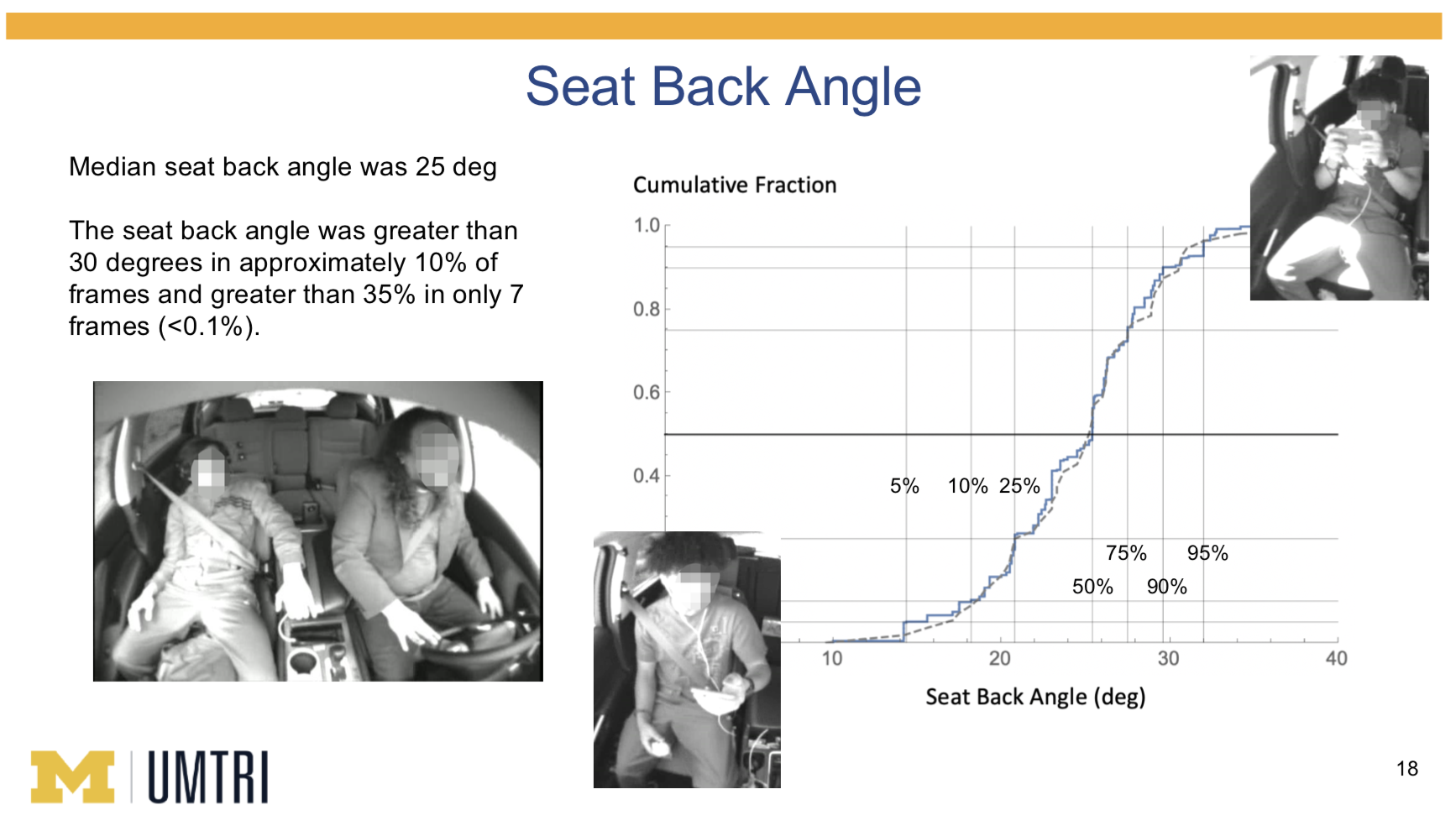
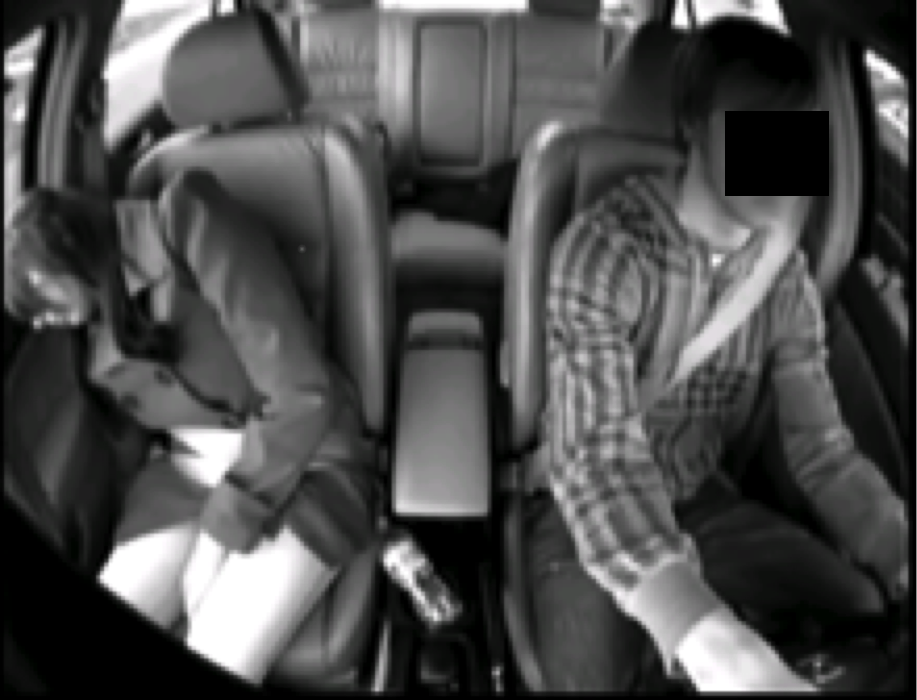
I gave a [talk](/pubs/Reed Passenger Behavior Updated 2020-02.pdf) at the SAE Government/Industry meeting in DC this month highlighting [preliminary results from a large-scale study of passenger behavior](/pubs/Reed Passenger Behavior Updated 2020-02.pdf). In spite of widespread speculation in the industry and media about what passengers in future automated vehicles will do, very little published research focuses on adult passenger postures and activities. To address this gap, we recruited 75 people who regularly drive with passengers and instrumented the vehicles with interior cameras. I presented results from 57 of the vehicles. Among the interesting findings: talking and phone use are the most common front-seat passenger activities and resting (eyes closed) is relatively uncommon, only about 3% of the time. We also recorded seat position and seat back angle. We found that the front passenger seat was positioned full rear about 23% of the time, with the seat rearward of mid-track 81% of the time. We found no relationship between seat position and body size, unlike the case for drivers. We also found very few highly reclined postures. The seat back angle was greater than 35 degrees less than 1% of the time.
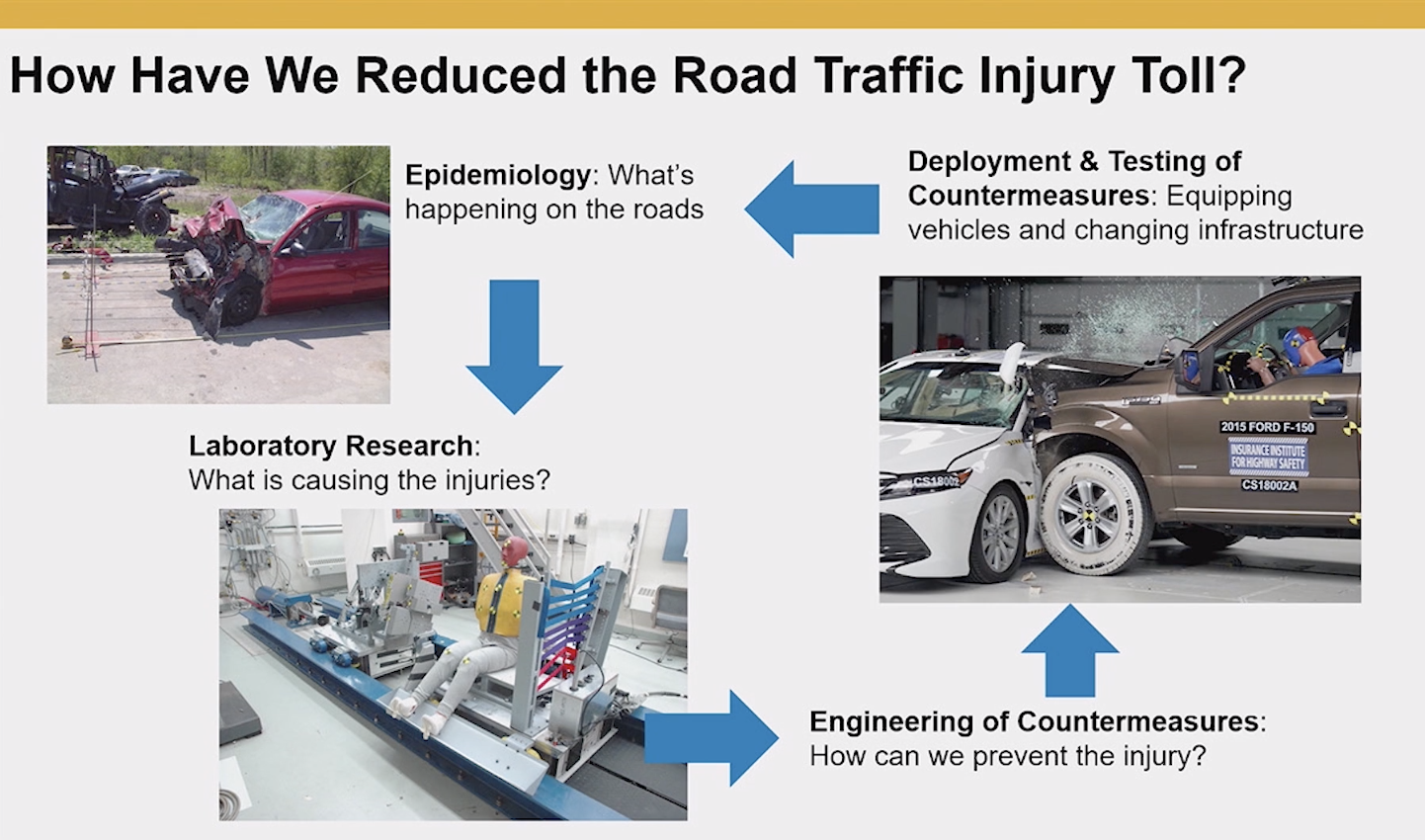
I was pleased to have the opportunity to give a keynote talk at the NFL's Helmet Challenge Symposium this month. The goal of the Helmet Challenge is to make a step-change improvement in the performance of football helmets. The symposium was attended by a wide range of experts from advanced manufacturing and materials science, as well as injury biomechanics. My talk focused on lessons from the automotive industry, which has seen dramatic improvements in crash safety through systematic application of science and engineering. I emphasized the critical role of computational modeling that has enabled the rapid advancements in crash safety we've seen in recent years.
I attended the AAAM annual conference, held in Madrid. (Thanks to Dr. Fran Lopez-Valdez and our excellent hosts at Comillas Pontifical University!) I presented an overview of recent work we did looking at front-seat passenger responses to abrupt vehicle maneuvers. This work, which was also published in Traffic Injury Prevention, compared head excursions in braking and lane change across three vehicles. We found unexpectedly small forward excursions in braking in one vehicle, but overall the differences were small compared to intersubject variability that is not explained by passenger characteristics. We are continuing this work with a large-scale study of 90 men and women with a large range of initial postures and positions.
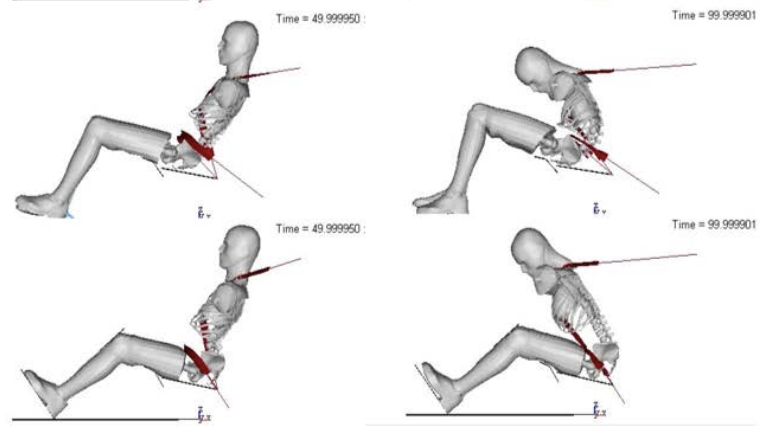
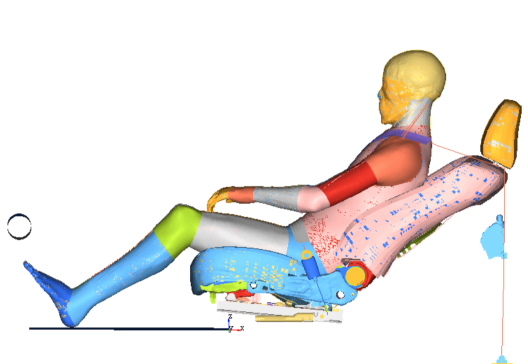
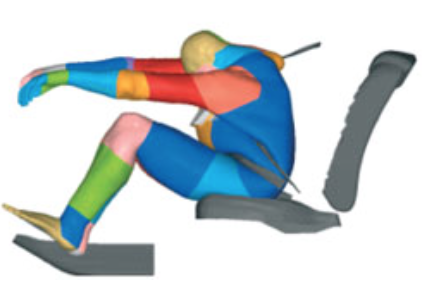
I attended the IRCOBI Conference in Florence this month. My colleague Kyle Boyle presented a paper describing recent simulation studies he conducted to assess possible outcomes for reclined passengers in frontal crashes. This work was conducted to guide the design of a PMHS test series we will begin in the coming months. The simulations used the GHBMC midsize-male simplified model. This study was notable in using an empirical posture-prediction model for positioning the human body model. (Our paper on reclined passenger posture and belt fit has recently been published at Traffic Injury Prevention.) Although the GHBMC model has not been validated for these reclined conditions, the results suggest that preventing submaring in reclined postures will require changes in belt anchorage locations. Future work will consider individuals with higher BMI, who our previous studies suggest are at higher risk of submarining.
I gave a presentation this month at the IQPC Seating Innovations conference in Canton, MI. This annual event draws engineers and designers from across the auto industry to discuss industry directions and new technologies. I presented an overview of research at U-M that points to a much longer phase-in for automated road vehicles than most of the industry hype would suggest. Aside from the technical challenges of handling inclement weather, road hazards, and other features of normal driving, we are looking at current mobility patterns to assess when and for whom automated vehicles would be worth the investment.
Fundamentally, we always ask the question: if the proposed application is so beneficial, why isn't it being provided currently with human-operated vehicles? Of course the answer is usually financial: the funds to pay for the application (say, small-vehicle last-mile services to connect people to public transportation) are not available. Digging deeper, though, the reality is that these services are already being provided below cost in many areas by the money-hemorraging transportation network companies such as Uber and Lyft. The sobering reality is that in any sustainable model for automated vehicle deployment intended to augment public transportation, the costs must be much less than for human-operated vehicles. Given that taxis have never been a high-margin business (even in protected markets), it's difficult to envision the large capital outlays necessary to develop and maintain AV fleets to provide services for which the market price is so low. Justifying the current high stock prices for money losing TNCs requires that they succeed in obtaining sufficient monopoly power that they can raise prices to profitable levels.
Importantly, it doesn't have to be that way. If AVs can eventually be operated (including acquision and maintenance costs) for substantially less than human operated vehicles (and with similar robustness to weather, construction, and other disturbances), public transportation could be revolutionized in ways that improve equity, particularly for Americans who can't afford privately owned cars. But right now, Uber, Lyft, and other TNCs operating below cost are siphoning riders and revenue from public transit while increasing road congestion for everyone. This is pretty good for their users (I'm one of them), who are getting their near-term transportation services subsidized, but ominous for the transportation system as a whole. Combating the relentless AV hype machines will take data and reasoned argument, so we will collaborate with others in this domain to focus research and outreach efforts on financial realism, contextual assessment, and equity considerations around road vehicle automation. The long-term goal of AV deployment should be to improve accessibility while reducing the inequities inherent in our current system that essentially forces people to own cars.
My colleague Dr. Jingwen Hu and I attended the 2019 ESV Conference in Eindhoven this month. Compared with the last ESV conference in 2017, this conference featured a great deal more realism about the challenges of vehicle automation and confronting the reality of mixed fleets in the coming decades. Among the realities is that advances in driver assistance systems will continue to move the safety goalposts for automation, reducing the potential benefits.
Dr. Hu presentedan overview over our most comprehensive effort to date to use our parametric human body modeling methodology to study the effects of driver characteristics on crash injury. From field data, we know that most occupants are at higher risk in crashes than the young midsize males best represented by the most widely used crash test dummies. In the study presented at ESV and published in Traffic Injury Prevention, Dr. Hu's team generated 50 male and 50 female human body models representing a large percentage of the US adult population with respect to stature, body weight, and age. This is an order of magnitude larger number of finite-element human body models previously generated in a single study. To do this work, we needed to develop fully automated methods to morph and posture the FE models within the simulated vehicle. We used validated driver posture prediction models, also a first in this domain.
The results showed large differences in safety in frontal impact depending on body size and shape. This line of research has the potential to guide the development of adaptive restraints that can provide people with a wide range of body size and shape with a similar level of protection in crashes.
I presented an overview of our recent research on reclined postures. In this talk, I focused on changes in belt fit associated with recline. On average the lap portion of the belt moved rearward relative to the pelvis as the participants reclined from back angles of 23 to 53 degrees. Because the pelvis is also rolling rearward with recline, this change in belt fit may make it more difficult to properly restraint the pelvis during a crash. We simulated a seat-integrated restraint in this study, moving the upper anchorage 1:1 with the seat back. However, the torso portion of the belt at the height of the claviclemoved closer to the midline with increasing recline. This probably doesn't represent a change in safety but may decrease comfort.
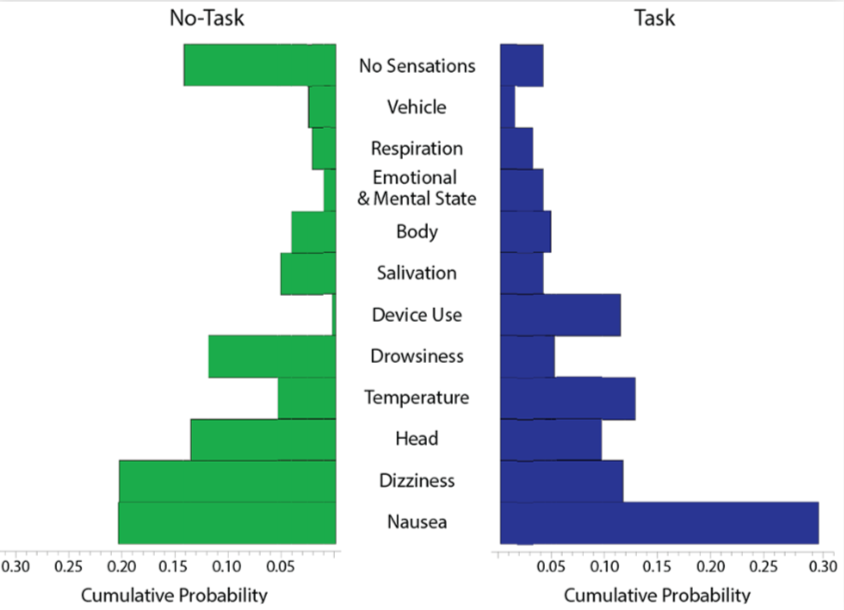
Our group was well-represented at the SAE Congress in April. My colleage Dr Monica Jones presented a paper on sensations reported by participants in a study on vehicle motion sickness she conducted. Motion sickness is an increasing concern due to the fact that passengers are much more susceptible to motion sickness than drivers are. As vehicle automation increasingly changes drivers into passengers, motion sickness can be expected to increase. Solutions are needed that can enable people to take advantage of the potential benefits of automation.
My colleage Dr Daniel Park presented preliminary results from a study examining road lane markings in the context of automated-vehicle sensing systems. Nearly all AV systems currently being tested on-road, as well as driver-assistance systems using similar technologies, rely on detecting lane markings. In this study, Dr Park's team is using a vehicle equipped with lidar and a high-resolution optical camera to monitor the detectability of lane markings on a nearby highway. This project is being conducted in conjunction with the Michigan Department of Transportation, who arranged to have a section of US-23 marked with four different types of paint. Tracking the performance of these materials over time will provide DOTs with useful information on how lane markings can facilitate the adoption of driver-assistance systems (particularly lane-keeping) and future vehicles with higher levels of automation.
I presented an overview of head and neck postures in highly reclined passenger seating scenarios. The head restraints in current vehicles are designed to reduce the risk of soft-tissue neck injury in rear impacts, rather than being designed to comfortably support the head in reclined postures. If future vehicles are to provide passengers with safe, comfortable rides in resting postures, improvements in seat design will be needed. These results, based on our recent study of reclined passenger postures, provide some useful guidance.
We have many activities underway related to increasingly automated vehicles. Here's an overview of some of the projects.
Occupant Postures, Seating, and Activities
Many concepts for highly automated vehicles envision that vehicle occupants who no longer need to drive will sit in different ways than they do in current vehicles. The two most common suggested alternatives to conventional vehicle seating are (1) highly reclined postures, perhaps for sleeping, and (2) seats facing some direction other than forward. In 2018, we conducted an initial investigation of passenger postures in seats reclined up to 53 degrees. These findings are valuable for understanding the details of skeletal posture in these conditions, which is very important for restraint system design.
We are also underway with a study to examine** how passenger's preferences for seat back contour change when they are highly reclined**. (We define highly reclined as sufficiently reclined such that head support is needed. Tthis angle varies among individuals, but the transition is typically somewhere between 30 and 35 degrees.) We have built a test seat that allows the contour of the seat back to be dynamically adjusted over a wide range. This will allow us to obtain data on sitter preferences during a variety of activities.
In trying to forecast how passengers in future vehicles will behave, we believe the best approach is to look at the activities of passengers in current vehicles. Surprisingly, passenger behaviors have not been studied extensively. Building on methods we used recently to study driver upper-extremity activities, we are coding videos from on-road trips with front-seat passengers from a previous naturalistic driving study. In 2019, we will gather additional data through video recorders installed in volunteers' vehicles. We anticipate that this data will provide baseline information on the distribution of activities in today's vehicles, which can be used not only to improve the design of current vehicles but also generate ideas for new interior concepts.
Motion Sickness
One of the biggest barriers to realizing the vision of cars as mobile workspaces and entertainment centers is motion sickness. A large percentage of the population experiences motion-sickness sensations when they are passengers in cars and light trucks. If this problem is not effectively addressed, many people will probably prefer to drive, since few people get sick as drivers. My colleague Dr. Monica Jones isleading a series of studies addressing this important challenge. Starting with data collection on the Mcity test track, she has moved onto the roads and highways around Ann Arbor to study the manner and rate at which motion sickness accrues. The data convincingly show that motion sickness is a multi-factorial experience, and not just nausea. The rate of increase in sensations is strongly affected by the vehicle acceleration domain and greatly exacerbated by the performance of a screen-based secondary task (in this case, reading on a tablet). One of the most important findings is that recovery from motion sickness above a certain level does not occur during travel; the person needs to be stopped for a relatively long time (~20 minutes) to recover to baseline. Many questions remain to be resolved about the etiology of motion sickness in vehicles. A surprising number of people seem to think this is a solved problem. In fact, no validated interventions or countermeasures short of "don't read" or "drive with less acceleration" have appeared in the literature. Nonetheless, the high rate of research and patent activitiy in this area indicates to us that people working with automated vehicle technology have realized that this is a very important barrier to adoption. Our work is ongoing -- contact Dr. Jonesfor more information.
Crash Safety for Occupants of Future Automated Vehicles
My colleague Dr. Kathy Klinich has looked at the likely distribution of crashes for vehicles that are themselves unlikely to cause a crash due to advanced technology. We've found that during the long phase-in period for crash-avoidance technology, occupants of highly automated vehicle will still experience crashes, although with a different distribution of types and severities. We have several efforts underway to gain the knowledge and develop the tools needed to improve safety for occupants exposed to these crashes.* Importantly, all of this knowledge will also be valuable for improving protection for passengers in current vehicles.*
One important line of research relates to the consequences of abrupt crash-avoidance manuevers, such as hard braking. Ideally, the crash avoidance maneuver will be successful, but sometimes a crash will still occur. Previous studies from our lab and others have shown that pre-crash braking or abrupt lane changes can substantially alter passenger posture away from the typical postures used for restraint system optimization. We are currently analyzing data from a recent study examining whether these motions differ across vehicles for similar events. In summer 2019, we will be conducting another large-scale test-track study gathering more data on passenger responses with different starting postures.
We are also underway with computational modeling of these pre-crash occupant motions. In a NHTSA-funded study led by Dr. Jingwen Hu, we are modifying the GHBMC simplified midsize-male model to respond dynamically to perturbations in the ~1g range. We anticipate that the model will be capable of realistic response to a wide range of horizontal perturbations. We will use our human volunteer data to tune and validate the model.
Crash Protection in Reclined Postures
We have recently kicked off a large-scale, collaborative effort to conduct basic biomechanics research addressing protection for reclined passengers. Preliminary modeling studies from our lab and others have shown that belt restraints can perform poorly for reclined passengers in frontal impacts, and the kinematics and loading of passengers in severe rear impacts also creates protection challenging. First, however, we need to gain sufficient understanding of occupant response in these conditions that we can accurately simulate these conditions with both computational and physical models (i.e., crash test dummies). In collaboration with the Medical College of Wisconsin, we are conducting a large-scale sled-test series with post-mortem human subjects focused on gathering response data across a wide range of recline and restraint conditions. Scheduled to continue into 2020, this program will yield highly valuable data that will be critical for developing advanced protection systems for occupants of future vehicles.
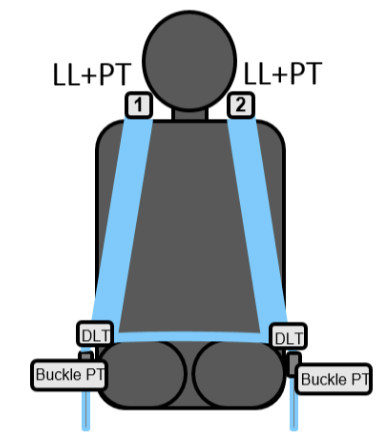
My colleagues and I presented two papers at the IRCOBI conference in Athens. Dr. Jingwen Hu presented an evaluation of a novel four-point belt system that shows considerable promise for improving occupant protection in oblique frontal crashes. In these crashes, even a belted occupant tends to slide off the airbag, risking potentially injurious head contacts with the interior. The four-point belt concept allows the load limits on the two shoulder belts to be independently varied, producing better kinematic control of the torso and reducing head excursions while also limiting chest deflection.
I presented an overview of methods our group has developed to track vehicle occupant head position and orientation during abrupt vehicle maneuvers. This effort has been led by Dr. Daniel Park, who developed a model-based tracking system using a single Microsoft Kinect time-of-flight depth camera. This highly efficient data collection methodology allowed us to test a much larger number of subjects than any previous study of vehicle occupant movements during typical pre-crash vehicle maneuvers.
Our group presented three papers at the triennial International Ergonomics Association conference in Florence.
Dr. Monica Jones presented preliminary results from a study of standing posture behavior. In previous work, we have shown that people engaging in standing reaching tasks organize their postures in a way that places the center of pressure on the floor well away from the centroid of the base of support, but not necessarily at the outer margin. This study will develop empirical models to use in posture prediction.
Dr. Daniel Park presented an exploratory study combining one of our seated body shape models with augmented reality. Using Apple's ARkit, he demonstrated an app inserting a seated avatar into a vehicle environment. Although much work remains to make the tool useful for quantitative work, this approach offers potential to enable rapid visualization of vehicle occupants using minimal measurement hardware. We plan to augment this work through improved capability in our body shape modeling, including the capability to represent the effects of clothing and PPE.
I presented a brief overview of the development of a tool for modeling soldiers wearing body armor. This software, which is written in Python, incorporates our seated, posturable male soldier body shape model. A geometric representation of body armor and body borne gear can be added. The primary applications of this human modeling tool are in representing space claim for soldiers in squad seating ares of vehicles. The development of this tool will intersect with our exploration of the application of AR technology to vehicle design assessment, but we also anticipate incorporating this capability into our growing suite of online tools.
Since 2012, we have been working with the U.S. Army TARDEC on a set of new tools for vehicle interior design. Our goal is to use extensive data on soldier anthropometry and posture, including the effects of body armor and body borne gear, to improve soldier comfort, performance, and safety. We have created a set of statistical accommodation models that generate the parameters of CAD surfaces for use in design. Our colleagues at TARDEC have implemented these models in PTC Creo, a widely used CAD package. For the first time, these models, which have gone through a rigorous verification processs, are now available on a public-facing TARDEC website. We are proud to have been able to contribute to the improvement of the Army's vehicle design processes. Many more models are in the pipeline, including tools for design squad seating positions and novel control configurations including fixed-eye-point workstations.
I recently completed a small study for General Motors examining the distribution of knee contours. The possibility of inadvertent activation of controls located near the knees can be reduced by recessing the controls. This study used 3D scans of knees obtained in previous studies to estimate the distribution of knee penetration into holes of various sizes. The results were evaluated by comparison to a small manually gathered convenience sample. To our knowledge this is the first systematic analysis of knee "pointiness" and a fun application of our vast amount of 3D human shape data.
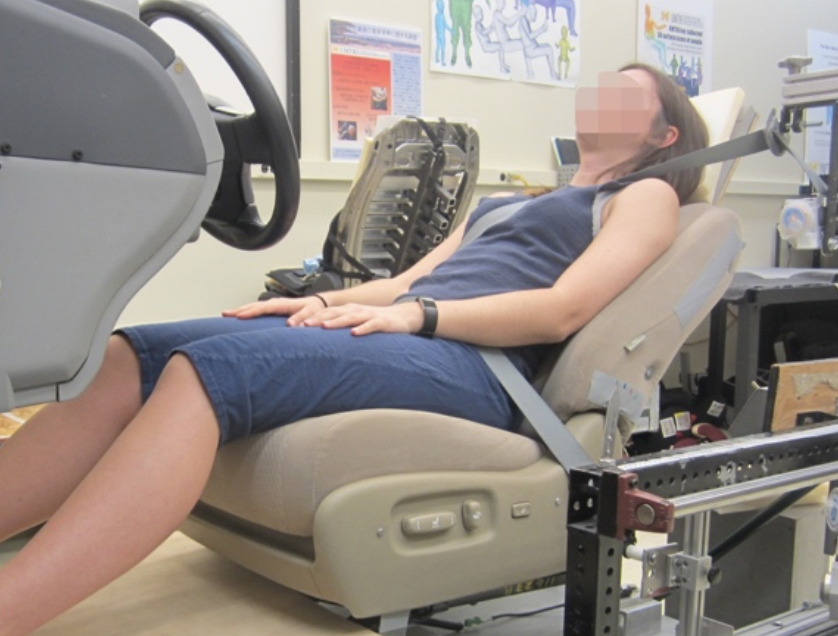
We recently completed a small study of highly reclined passenger postures. Many conceptual designs for future automated vehicles anticipate that passengers will want to recline for relaxation or even sleep. Although nearly all front passenger seats currently recline, the seats are not designed for comfort and support in highly reclined postures. (I define highly reclined postures as those for which head support is needed for comfort. This typically starts at about 30 degrees from vertical for most seats and sitters.) Moreover,current vehicles are not designed to provide crash protection in highly reclined postures.
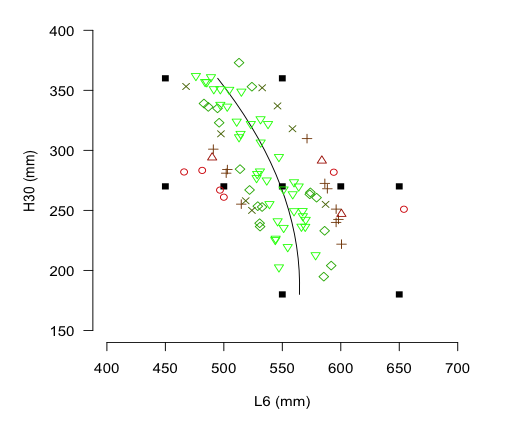
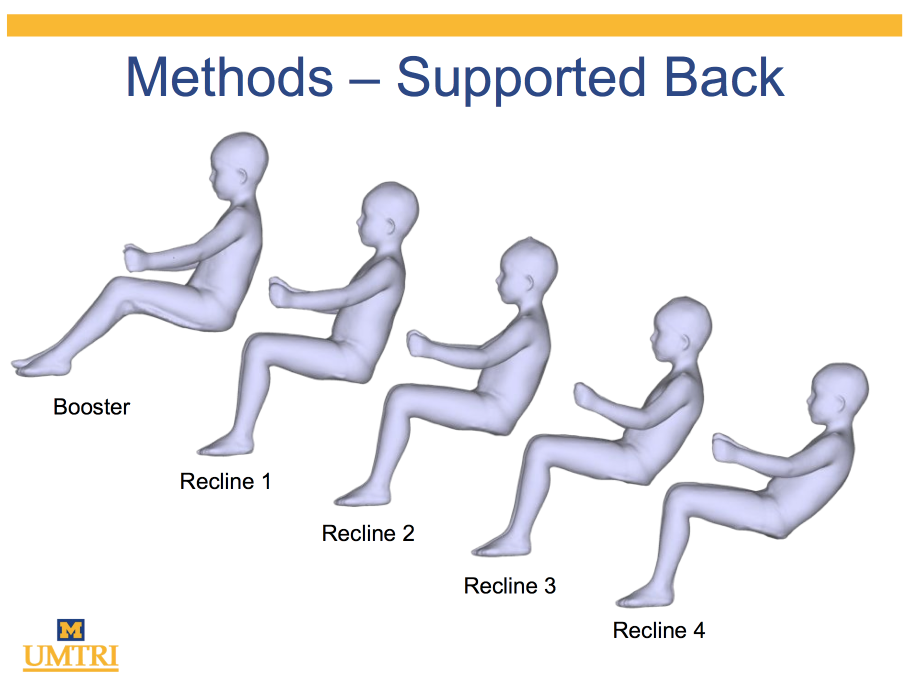
In what we believe to be the first study of its kind, we measured posture and belt fit for 24 men and women with a wide range of body size as they sat in a typical front passenger seat with back angles of 23, 33, 43, and 53 degrees (referenced to SAE A40 measured at 23 degrees). Postures were measured with and without sitter-selected head support. The results were analyzed to develop posture-prediction models for use in safety assessments using computational human models.
I gave an invited talk at the 12th Annual IQPC Seating Innovation Summit on safety considerations in the design of future automated road vehicles. I covered a range of topics, including the typical phase-in periods for safety advances, the FMVSS that will continue to apply to passenger vehicles even without a driver, and the potential safety consequences of alternative seating positions and postures. We have been doing simulations that show big challenges in crash protection for occupants at high recline angles, a posture that many believe will become more common with increasing vehicle automation.
I was honored to receive the Arnold W. Siegel International Transportation Safety Award from SAE International this month. This endowed award is named for Arne Seigel, a pioneer in crash safety, occupant protection, and injury biomechanics. Receiving the award at this time was bittersweet because Arne passed away last year after a long career and a "retirement" rich with philanthropy. I was privileged to meet Arne in the 1990s at Stapp Car Crash Conferences. He was always very encouraging of young researchers. Among many other philanthropic activities in recent years he has been a strong supporter of SAE's World In Motion program, which aims to bring the excitement of STEM learning to K-12 education.
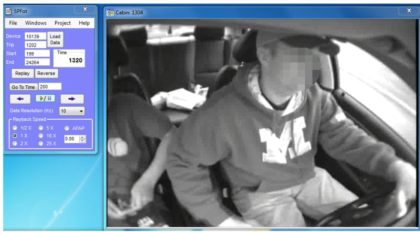
Driver upper-extremity postures and activities were manually coded in 9856 video frames from 165 drivers in 100 vehicles that were instrumented with interior cameras as part of the Connected Vehicle Safety Pilot Model Deployment study. Drivers had left, right, and both hands on the steering wheel in 64%, 46%, and 28%, respectively, of frames in which the hand placements could be determined. The driver’s left elbow was in contact with the door or armrest in 18% of frames, and the driver’s right elbow was contacting the center console armrest in 29% of frames. Men were more likely than women to use both the left and right armrests. Women had approximately the same percentage of armrest use across vehicles, but men’s usage differed widely, suggesting that armrest design may influence whether people of different statures can use the armrests comfortably. Women were more likely to have a phone in their right hands than men, and women were twice as likely as men to be wearing sunglasses during trips taken in daylight hours.
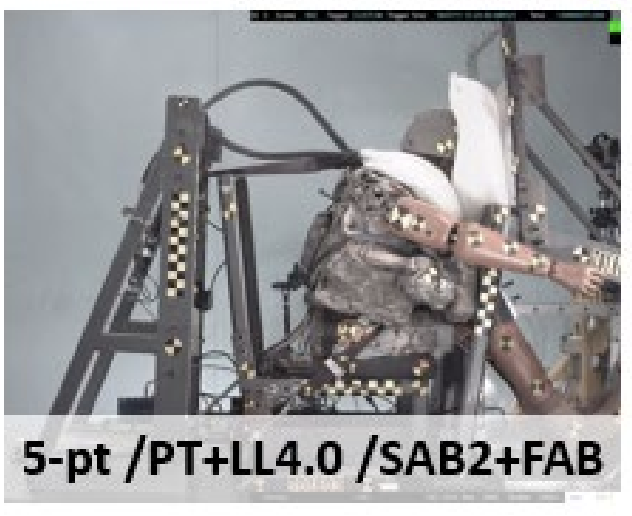
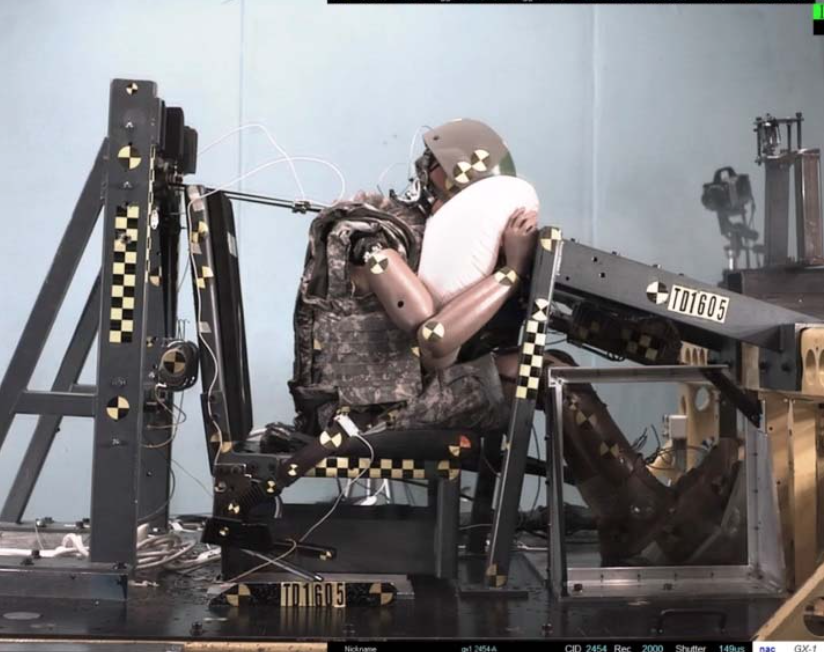
The objective of this study was to optimize the occupant restraint systems for a light tactical vehicle in frontal crashes. A combination of sled testing and computational modeling were performed to find the optimal seatbelt and airbag designs for protecting occupants represented by three size of ATDs and two military gear configurations. This study started with 20 sled frontal crash tests to setup the baseline performance of existing seatbelts, which have been presented previously; followed by parametric computational simulations to find the best combinations of seatbelt and airbag designs for different sizes of ATDs and military gear configurations involving both driver and passengers. Then 12 sled tests were conducted with the simulation-recommended restraint designs. The test results were further used to validate the models. Another series of computational simulations and 4 sled tests were performed to fine-tune the optimal restraint design solutions. The sled tests with the optimized seatbelt and airbag designs provided significant improvement of occupant protection from the baseline tests in terms of the head, neck, chest, and lower extremity injury measures. Using a baseline seatbelt without an airbag, the ATD tended to contact the steering wheel or the instrument panel, or sustained a significant head whipping motion inducing large head and neck injury measures. By adding the airbag and reducing the load limit in the seatbelt, the injury measures were improved significantly. This study demonstrated the benefit of adding a properly designed airbag and advanced seatbelt to improve the occupant protection in frontal crashes under an environment representing a light tactical vehicle.
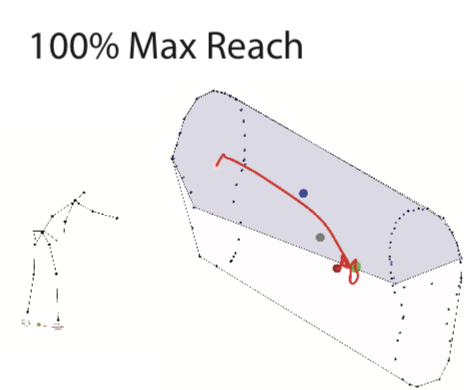
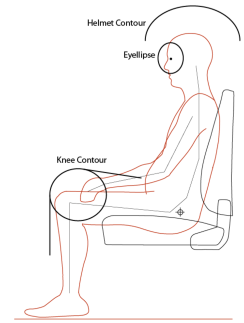
The interior layout of passenger cars and light trucks is substantially aided by SAE occupant packaging tools, which include the SAE J941 eyellipse, SAE J287 reach curves, and the seating accommodation model in SAE J4004. Most of these tools were developed based on posture and position data from drivers, although an eyellipse and head contour are available for fixed-seat passenger positions. This paper reviews the current SAE occupant packaging tools and related industry practice in the context of current concepts for highly automated vehicles, considering SAE levels 4 and 5. Concepts that have driver controls for occasional use and vehicles with no driver controls are examined. Gaps in the current knowledge and tools are reviewed to establish priorities for research and development of new standards and recommended practices.
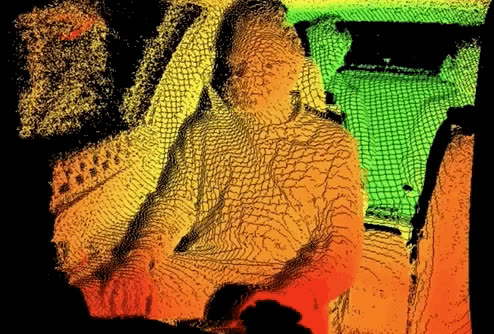
Analyzing dynamic postures of vehicle occupants in various situations is valuable for improving occupant accommodation and safety. Accurate tracking of an occupant’s head is of particular importance because the head has a large range of motion, controls gaze, and may require special protection in dynamic events including crashes. Previous vehicle occupant posture studies have primarily used marker-based optical motion capture systems or multiple video cameras for tracking facial features or markers on the head. However, the former approach has limitations for collecting on-road data, and the latter is limited by requiring intensive manual postprocessing to obtain suitable accuracy. This paper presents an automated on-road head tracking method using a single Microsoft Kinect V2 sensor, which uses a time-of-flight measurement principle to obtain a 3D point cloud representing objects in the scene at approximately 30 Hz. Vehicle passenger motions were recorded during hard braking and rapid lane changes. The dynamic head orientation and location data were obtained by fitting a subject-specific 3d head model to the depth data from each frame. Results were validated using a marker-based tracking system based on video images from multiple views. The results showed that the proposed method and system provides efficient and accurate in-vehicle head tracking using a single low-cost depth camera. Extensions of this method have broad applications for study of vehicle occupant dynamics, and with advances in technology may be applicable to routine use in production vehicles.
Motion sickness in road vehicles may become an increasingly important problem as automation transforms drivers into passengers. Motion sickness could be mitigated through control of the vehicle motion dynamics, design of the interior environment, and other interventions. However, a lack of a definitive etiology of motion sickness challenges the design of automated vehicles (AVs) to address motion sickness susceptibility effectively. Few motion sickness studies have been conducted in naturalistic road-vehicle environments; instead, most research has been performed in driving simulators or on motion platforms that produce prescribed motion profiles. To address this gap, a vehicle-based experimental platform using a midsize sedan was developed to quantify motion sickness in road vehicles. A scripted, continuous drive consisting of a series of frequent 90-degree turns, braking, and lane changes were conducted on a closed track. The route was selected to be representative of naturalistic urban driving conditions and parameterized in terms of lateral and longitudinal acceleration intensities likely to produce motion sickness. Vehicle instrumentation included simultaneous measure of vehicle acceleration, passenger head kinematics, self-reported motion sickness ratings and associated sensations, and physiological responses. A no-task condition involved normative passenger behavior and unconstrained gaze. During the task condition, passengers read a handheld mini iPad tablet. The resulting vehicle-based experimental platform provided a reliable methodology designed to quantify motion sickness. Knowledge generated from studies with this platform will inform the design of AVs and the development and evaluation of countermeasures.
We recently published a report on an extensive study of passenger responses to abrupt and unexpected vehicle maneuvers. Currently, around half of serious crashes are preceded by some attempted evasive braking or steering. Previous research has shown that these vehicle motions can change the postures and positions of vehicle occupants, which may affect their protection in any subsequent crash. We conducted a test-track study with 87 men and women with a wide range of body size and age in braking, lane-change, and turn-and-brake maneuvers. We used a novel markerless motion-capture method based on Microsoft Kinect to track head motion. We found that passenger head excursions were only moderately related to passenger characteristics, with age and BMI the strongest predictors. The reuslts will be useful for developing and tuning human models capable of simulating pre-crash events.
Dr. Lauren Zaseck led this modeling study addressing the extent to which non-displaced rib fractures affect thoracic response. This issue arises in PMHS testing because many specimens available for biomechanics research have rib fractures due to ressusitation efforts. This modeling study suggests that a small number of rib fractures do not appreciably affect thoracic response.
Dr. Monica Jones led a study investigating whether an intervention could induce drivers to don their safety belts in a more effective way. Good safety belt fit includes the lap belt low and close to the pelvis, but our previous studies have shown that too often people place it high on the abdomen instead. This pair of papers in the Journal of Safety Reseach reports two aspects of the study, which demonstrated significant improvements following a video intervention, with most of the benefit acruing to those with the worst initial belt fit.
Dr. Daniel Park led the development of a visualization tool to help parents and clinicians estimate BMI in young children. This paper in Pediatric Obesity describes the tool and its validation. One version of the tool is available online.We have developed similar capability for modeling adult body shape.
Designing vehicles to be used in multiple markets is challenging in part due to differences in the body sizes across nations. Yet, little research has been published on national differences in body size, shape, and posture for vehicle occupants. We conducted a focused study comparing driving posture and body shape for Japanese and U.S. nationals. The U.S. data was drawn from a large-scale study of driver and passenger posture. We recruited Japanese nationals who had been resident in the US for less than one year and measured them in the same conditions. The results show small but significant differences in driving posture after accounting for body size. Body shape differences were more apparent. These results are valuable for companies designing vehicles for both markets.
My colleagueDr. Jingwen Hu presented a paper at the Stapp Car Crash Conference on our extensive collaboration with ZF on rear-seat occupant protection. This research, funded by NHTSA, aimed to identify the extent to which rear-seat occupant protection could be improved by adding previously developed technologies. Historically, safety technologies used routinely in front seats, such as airbags and advanced seatbelts with pretensioners and load limiters, have been installed much less frequently in rear seats. Consequently, improvements in occupant protection in these seating positions have been slower than for the front seat. This study documented substantial improvements that could be made, particularly through the use of novel airbag designs.
The seats in commercial aircraft in the US are required to provide appropriate lap belt fit for all passengers ages 24 months and older. However, no belt fit procedure or measurement device is specified. This paper describes an internally funded effort to develop a belt-fit test device representing a typical two-year-old child. The external shape is based on output from a statistical model of toddler body shape. The external surfaces were created using 3d printing and mounted to an internal armature that includes hip joints and an articulate four-bar neck. The next step is to validate the belt fit measures obtained using this manikin using measurements from children. As far as we are aware, this is the first belt fit device to be created using 3d printing, as well as the first to be created using a statistical body shape model.
Analyses of crash data indicate that high BMI is associated with a higher risk of thoracic injury in frontal crashes. In previous work, we found only small differences in shoulder belt placement relative to the clavicle associated with obesity, although large effects on lap belt placement were found. In the current paper, we used functional regression techniques to model the effects of driver attributes on the path of the belt relative to the skeleton. As expected, higher BMI is associated with with belt routing farther from the skeleton, but we also found sex differences for both the lap and shoulder belt after holding stature and BMI constant. In general, we find that higher BMI causes the lower torso portion of the belt to route more laterally, which may cause increased risk of rib fractures and liver injuries for drivers. We will use these results to improve the routing of belts in simulations of frontal crashes with high-BMI drivers.
My colleague Dr. Jingwen Hu presented results of ongoing work examining the effects of body size, shape, posture, and position on crash outcomes. The parametric modeling paradigm developed in our group allows us to morph high-fidelity finite-element human models to represent any of a wide range of occupant sizes and shapes. In this work, we used validated posture-prediction models to position six human body models: three representing the reference anthropometry of the small-female, midsize-male, and large-male ATDs that are widely used for vehicle safety system assessment, and three models with the same stature but a BMI of 40 kg/m^2 (roughly the 95th percentile for US adults). The results showed very different restraint system interactions across the body size and shape space. BMI was associated with higher injury risk, consistent with the field data, and both short and tall drivers were at higher risk. The results highlighted the possibility of the driver's torso disrupting the deployment of the airbag, reducing its effectiveness. Future studies with a much larger number of body sizes and shapes are underway.
I attended the annual conference of the Human Factors and Ergonomics Society in Austin, TX this month.Justin Haney, a PhD student working with advisor Clive D'Souza in the Human Motion Simulation Lab, presented recent work on measurement and modeling of threading operations. I participated in a panel discussion on the use of virtual fit testing (VFT) to improve the accuracy and flexibility of accommodation assessments of office workstation designs. My colleague Matt Parkinson and I have developed a new database of US civilian anthropometry by weighting the US CAESAR data, augmented with additional high-BMI data from UMTRI research. We've built a spreadsheet for VFT around the new weighted database, providing a simple interface to obtain accurate multivariate assessments of office workstation accommodation. HFES will be making this new VFT tool available along with a revised version of the ANSI/HFES 100 office workstation design standard.
I attended the annual meeting of the Association for the Advancement of Automotive Medicine in Las Vegas, NV this month. I presented a paper comparing the belt fit obtained by rear-seat passengers with the belt fit measured on Hybrid-III ATDs using standardized installation procedures. [This paper has been accepted for publication in a special issue of Traffic Injury Prevention.] On average, the belt fit for the ATDs was much lower and more advantageous, relative to the pelvis. The shoulder belt also routed much closer to the centerline for the ATDs. These differences in belt fit may have important implications for the design of restraint systems. The lower placement of the lap portion of the belt likely means that the ATDs are less likely to submarine than the ATDs. This in turn may result in manufacturers choosing flatter belt angles than would be optimal for human occupants. Similarly, the more-centered shoulder belt placement may result in an underestimate of the chest loading that would result in a forward crash, diminishing the importance of load limiting. Further research with parametric human body models is needed to evaluate these effects.
We've gathered a large set of data on the responses of front-seat passengers to unexpected hard braking and other abrupt vehicle maneuvers. These data will be valuable for developing and tuning active human body models that can simulate occupant responses during crash-avoidance actions triggered by vehicle automation. Pilot data we gathered last year showed that head excursions exceeding 200 mm were observed during hard braking, even with normally positioned passengers who are properly belted. Movements of this magnitude may have important implications for the design of restraint systems. The primary focus is determine whether restraint systems, including seat belts and airbags, need to be improved to handle occupants who are out of the expected position.
These videos were created using data from a single Microsoft Kinect sensor mounted in the vehicle cabin. We are using methods developed at UMTRI to fit subject-specific avatars to these data to obtain accurate head and torso kinematics during the events.
My colleague Dr. Daniel Park and I recently completed a research project for the U.S. Army that tackled an array of cutting-edge problems relating to human body measurement and modeling. The report on this work is now available online. From the abstract: "Two metrics were devised for comparing two body shapes represented by surface meshes. The distance from the nodes of one mesh to the polygonal surface of another was defined as mesh error. Six torso dimensions computed between mesh nodes that are analogous to standard anthropometric measures were compared to compute mesh error. Analyses were performed using three datasets: 236 male Soldiers, 200 Air Crew, and 73 civilian women. Statistical body shape models (SBSM) were developed using methods developed and adapted in previous UMTRI research. A standardized template was fit to each scan to enable the analysis. Mesh error was found to diminish smoothly with the number of PCs used for reconstruction, with minimal improvement after 100 PCs. When conducting regression predictions, retaining more than 80 PCs provided minimal improvement in mesh or dimension error metrics. A simulation study demonstrated that improvements in regression model performance when using more than 50 subjects were small. Errors in predicting Air Crew torso mesh dimensions using 10 standard anthropometric variables averaged less than 10 mm. A novel method was developed to predict seated body shape from standing body shape, and a new inscribed fitting method enabled generation of accurate avatars from scans of individuals wearing clothing and gear. A pilot test demonstrated the potential for scanning prone individuals using a transparent table to obtain good coverage." Whew! Lots of good stuff in there. Contact me if you'd like details or would like to use these models or methods.
The cervical spine is of considerable interest in biomechanics research due to its complexity and its importance as a site of both low-severity and high-severity injury (e.g., whiplash-associated disorders and fractures with spinal cord injury). My colleague Dr. Monica Jones and I recently published a technical report describing new two- and three-dimensional parametric models of cervical spine geometry and posture. The data for the 2d model were drawn from a Snyder et al. x-ray study conducted at UMTRI in the 1970s. Using the same methods we've previously applied to model body shape, we created a parametric model that generates sagittal spine geometry as a function of sex, stature, age, and head-to-thorax posture. This is the only parametric model of its kind for unsupported head postures typical of seated environments, such as vehicles. In addition, we linked this 2d model to 3d geometry provided by collaborators at Johns Hopkins University Applied Physics Lab (APL). Using 3D spine geometry data extracted by APL from medical imaging (CT) studies, we created a parametric model that predicts 3d bone geometry from 2d shape. One unexpected observation is that lateral dimensions of cervical vertebrae are essentially uncorrelated with sagittal dimensions. The resulting 3d model can be used as input for finite-element models used to examine the influence of posture and spine shape on injury risk in a wide range of exposures. This model is implemented in Python and is freely available for use -- just contact me to get it.
My colleagues Dr. Monica Jones and Dr. Daniel Park represented our group at the International Digital Human Modeling Symposium in Bonn, Germany this month. Dr. Jones presented methods and preliminary results from our work on occupant dynamics during abrupt vehicle maneuvers. The goal of this work is to understand how occupant posture and position many change due to automatic crash avoidance systems so that restraint systems can be designed appropriately to protect occupants when a crash does occur. Dr. Park presented an investigation into the development of boundary manikins. Principal component methods are widely used for developing small families of 3d manikins for use in ergonomics analysis. However, little has been published regarding the effects of the many decisions that are necessary when using the typical methods based on standard anthropometric dimensions. In this paper, we compared manikins generated using traditional methods with those created from direct analysis of body shape. Boundary manikin analyses do not achieve quantifiable accommodation assessments; statistical population accomodation models or virtual fit testing are necessary. However, boundary manikins are useful for representing range of extreme body dimensions while incorporating covariance. This paper provides some guidance for thinking about the various decisions to be made in generating a boundary manikin family.
Hu, J., Klinich, K., Manary, M.A., Flannagan, C.A.C., Narayanaswamy, P., Reed, M.P., Andreen, M., Neal, M., and Lin, C-H. (2017). Does Unbelted Safety Requirement Affect Protection for Belted Occupants? This article has been accepted for publication in Traffic Injury Prevention.
My colleague Dr. Jingwen Hu gave an overview of a large-scale study funded by NHTSA and conducted collaboratively with General Motors. Under FMVSS 208, automakers are required to certify their vehicles based in part on a frontal crash test with unbelted dummies. Several automakers have petitioned NHTSA to permit them to skip the unbelted test if they have belt assurance systems that can be expected to produce near 100% belt use. In this study, we conducted a large number of simulations to optimize the restraint system with and without the belted test. The major change in the restraint system in the absence of the unbelted test is to remove the knee bolster, which changes load sharing between the remaining components of the frontal protection system (seat, seat belt, steering column, and steering wheel airbag).
Dr. Monica Jones presented the first study to examine the spatial relationship between the steering wheel and torso for individuals with high body mass index (BMI). Her study demonstrated that none of a cohort of 52 obese drivers sat with the recommended 250 mm of clearance to the steering wheel, and some, particularly those with short stature, sat with essentially a contact condition at the lower wheel rim. These findings may have important implications for crash safety, because the restraint systems are tuned for frontal impact conditions in which the airbag is able to deploy fully prior to contacting the occupant. We are conducting simulations studies using morphed parametric human body models of obese occupants to understand how to optimize restraints for these individuals.
Over the past several years, our group has developed automated methods for rapidly modifying the size and shape of FE models used for occupant simulations in crashes. This study was the first to morph both widely used detailed models of midsize male occupants, from the THUMS and GHBMC families. The results demonstrate the utility of being able to separate true anatomical effects from the differences between models.
A new paper on our work modeling child body shape has appeared in Traffic Injury Prevention. My colleague Dr. Daniel Park led the development of the first-ever statistical body shape model of seated children. The model, which is available online for interactive use, predicts body shape for children ages 3 to 11 years as a function of stature, body weight (expressed as body mass index), and the ratio of sitting height to stature. The posture of the predicted body shape can also be varied with respect to recline angle and lumbar spine flexion. Whole-body laser scans from 135 children in up to 4 postures were used to create the model. Applications include the development of new physical human surrogates for safety system design (e.g., crash test dummies) and parametric human body models. The downloadable body shapes are also approprite for use in the development of child restraint systems. The new model joins other body shape models for adults and children available online at humanshape.org.
My colleague Dr. Monica Jones presented work investigating the associations between sitter and seat characteristics and the pressure distribution at the seat-sitter interface. A study was conducted using 12 production driver seats from passenger vehicles and light trucks. Thirty-eight men and women sat in each seat in a vehicle mockup and seat surface pressure distribution was measured on the seatback and cushion. Anthropometric dimensions were recorded for each participant and standardized dimensions based on SAE J2732 were acquired for each test seat. Regression models were effective in predicting characteristics of pressure distribution from the anthropometric variables and SAE J2732 dimensions.
My colleagueDr. Daniel Park presented a novel method for quantifying vehicle occupant postures and body shapes. The methodology was demonstrated using children and a single Microsoft Kinect sensor. The challenge posed by the noisy and incomplete data was addressed by fitting the data using a statistical body shape model (SBSM). The SBSM used in this work was developed using laser scan data gathered from 147 children with stature ranging from 100 to 160 cm and BMI from 12 to 27 kg/m2 in various sitting postures. A principal component (PC) analysis was conducted based on these scans along with the manually-measured body landmarks, and 100 PC scores were retained to account for 99% of variance in the body shape and sitting postures. A PC-based fast fitting method was applied to estimate the occupant characteristics by fitting the SBSM to an incomplete depth image of a subject. The results demonstrate that a fast, inexpensive system can be used to produce useful estimates of occupant characteristics that could be applied to improve personalization of component adjustments, restraint systems, and infotainment systems.
The SAE J2114 dolly rollover test is the most widely used vehicle rollover test procedure. However, it requires the test vehicle to be seated on a dolly with a 23° initial angle, which makes it difficult to test a vehicle over 5,000 kg without a dolly design change, and repeatability is often a concern. My colleagueDr. Jingwen Hu presented a new dynamic rollover test methodology that can be used for evaluating crashworthiness and occupant protection without requiring an initial vehicle angle. A custom cart was designed to carry the test vehicle laterally down a track. The cart incorporates two ramps under the testing vehicle's trailing-side tires. In a test, the cart with the vehicle travels at the desired test speed and is stopped by a track-mounted curb. While the cart is being stopped by two honeycomb blocks, the vehicle slides laterally from the cart with the far-side wheels sliding up the ramps, which generates the desired lateral roll rate. The vehicle near-side wheels slide onto a high-friction surface, which generates an additional strong roll moment around the vehicle center of gravity. Three physical tests using three armored military vehicles were conducted using the procedure. All tests resulted in the desired 5 to 8 quarter-turns of the vehicle, and the instrumented tests showed repeatable initial roll rates. The tests demonstrated that the newly-designed rollover procedure is suitable for vehicles that are generally too large/heavy for other dynamic rollover methods, and may also be useful for lighter vehicles when a well-controlled, directly lateral roll is desired.
We recently completed an interesting study looking at upper-extremity activities in driving. We coded nearly 10k snapshots from videos of over 100 drivers who participated in a naturalistic driving study. The activities of the left and right hand and forearm were documented, including contacts (e.g., steering wheel or armrest) and whether they were holding an object. Drivers had left, right, and both hands on the steering wheel in 64%, 46%, and 28%, respectively, of frames in which the hand placements could be determined. The driver’s left elbow was in contact with the door or armrest in 18% of frames, and the driver’s right elbow was contacting the center console armrest in 29% of frames. Women were more likely to have a phone in their right hands than men, and women were twice as likely as men to be wearing sunglasses during trips taken in daylight hours. For more information, see the report, now available online.
My colleagues Dr. Lauren Zaseck and Dr, Jingwen Hu have led thepublication of recent work aimed at improving crash protection for soldiers. Vehicle crashes and rollovers, sometimes secondary to IED blasts, are a leading cause of injury. In this project, funded by the US Army TARDECthrough the Automotive Research Center, we conducted a series of sled tests to assess the performance of various restraint systems. Hybrid-III ATDs were used along with a range of body armor and body borne gear configurations. The results demonstrated that advanced belt system features such as pretensioners and load limiters substantially improve restraint performance. The data also showed that achieving good belt or harness restraint performance with soldiers in body armor and wearing gear is challenging.
A broad collaboration at U-M several years in the making has produced an innovative tool for visual assessment of child body shape. The lead researchers on the effort are Dr. Julie Lumeng and Dr. Daniel Park. The first validation article onShapeCoder appeared this month in Pediatric Obesity. The underlying body shape model was developed at UMTRI by Daniel Park and colleagues based on whole-body laser scan data from 147 children. The parametric model used in ShapeCoder allows a rater to select images on screen that best match the body shape of particular child. This tool has value for both estimating the body mass index of children for which measured stature and weight data are not available and for investigating misperception of child body size. An online version of the tool is available. We welcome further collaboration in this domain. Our growing library of body shape models can be used to accurately represent individuals from age 12 months through elderly adults. Please contact me if you have interest in collaborating on further research in this area or applying body shape models.
Dr. Eunjoo Hwang, who recently completed a post-doc fellowship in our group at UMTRI, presented a paper at the Stapp Car Crash Conference this month. This is the most in-depth effort to date to validate parametric finite-element human body models (HBM) by subject-specific comparisons to data from impact tests with post-mortem human subjects (PMHS). Previously, the responses of HBMs have been compared to corridors developed for physical crash test dummies. These corridors have been developed by scaling of PMHS responses (and some low-speed human volunteer test data) to target specific body sizes. But parametric HBM can generate a wide range of body shapes and sizes. Validating this methodology requires comparison to individual subject tests, with the model configured to match the specimen geometry as closely as possible. Although much more work remains to be done in this domain, the results showed clearly that subject-specific models match test data better than naively scaled models.
In early October an had the opportunity to visit Chalmers University and SAFER in Gothenburg, Sweden to participate in a dissertation defense. While there I gave a talk on our recent progress on parametric human body modeling. The abstract:
People Are Not Dummies: Modeling Human Variability for Vehicle Restraint System Optimization
Over the past 50 years, crash test dummies (also known as anthropomorphic test devices, or ATDs) have been critical tools for advancing vehicle occupant protection. ATDs allow vehicle manufacturers to design their seat belts, airbags, and other components so that they protect vehicle occupants in a wide range of crash scenarios. However, ATDs are only rough approximations of humans: they have unrealistic body shapes and the need for durability is sometimes achieved at the expense of realism.
In recent years, improvements in computational power and modeling techniques have enabled the creation of highly detailed computer models of human anatomy that can be used to augment ATDs in vehicle design. Currently, most computational models represent people who are the same size as the physical crash test dummies, but our research group has developed methods that allow the existing models to be rapidly morphed to represent a wide range of body sizes and shapes. I'll discuss the rich data we have gathered to characterize the occupant population, the methods and outcomes of model morphing, and the opportunities that we now have to improve protection for the full range of vehicle occupants.
I gave two presentations at the [NHTSA-hosted biomechanics workshop](http://www-nrd.nhtsa.dot.gov/pdf/bio/proceedings/2016/2016 Final Workshop Agenda.pdf) preceding the Stapp Car Crash Conference.
In this talk, I gave an overview of the methodology we used to develop the anthropometric vargets for the Warrior Injury Assessment Manikin midsize-male ATD. This is the first ATD for which the shape and posture targets were developed through 3D statistical modeling of data from a diverse population.
Responses of Minimally-aware Passengers to Abrupt Braking and Steering Maneuvers
I reported on a pilot study of the motions of front-seat passengers who experienced a surprise vehicle manuever, either a hard braking event or a sharp turn followed by hard braking. For this study, we developed a camera-based method for tracking the upper-body posture and motion during the event, as well as capturing vehicle kinematics. We plan to follow this pilot work with data collection on up to 60 volunteers with a wide range of body size and age.
Dr. Zaseck presented this innovative simulation study examining the consequence of rib fractures on thorax response. PMHS often have rib fractures due to CPR. Typically such specimens are rejected for biomechanics testing involving the thorax due to concerns that the response would be strongly affected. This simulation study suggests that a small number of rib fractures is unlikely to have a large effect, which also opens the door to more efficient use of PMHS through multiple impacts.
My colleague Dr. Martínez from INSIA in Madrid presented the results of assembling components from range of crash test dummies to better represent the size and mass distribution of individuals with OI. This work is an important step toward developing improved occupant protection systems for this population.
I presented this work by my post-doc Dr. Jangwoon Park, the latest in a long series of papers on belt fit in vehicle seats for occupants with a wide range of characteristics. The results were similar to those presented previously for drivers, showing a strong effect of BMI on belt fit. Individuals with high BMI tend to have markedly worse lap belt fit than those with normal BMI, potentially reducing safety in frontal and other collisions. The findings confirm the need to look for new ways of improve belt fit and belt performance for all occupants, particularly those who are not shaped like crash test dummies.
My colleague Dr. Klinich presented this innovative study looking at the potential consequences of advanced crash avoidance systems and vehicle lightweighting. Even if a vehicle cannot cause a crash, other vehicles will still collide with it and cause risks to the occupants. Our analysis of current crash data suggests that side impacts will become increasingly important as frontal impacts are reduced and mitigated. This effect is accentuated by vehicle lightweighting, which exposes the occupants to higher accelerations.
I presented this short communication presenting the development of a geometric target for the pelvis of a small-female crash test dummy. Current small-female ATDs have pelves developed by simple geometric scaling of midsize-male pelves. This analysis, which is based on Katelyn Klein's PhD work, demonstrates that linear scaling produces a distinctly unrealistic pelvis shape. We've made the results of this work available online.
I'm honored to have been named the Don B. ChaffinCollegiate Research Professor by approval of the U-M Board of Regents. The Collegiate Research Professorship is the highest honor awarded to research faculty at the University and is intended to recognize "exceptional scholarly achievement and impact on advancing knowledge." This professorship is named for my mentor Prof. Don Chaffin, a professor of Industrial and Operations Engineering and Biomedical Engineering who led the U-M Center for Ergonomics for many years. Don was a pioneer in the use of biomechanical modeling in ergonomics, leading the development of ahuman modeling tool for strength assessment that is still used around the world. Don also founded the Human Motion Simulation lab that I now lead. This award is a recognition of the tremendous contributions of my colleagues and students who have created and sustained a highly productive, engaging research enterprise both at UMTRI and in IOE that I am fortunate to be a part of.
I joined my UMTRI colleagues Dr. Monica Jones and Dr. Daniel Park at the Digital Human Modeling Conference in Montreal. Our hosts at ÉTS did a terrific job organizing the conference. We presented work focused on three-dimensional anthropometry and computational simulation of vehicle occupants
Dr. Jones presented a pilot study of the body shape of men and women with high body weight. People with body mass index >40 kg/m2 are almost completely absent from previous body scan study. Yet, such adults are about 5% of the U.S. adult population, and their attributes are critical to set design targets for many products, including vehicle seats and medical equipment. In this study, we also compared supine and standing postures. The goal is to create a linkage
As part of a collaborative project with the U.S. Army, we have been exploring many issues related to the measurement and modeling of body shapes. Most scan datasets have a large number of subjects in small number of postures, none of which are functional postures useful for vehicle and seat designs. However, our UMTRI studies typically measure participants in up to 25 postures, including supported seated postures. To make better use of other studies, we developed a statistical model that very accurately predicts seated body shape from a standing scan. We demonstrated the method with civilian female models, but we will be exending this to the male military population.
Most body scan surveys measure people minimally clad so that the data best characterize the surface shape. However, in many practical situations it is not feasible to measure people without clothing. Hence, methods for estimating body shape under clothing have great potential utility for building subject-specific avatars. My colleague Daniel Park developed a novel method for rapidly fitting a statistical body shape model to a clothed figure. He demonstrated that the method was surprisingly effective even with soldiers wearing body armor and gear.
Mark Neal from General Motors presented an overview of a collaboration between UMTRI and GM that is part of our effort to dramatically increase the utility of computational human models for restraint system optimization. Jingwen Hu has led the efforts at UMTRI to develop methods to rapidly morph complex FE models (2M elements) to any arbitrary body size and shape. In this project, the template model is the GHBMC midsize male. The 100 models developed in through this study extend the population represented by that single model through more than 90% of the U.S. adult population based on stature, age, and BMI.
My colleague Dr. Jingwen Hu led a case-study presentation at the annual review meeting of the Automotive Research Center, an Army funded center of excellence at the University of Michigan focused on modeling and simulation of ground vehicles. With our collaborators from TARDEC, Takata, and Oakland University, the presentation outlined a large-scale effort to improve occupant protection in tactical military vehicles, such as the HMMWV, involved in frontal and roll-over crashes. UMTRI's contributions included sled testing, the development of computational models of body armor and gear, restraint optimization, and fitting vehicles for physical testing.
The Biosciences Group had a big presence at the SAE Congress in Detroit this month. We presented research on a broad range of topics from seat shape modeling to restraint system optimization for military vehicles. Here are some highlights:
In the design of on-highway vehicles, the SAE J826 H-point machine is used globally to establish reference points and angles to define the seat position and orientation. However, the H-point machine doesn't work very well in many military vehicle seats. In this paper,we compared the performance of the ISO 5353 seat index point tool (SIPT) to the H-point machine and found that not only is it more stable, but it gives comparable results in many situations. Consequently we recommend that the U.S. Army immediately adopt the SIPT as the standard for measuring ground vehicle seats whenever the H-point machine cannot be used or is not available.
We are in the final stages of a large-scale project developing optimized restraint systems for a Humvee-like vehicle to protect its occupants in frontal-crash and rollover events. We conducted sled testing of a variety of restraints with fully equipped soldiers, then performed a wide-ranging simulation study to identify optimal restraints, including airbags for frontal crash protection. One challenge in restraint system optimization is that the complexity of the computational models for simulating crashes means that we can't run as many physical or computational tests as we would like. This paper explores a method for estimating the uncertainy in outcomes given a small number of test results.
Our postdoc Eunjoo Hwang presented some of her work on parametric modeling of vehicle occupants. The work reported here was actually completed about 18 months ago and represented the first project we're aware of to successfully morph a high-fidelity human body model (THUMS4, in this case) to a wide range of body sizes. With leadership from Dr. Jingwen Hu, we have extended this broadly, generating over 100 anthropometricallly distinct versions of THUMS4.
My colleague Dr. Monica Jones presented some interesting pilot work she conducted assessing the geometric fit of law-enforcement officers (LEO) in vehicles with a focus on seats and restraint systems. Car crashes are a leading cause of death for LEO in the U.S., with more officers killed in vehicles than by guns. Some officers report that they do not wear their safety belts because they do not fit well when they're wearing their duty belts, and lower-back and other musculoskeletal ailments due to poor vehicle ergonomics are a leading cause of lost work time for officers. In this study, Monica used 3D laser scanning to document the mismatch between LEO and their seats and vehicles. More work is needed in this area to improve vehicle designs for law enforcement.
Park, J., Ebert, S.M., Kim, K.H., Jones, M.L., Park, B-K, and Reed, M.P. (2016). Development of an automatic seat-dimension extraction system. SAE Technical Paper 2016-01-1429. SAE International, Warrendale, PA.
Dr. Jangwoon Park, a post-doc in our lab, developed a novel automated software system for extracting seat dimensions. In the auto industry, seat benchmarking is a slow process. Extracting the dimensions defined by SAE J2732 can take hours. Dr. Park's system can compute dimensions in minutes from a 3D scan of the seat, assuming H-point data are available. We are exploring the potential of combining this system with the statistical shape modeling methodology described below to create a new, quantitative system for evaluating vehicle seating.
My colleague Dr. Han Kim developed an interesting approach to analyzing seat shapes. Observing the organic contours typical of modern auto seats, he applied the same methods we've been using in recent years for modeling human body shape. He developed a semi-automated method for fitting a template to each seat so that the contours are amenable to a statistical analysis using principal component analysis and regression. The resulting parameterization can be used for a host of interesting applications, including seat shape clustering, interpolating among seats, finding the "nearest neighbor" of a seat, and designing completely new seat shapes. The potential of this new tool will begin to be realized after we are able to add perhaps 100 more seats to the database.
Thanks to the great work of my colleague Dr. Daniel Park, we have launched a beta version of our new web portal, HumanShape.org. HumanShape will provide interactive, online access to our many statistical body shape models. Already, this is the only online source of data on child body shape and seated adults. Much more will be coming in the next few months. Currently, the site hosts three child anthropometry models and one adult model. Users can input the overall body dimensions, such as stature and body weight, and download an STL file along with a range of body landmarks. We welcome feedback and suggestions on how we can make this tool useful for a wide range of applications.
Anthropometric data on children are scarce, and anthropometric data on toddlers and infants are even more rare. My colleagues and I just wrapped up a preliminary analysis of an unprecedented dataset of 3D whole-body laser scans of toddlers ages 12 to 36 months. Using methods we previously applied to children ages 3 to 11, we developed a statistical body shape model parameterized on torso length (erect sitting height for children who could assume that posture, recumbent length for the younger ones) and body mass. The resulting model was used to generate a set of boundary manikins based on increments of body weight. These tools will be useful for child restraint design, in particular for ensuring that harness strap heights accommodate nearly all children within the weight ranges by which restraints are specified.
My colleagues in the Biosciences Group and I are heavily involved with other researchers across the country in a program to develop a new anthropomorphic test device (ATD or dummy) for underbody blast testing. The Army currently uses the Hybrid-III ATD, which was developed for frontal crash testing in automobiles. Our group is conducting vertical impact testing using our droptower to develop the basic biomechanical performance targets for the ATD. We have also had primary responsibility for developing the anthropometric specifications for the ATD. The image to the right is an early prototype concept originally developed by Humanetics and brought to fruition by DTS. Among our contributions to this design are the design of the overall body shape and joint locations, head contour, pelvis shape, design posture, and foot contour. This is the first ATD in which the anthropometric specification is based on a statistical analysis of whole-body shape data. It follows a long tradition at UMTRI of the development of anthropomorphic human surrogates for safety applications.
AutoBeatDaily has a nice piece on recent work we did with ZF TRW aimed at improving occupant protection in rear seats. My colleagues Jingwen Hu, Steve Peterson and I were interviewed about the collaboration between ZF TRW and UMTRI on this NHTSA-funded project. The overall goal of the effort was to develop optimized restraint systems for occupants of various sizes in second-row, outboard seating positions. The best-performing system included a unique, self-configuring airbag design that provides good head protection for occupants with a wide range of body size. Future work will consider the effects of alternative and adaptable belt and seat geometries.
My colleagues and I attended the Stapp Car Crash Conference in New Orleans this month. During the sessions, we received an award for the best paper at the previous years' conference. Dr. Lauren Zaseck was the lead author on the paper, which was the first to look closely at the side-impact response and tolerance of older and female PMHS. Because these populations are greater risk of serious injury, test procedures, ATDs, and injury criteria need to take their needs into account.
My colleagues Dr. Daniel Park and Dr. Jangwoon Park presented some recent work at the Applied Human Factors and Ergonomics (AHFE) annual meeting in Las Vegas. Dr. J. Park presented a new method for estimating pelvis position and orientation in automobile seats. This perennially challenging problem is more difficult in individuals with high BMI, and the new methods enable adjustments to account for larger flesh margins. Dr. Daniel Park presented methods for mapping a statistical body shape model generated on one manikin mesh to another mesh. This method allows us to apply our model outcomes much more broadly. In particular, we can rapidly generate a CATIA manikin automatically from Kinect scan data.
The Biosciences Group is conducting a broad range of research for the U.S. Army, including a large-scale study focused on improving protection for soldiers in vehicle crash and rollover events. At the 2015 GVSETS meeting, my colleague Dr. Jingwen Hu presented an overview of outcomes from a sled-test seriescomparing the performance of alternative belt restraint systems in frontal impact. This is the first study to examine the influence of restraint system configuration across a range of body size, taking into account the effects of body armor and body borne gear. This work was recognized with a "best paper" award, one of only 2 out of 53 peer-reviewed papers to receive this honor.
Daniel Park and I have just published the first parametric body shape model for children. The model is based on laser scans of 137 children ages 3-11 in a standing posture. We used a custom template fitting approach followed by standard PCA+regression methods to create a statistical body shape model parameterized by stature, BMI, and the ratio of sitting height to stature. This model is now available online at childshape.org. As far as we know, this is the first data-based body shape model to be made available for free online. The online versions allows for downloads of a mesh surface (STL) file along with body landmark and joint locations and a set of standard anthropometric dimensions. We expect to be putting many more models online in the next year as we published more of our body shape studies. Please contact me if you have questions about using the model in your research.
Analyses of crash data in the field have shown that obese occupants are at higher risk in frontal crashes than occupants of normal weight. Improving protection for obese occupants requires an understanding of how these occupants interact with restraint systems. At the 2015 ESV Conferencein Gothenberg, Sweden, my colleague Jingwen Hu presented a simulation study aimed at understanding how obese occupants interact with belts in frontal impact. This work is based on a new paradigm in parametric human modeling that allows rapid, accurate morphing of complex finite element models to represent individuals with a wide range of size and shape. This study validated a set of obese occupant models using post-mortem human subject data from testing conducted at the University of Virginia.
My collaborator Matt Parkinson, his student Brian Pagano, and I have just publishedthe first updated assessment of U.S. child anthroometry in a generation. During the 1970s, UMTRI researchers led by Jerry Snyder conducted two large-scale studies of child body dimensions, measuring thousands of children across the country. Since that time, children in the U.S. at each age have gotten considerably heavier, with greater differences at older ages. Dr. Parkinson and I have previously published statistical methods for adjusting a detailed dataset to match a population for which only overall body dimensions, such as stature and weight, are known. We applied a similar methodology to update the detailed dimensions in the Snyder 1977 study based on recent stature and body weight data from the U.S. National Health and Nutrition Examination Survey. This update will be valuable for anyone who creates products or environments for children in the U.S. including child restraints, furniture, and clothing. Ultimately, a new, comprehensive study of U.S. child anthropometry is needed. Contact me for an article reprint.
The final report for the Seated Soldier Study conducted by UMTRI for the US Army TARDEC is now available. The report describes the methods and results from detailed measurements of 315 soldiers at three Army posts.
A detailed posture analysis was conducted for both driver and squad seating conditions. Posture-prediction models based on UMTRI's Cascade methodology are presented for both environments. The models take into account the effects of body armor and body borne gear. Whole-body laser scanning was conducted to characterize body shape with and without PPE and gear. Analysis of this rich dataset will be underway for some time. Already, we are working on accommodation models for driver and squad condition, new vehicle packaging paradigms, and methods for optimizing seat design based on these findings and data. Three-dimensional body shape modeling using a subset of data from the Seated Soldier Study was used to develop anthropometric specifications for the midsize-male WIAMan ATD. If you have additional ideas on how these data could be used to improve the design of vehicles, seats, and protective equipment for soldiers, please contact me.
I presented a short communication at the 2014 IRCOBI conference in Berlin this month addressing driver knee locations. In modern vehicles, the underside of the instrument panel is designed to absorb energy in frontal impacts by exerting controlled force on the driver's knees. The knee bolster is an important component of the restraint system, sharing load with the steering wheel airbag and three-point belt. In recent work, we showed that the lap portion of the belt fits considerably more loosely for most people than for crash dummies. A loose belt means that the occupant will translate further forward before belt force builds up, potentially changing the load sharing between the belt and knee bolster. The starting knee location at the time of the crash is one critical determinant of load sharing. We used data from 100 men and women with a wide range of body size who sat in a laboratory vehicle mockup in 9 different vehicle configurations spanning the range from sports cars to SUVs. We used regression analysis to model the location of the forward-most margin of the patella (kneecap) as a function of vehicle and driver variables. As expected, the vehicle configuration had a strong effect, but we also found that taller drivers' knees are more rearward, on average. These results are useful for understanding the distribution of drivers' knee locations in any particular vehicle and could be used to conduct parametric studies of load sharing for a range of frontal impact conditions.
Building on recent work on body shape modeling and using Kinect as a body scanner, I presented a paper at the 2014 HFES conference in Chicago on work with Siemens on generating subject-specific Jack models. In May, we presented work at the 2014 DHM conference on the implementation in Jack of standing male and female statistical body shape models (SBSM). For some applications, it is useful to create a Jack manikin of a particular individual, for example, a subject in a laboratory study. Normally we would take a set of a dozen or so standard anthropometric measures and type them into Jack to scale a custom figure. That figure will have roughly the right size, but often the shape is quite unlike the individual. In the current work, we find the set of principal component scores in our male or female shape model that produces the body shape most closely matching the data from a snapshot taken with the Kinect sensor.We then pass those PC scores to Jack to obtain a figure with very similar size and shape. The paper shows quantitative comparisons for four women scanned with the Kinect system. In future work, we'll apply the new Kinect 2 sensor, which promises greater accuracy, and relax the current restrictions on scanning posture.
I presented an update of our virtual seat fit assessment work at the 8th Annual Automotive Seating Innovators Summit in Detroit. This collaboration builds on work my colleague Jingwen Hu presented at the SAE Congress in 2013. The critical insight behind this work is that rigorous dimensional assessments of seats requires evaluation with hundreds or even thousands of people. Since it's not remotely practical to do that with physical prototypes, virtual seat fit evaluations with synthesized populations of sitters is the only way to conduct an accurate dimensional analysis considering all geometric aspects of the seat sitter interaction, rather than just a few standard anthropometric dimensions. The previous work used 3D body shape models based on CAESAR. The work now underway will apply body shape models based on UMTRI data gathered in a number of studies.
The Automotive Research Center at the University of Michigan held its Annual Review this month, celebrating 20 years of research in modeling and simulation of ground vehicles. I presented an [overview of some of our activities in Thrust Area II, Human-Centered Modeling in Simulation](/pubs/Reed ARC Annual Review 2014.pdf). Among other projects, we are studying the effects of body armor and body borne gear on seated reach difficulty and capability; developing new statistical tools for vehicle interior layout based on soldier posture data; and conducting sled tests and finite-element simulations to optimize belt restraints and airbags for tactical vehicles.
My colleagues Dr. Monica Jones and Dr. Daniel Park participated in the Human Factors and Ergonomics Society annual meeting in Washington, DC this month. Dr. Park participated in a panel discussion on new markerless motion techniques for ergonomics analysis. These methods have great potential for gathering data on worker motions in realistic scenarios without time-consuming and intrusive interventions. Dr. Park's contribution was based on innovative work he's doing using Kinect in concert with our new articulated, rapidly generated subject-specific avatars. Dr. Jones presented work on a new database of body shapes and postures of individuals with high body mass index. Around 5% of US adults have a BMI greater than 40 kg/m^2, and these individuals often experience difficult with the fit and performance of consumer products, vehicles, medical devices, and other products and environments that are too frequently designed for the average. Integrating studies like these with earlier work on body shape modeling, we aim to produce tools that enable the design of products that work well for a wider range of the population.
Locating body surface landmarks on whole-body scan data is usually a time-consuming manual process. Manual digitizing is the "gold standard", producing higher accuracy and precision than automated methods, but for some applications a rapid, fully automated procedure is desireable, even if accuracy is lower. I presented a brief paper at the IEA conference in Melbourne, Australia, this month examining the precision of a purely statistical method for predicting landmark and joint locations. The method is based on a statistical body shape model that incorporates landmarks and joints. The results showed that the predictions for torso joints are surprisingly precise when scan data is fitted using a rapid optimization process. The most important near-term application is the estimation of a kinematic linkage for avatars created from Kinect scan data.
The paper reports a collaboration with Siemens to implement a statistical body shape model based on scan data in the Jack human modeling software. To our knowledge, this is the first time a widely used commercial ergonomics tool has included a high-resolution body shape model based on a statistical analysis of scan data.
This paper won an Applied Research Award at the conference.
Our technique uses only two Kinect sensors and requires only about 12 seconds to obtain a subject-specific avatar. The key innovation is a rapid application of a statistical body shape model based on body scan data. The method is demonstrated using children between ages 3 and 11.
TheBBC did a great piece on our work over the past few years to improve accommodation and safety for soldiers in vehicles. This work was funded by TARDEC through the Automotive Research Center. This effort has involved a large number of U-M and TARDEC collaborators. The dataset from the Seated Soldier Study is now the primary information the Army uses in determining the posture, shape, and space claim for soldiers in vehicles. This work for the Army is part of wide ranging research program in the Biosciences group to quantify how people sit in vehicles, as well as how they get in and out and move around in them. We have pioneered the use of 3D human surface measurement and modeling in this domain and are increasingly using markerless technology, such as Microsoft Kinect, to measure motion as well as posture.
I was fortunate to have the opportunity to present an overview of our research on tactical vehicle occupant protection at the U.S. Military Academy at West Point. [LTC Bruce Floersheim, Director of the Center for Innovation and Engineering](http://www.usma.edu/cie/sitepages/bruce floersheim.aspx), hosted my visit.
The research I presented was funded by TARDEC through the Automotive Research Center at the University of Michigan. The ARC is a U.S. Army Center of Excellence in modeling and simulation of ground vehicles.
We've completed another analysis of data from the Seated Soldier Study aimed at improving the accommodation of warfighters in military vehicles. This work applies methods that we've previously developed for passenger cars, light trucks, and commercial trucks to the layout of seats and vehicle interiors for the squad seating positions in mlitary vehicles. The seat is parameterized by seat height and seat back angle. The population is described by the distributions of stature, body weight, and erect sitting height, along with gender ratio. For our demonstrations, we use data from the latest U.S. Army Survey (ANSUR II). For squad seating, the models provide a helmet clearance contour, eyellipse, and knee clearance contour. The contours can be set to accommodate any target percentage of the population, such as 95, 98, 99%. These new models provide the first opportunity for the designers of military seat and vehicle interiors to use design tools based on realistic warfighter postures.
I gave a briefing at the U.S. Army Tank-Automotive Research, Development, and Engineering Center this month on our Seated Soldier Study. In close collaboration with the Army, and with assistance from Anthrotech, we measured the seated postures and body shapes of over 300 soldiers. This study is the first we are aware of to document in detail the effects of body armor and body-borne gear on supported seated postures. Major outcomes of this work include new posture-prediction models for drivers and squad members in military vehicles. In addition to posture measurements, over 8200 whole-body surface scans were obtained using a laser scanner, documenting male and female body shape in up to 20 postures. Along with our related work on civilian vehicle occupants, this study provides the first large-scale data on body shapes in supported seated postures. We have used the data to generate statistical models of body shape for use in a wide range of engineering applications.
The Seated Soldier Study was funded by TARDEC through the Automotive Research Center at the University of Michigan. The ARC is a U.S. Army Center of Excellence in modeling and simulation of ground vehicles.
My colleages Gale Zielinkski and Frank Huston from the U.S. Army TARDEC presented some of our joint work at the annual Ground Vehicle Systems Engineering and Technology Symposium (GVSETS) in Novi, MI, this month. We have been collaborating for several years on the development of new methods and models for laying out and evaluating military vehicle interiors. The work is based on outcomes from the Seated Soldier Study, our landmark project to gather and analyze data on soldier postures in ground vehicle seats as drivers and squad. The 2016 GVSETS presentation was focused on the development of a CAD implementation of our suite of driver accomodation models for the fixed-heel-point scenarios typical of truck-like vehicles. The image at the right shows the graphical rendering of the models in the Creo parametric CAD system. Based on steering wheel location and the distribution of driver body dimensions, the models generate clearance contours for the head (with helmet), knees, and torso (with body armor and gear). A seat adjustment envelope is generated for a target accommodation level, and an eyellipse graphically illustrates the expected distribution of driver eye locations, which is useful for conducting analysis of driver vision to external and internal targets.
I presented a short communication at the IRCOBI annual conference in Lyon, France. A substantial part of our current research focuses on measuring and modeling body shape. Many of our applications relate to automobile crash safety. Using whole body scan data, we analyzed the contour of the lower abdomen in the area where the lap portion of a three-point belt is routed. We found that the length of this contour is strongly associated with body mass index (BMI), which is a useful surrogate for adiposity. Age had a small effect, but gender was unimportant. This research is consistent with our previously published work showing that high BMI is associated with relatively poor lap belt fit. That is, high-BMI individuals tend to place the belt higher and more forward relative to the pelvis. The current study confirms that the effect can be largely accounted for by lower abdomen protrusion, a finding that is not unexpected, but is now quantitatively demonstrated. We have previously published human simulation studies demonstrating the consequences of high BMI for drivers, which are consistent with our analysis of field crash data. We are currently underway with studies to evaluate the effectiveness of advanced belt systems and other countermeasures to improve restraint performance for the 1/3 of U.S. adults who are obese.
I gave a talk at the Stapp Car Crash Conference in Orlando this month. My paper examined the effects of driver characteristics on seat belt fit. We'd previously shown that obesity significantly worsens lap belt fit in passenger conditions. The latest study, based on data from 97 men and women with a wide range of age and body size, show that many drivers place their seat belts farther from their pelves than they should. Individuals with higher BMI had worse belt fit, on average. The results suggest a need to educate drivers about proper belt placement, but also indicate that improved belt designs might help. This research was funded by the Toyota Collaborative Safety Research Center.
I gave a short talk at the IRCOBI conference in Gothenburg Sweden last month. My paper focused on our work measuring and modeling seated occupant body shapes for parametric human body modeling. We are continuing to improve the depth and breadth of our human modeling capability. We have a rich dataset that includes children ages 2 and up, young adults, elderly, and soldiers.
I participated in an informative symposium hosted by SAFER in Gothenburg Sweden. With a focus on occupant protection for children 4-12 years old, the symposium noted the considerable progress made in the past decade while outlining the remaining challenges. The presentations are available at this website.
My colleagues and I presented an update on our work on soldier posture, position, and body shape at the 19th annual meeting of the Automotive Research Center at the University of Michigan. The overall goal of this work is to develop modeling and simulation tools that will lead to safer and more efficient vehicle designs.
My colleague Jingwen Hu developed a new framework for conducting virtual seat fit testing using a parametric human body model. This work differs from previous simulation studies of human/seat interaction in using a human body model that can represent a large range of male and female body shapes and postures. Our ongoing body-shape modeling work includes the development of new, whole-body paramtric shape and posture models based on a wider range of postures than are found in the CAESAR database we used for this study.
We have measured the interior geometry of dozens of vehicles over the past few years for a wide range of safety and ergonomics applications. One important finding for safety is that the seat belt anchorage locations in second-row, outboard seats vary widely, with the lab belt anchorages spanning essentially the entire legal range. ATD and simulator studies show that the range of belt fit we document in our current paper can have important safety implications.
Driver preference for fore-aft steering wheel position has not previously been addressed directly in the SAE literature. We analyzed data from a laboratory study to create a logistic regression model predicting subjective response as a function of H30, L6, and driver stature. The results compare favorably to a large set of vehicle benchmarking data.
At the 2012 Human Factors and Ergonomics Society Annual Meeting in Boston, I presented an overview of the methods for our recent large-scale child anthropometry study. We used a laser scanner to record the body shapes of 162 kids age 4 to 11 in a wide range of standing and seated postures. These data will be used to develop new anthropometric specifications for crash dummies, but also have application to a wide range of other products for children. We will be using the data to develop parametric finite-element models of children for use in crash simulation and restraint-system optimization.
Wired Autopia covered some of our recent work on body shape modeling. We're using a range of technologies to measure posture and body shape in automotive postures. Although the results have significant applications in ergonomics (for example, improved seat design for comfort) the primary applications of the data and resulting models will be in the development of improved physical and computational surrogates for crash simulations. These tools will allow improved optimization of restraint systems to proteect vehicle occupants with a wide range of physical characteristics. This presentation covers a some of our current activities.
Recent research, including studies by my colleagues at UMTRI, has shown that older drivers are at increased risk of injury in vehicle crashes. Some of that risk is due to frailty -- injury (particularly thoracic injury) occuring with less loading than is required to injury younger occupants. But the posture and belt fit of older drivers may also put them at greater risk. To addess this issue, we are conducting a laboratory study of older occupant posture, belt fit, and body shape. Supported by the Toyota Collaborative Safety Research Center, the study measured 200 men and women, including 120 over age 60. The participants sat in laboratory mockups that can be reconfigured to represent the driver and passenger package configurations of a wide range of vehicles, from sports cars to minivans. Posture and belt fit are recorded using a FARO Arm coordinate digitizer to measure body landmark locations. A whole-body laser scanner is used to record the participant's body shape in a range of postures. These data will be valuable for designing improved restraint systems that optimally protect occupants of all ages.
We've just completed development of anthropometric specifications for the Army's new WIAMan blast dummy. The new anthropomorphic test device (ATD) will lead to the development of safer vehicles, seats, and interiors. This work is an outgrowth of our Seated Soldier Study.
The U.S. Army's TARDEC organization recently featured our work in an internal publication. The data from this study will have broad applicability in the development of road vehicles, not just military vehicles. This study is the first to gather and model data on whole-body shape from a large, diverse sample of people in supported seated postures. Consistency in study protocol will allow the data from the 300 soldiers measured in this project to be merged with data from 200 adults measured in another current project.
We collaborated with Anthrotech on a large-scale study of soldier anthropometry, focusing on seated postures and body shapes with a range of clothing and personal protective equipment. The goal of the research is to develop new quantitative models that can be used for the design of physical and computational surrogates used for designing and assessing military vehicles. One near-term application is the Warrior Injury Assessment Manikin (WIAMan), a new anthropomorphic test device (ATD) to be used for evaluating protection in underbody blast events. UMTRI will use the data from the seated soldier study to specify the posture and body shape for WIAMan. Other applications include the development of statistical models to predict posture for soldiers in both driver and crew workstations. These models will be used to position computational models of soldiers for both ergonomics analysis and blast simulations.
The prevalence of obesity among US adults has plateaued over the past few years, but still remains at historical highs. Analysis of crash data has suggested that, after correcting for other factors, obesity increases the risk of certain types of injuries. One reason for that increased risk may be problems with seat belt fit. We conducted a laboratory study of belt fit among 54 adults, 48% of whom were obese. We found that obesity results in relatively poor lap belt fit, with the belt riding high and forward relative to the pelvis. Both lap belt and shoulder belt length were also increased for heavier individuals, a trend which also reduces belt effectiveness. These results indicate that load sharing among the components of restraint system (including the belt, airbag, and knee bolster) may differ substantially for obese adults and should be taken into account in restraint system design.
We are conducting a major study of child posture and body shape. This is the first study to gather three-dimensional data on child posture in automotive seated postures. We have measured 160 children spanning an age range from45 to 11 years seated in a rear seat from a sedan, with and without a belt positioning booster, and in up to 18 different postures in our 3D body scanner. The primary near-term application of thedata will be to improve the design of crash dummies and computational models of child occupants. But the data will also have broad application for the design of child restraints, protective equipment, clothing, and other products and environments that interact physically with children in this age range.
Digital human modeling for ergonomics applications is the focus of my research in the Center for Ergonomics. The research I direct in the Human Motion Simulation Laboratory focuses on the development of algorithms and models for accurate prediction of human postures and motions in tasksituations relevant to product and workspace design. We emphasize algorithms that can be implemented in any human figure model, rather than limiting ourselves to the capabilities of one model. We are fortunate to have the developers of the two most popular software systems for industrial ergonomics (Dassault Systemes and Siemens PLM) engaged in our laboratory as technology partners. Among other topics, we're currently working on improving grasp simulation. The literature on grasp is vast, including contributions from motor control and robotics as well as ergonomics and human modeling. Yet, ergonomics using human models spend a large amount of time working to simulate grasp, often with poor results. As part of ongoing research in the Human Motion Simulation Lab, Ph.D. candidate Wei Zhou and I developed a data-based method for predicting grasp motions. The hand motions are parameterized on target size and grasp type, so that they're readily configurable for different objects. We integrated this kinematic prediction with collision sensing to enable automated grasp of objects with arbitrary geometry.
Three-dimensional anthropometry is a part of many of my current research projects. Using data from UMTRI's whole-body laser scanner, medical imaging data, or studies conducted elsewhere, we create statistical models of anatomical shapes. These models are used for a wide variety of design and analysis purposes, from creating anthropometric specifications for crash dummies to virtual seat assessments. One challenge in using 3D scan data is that each scan represents a single posture. For general applications, it's necessary to be able to alter the posture of the scan. This figure shows a statistical model of the seated torso that encompasses both anthropometric and postural variability. A single relaxed seated scan from each of 712 men and women was morphed to 15 different postures using a skeletal linkage. The resulting external body shapes were analyzed using a principal component analysis/regression (PCAR) approach to produce the model demonstrated in the figure. The model provides an efficient way of representing a wide range of seated body shapes driven by both structural anthropometry and posture.The model has applications from seat and chair design to the development of parametric finite-element models for crash safety analysis.
The design of truck and off-highway equipment cabs (agriculture, construction, mining, and forestry) is becoming more complex due to the increase in the use of electronic controls and displays. In most cases, the new equipment is added to the customary manual controls, creating a need to optimize the layout for all tasks.
We conducted a study of seated operators to quantify reach and force-exertion capability as a function of task location relative to the driver and package. Licensed truck drivers reached for push-button targets located throughout the workspace, providing subjective ratings of difficulty for each target. The subjects also exerted force on a handle located in 13 discrete positions spanning the range of typical hand control locations.
The drivers also operated accelerator, brake, and clutch pedals, using both normal motion speed and "as fast as possible", simulating emergency operation. An optical motion-capture system was used to record whole-body kinematics.
The data from this study are being used to develop new design tools for assessing and laying out truck and heavy equipment cabs.
My colleague Matt Parkinson and I hosted a symposium on digital human modeling in Ann Arbor. We had over 140 participants from 12 countries with poster and podium sessions over three days. The program, proceedings, and other info are available at dhm2013.org. One highlight was a twitter scavenger hunt featuring our brand-new human modeling avatar, Diablos.
Truck driving is among the most dangerous occupations in the U.S. Crashes are not the main cause of injury, though: Most occupational injuries to truck drivers are due to slips and falls. With support from at R01 grant from the National Institute for Occupational Safety and Health, we conducted a field and laboratory study of truck driver ingress and egress. Our work uses biomechanical analysis techniques to quantify ingress/egress behaviors. We have gathered field data on entry and exit techniques drivers use, interviewed drivers on their experiences, and conducted a detailed laboratory study. Using an optical motion capture system and an instrumented cab mockup, we recorded driver's movements and the forces they exerted with a wide range of step and handhold configurations.
The outcomes of this research include new design guidelines for truck ingress/egress systems (steps and handholds), new biomechanical analysis methodologies that can be used to assess candidate systems, and a better understanding of the factors that influence the risk to drivers of both acute and chronic injury. See https://trucksteps.org/ for a summary of our results and recommendations.
The performance of belt-positioning booster seats used by children who are too small to achieve good belt fit with vehicle belts alone, and no longer riding in harness restraints, is assessed in U.S. regulatory tests using Hybrid-III dummies. Unfortunately, these dummies interact with belt restraints in unrealistic ways. The lap, shoulder, and chest areas where the belt contacts the dummy are of particular concern, because the dummy geometry in these areas is substantial different from the skeletal anatomy of similar-size children. We are working on developing improved components for the dummies, starting with the Hybrid-III six-year-old. We have developed new methods for extracting and analyzing the shapes of anatomical structures from medical imaging data. We've used these methods to create a statistical model of the child pelvis, thorax, and shoulder based on data from over 80 children from ages 4 to 12. The analysis allows us to create skeletal models for children in that age range as a function of age, stature, body weight, or other variables. We've used these model to create a geometric target for the 6YO pelvis and thorax. This figure compares the skeletal gometry of the Hybrid-III 6YO to the targets.
The National Highway Traffic Safety Administration (NHTSA) amended Federal Motor Vehicle Safety Standard (FMVSS) 202 to require higher and more-forward head restraints (sometimes called head rests, but primarily intended to protect occupant's necks in rear collisions). The new regulation, called FMVSS 202a, requires that head restraints lie within 55 mm of a Head Restraint Measurement Device representing a midsize-male head shape when measured at a seat back angle of 25 degrees. When this rule was proposed, my colleagues and I published a report showing that most drivers sit with more-upright seatback angles. We concluded that designing to the 55-mm "backset" would cause the head restraint to interfere with the preferred head locations of a substantial number of drivers. This prediction has since been substantiated by other research and field reports from vehicles built to the new standard. Recently, my colleague Prof. Matt Parkinson, who heads the OPEN Design Laboratory at Pensylvania State University, conducted a simulation study of an alternative seat back design that optimizes the head restraint position across seat back angles. This approach reduces the likelihood of interference with the head restraint for smaller-stature drivers while ensuring that taller drivers, who tend to select more-reclined seat back angles, are equally well protected.