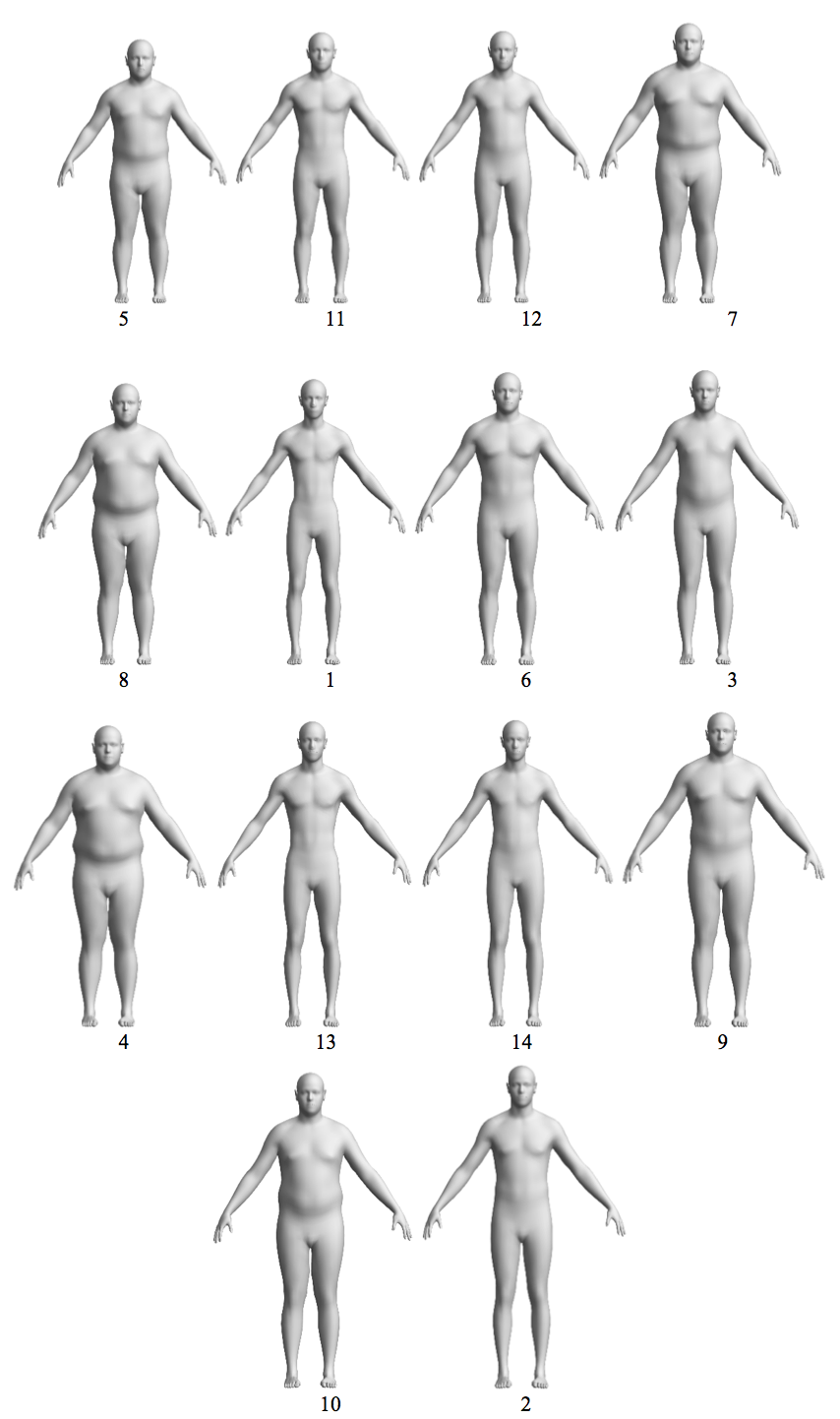
My colleagues Dr. Monica Jones and Dr. Daniel Park represented our group at the International Digital Human Modeling Symposium in Bonn, Germany this month. Dr. Jones presented methods and preliminary results from our work on occupant dynamics during abrupt vehicle maneuvers. The goal of this work is to understand how occupant posture and position many change due to automatic crash avoidance systems so that restraint systems can be designed appropriately to protect occupants when a crash does occur. Dr. Park presented an investigation into the development of boundary manikins. Principal component methods are widely used for developing small families of 3d manikins for use in ergonomics analysis. However, little has been published regarding the effects of the many decisions that are necessary when using the typical methods based on standard anthropometric dimensions. In this paper, we compared manikins generated using traditional methods with those created from direct analysis of body shape. Boundary manikin analyses do not achieve quantifiable accommodation assessments; statistical population accomodation models or virtual fit testing are necessary. However, boundary manikins are useful for representing range of extreme body dimensions while incorporating covariance. This paper provides some guidance for thinking about the various decisions to be made in generating a boundary manikin family.
July 2017
Occupant Dynamics and Limitations of Boundary Manikin Methods