Our group has had a number of recent publications that I think are worth highlighting.
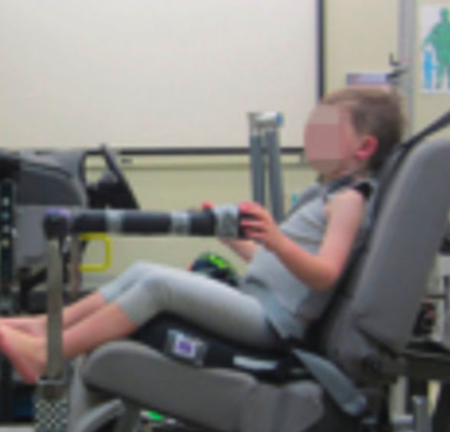
**Jones, M.L.H., Ebert, S.M., Manary, M.A., Reed, M.P., and Klinich, K.D.K. (2020). Child Posture and Belt Fit in a Range of Booster Configurations. International Journal of Environmental Research and Public Health. 17(3):810. **
My colleague Dr Monica Jones led this work, which builds on several previous studies in this domain. We have previously published extensively on posture and belt fit for booster-age children, including contributions to the development of the IIHS booster rating procedure that has resulted in substantial improvements in belt fit for children in boosters. This recent study was prompted by concerns that some recently developed "boosters that don't boost" could have adverse effects on child safety. In this study, we documented concerns about posture and belt fit with two of these new products.
Park, J., Ebert, S.M., Reed, M.P., and Hallman, J.J. (2020). Comparison of Three-Point Belt Fit between Humans and Hybrid-III Anthropometric Test Devices in a Driver Mockup. Traffic Injury Prevention. 21(1): 98-101
A substantial stream of our work has focused on quantifying the important differences in restraint system interactions between humans and crash test dummies (ATDs). These differences are very important because restraint systems are optimized for ATDs, so that vehicles perform well on regulatory and consumer information tests that use ATDs. In this paper, my colleague Dr Jangwoon Park (now at Texas A&M) compared the belt fit obtained by midsize-male and small-female Hybrid-III ATDs with the belt fit for similar-size drivers. The lap belt fit is markedly better for the ATDs, meaning that humans experience the belt restraints in a less advantageous manner, on average. Improving restraint performance for humans requires integrating simulation results from parametric human body models that can represent the range of human body shape, belt fit, and posture better than ATDs can.
Hwang, E., Reed, M.P., and Hu, J. (2020). Validating Diverse Human Body Models against Side Impact Tests with Post-Mortem Human Subjects. Journal of Biomechanics. 98:109444. **
This paper is one of series of studies examining the validity of parametric human body models (HBMs). As noted above, human models are needed to overcome the limitations of ATDs, which at best represent accurately a small percentage of individuals with low body mass index. Historically, HBMs have been constructed to be essentially identical in size to existing ATDs and then validated using the same ATD response corridors previously developed from post-mortem human subject data. Among the many problems with this approach is that the method is not readily applied to parametric HBMs that can be rapidly morphed to represent a large range of the population. Our team, led by Dr Jingwen Hu, has been developing a new approach to validation based on subject-specific comparison. One question addressed by this research is "how subject-specific" a model needs to be to represent PMHS data accurately. Is it sufficient to match stature and body weight, or is more detailed information about body shape, posture, and even tissue properties needed? Ultimately, much more PHMS data is needed from diverse populations that include sufficient imaging and posture measurements.